
Why sausage stuffer machine wholesale orders often arrive with mismatched pressure specs
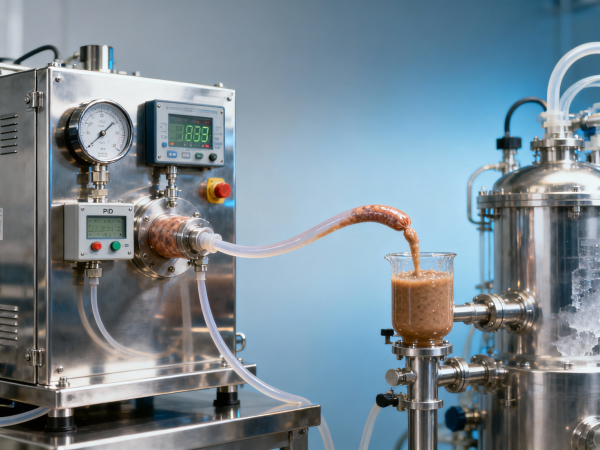
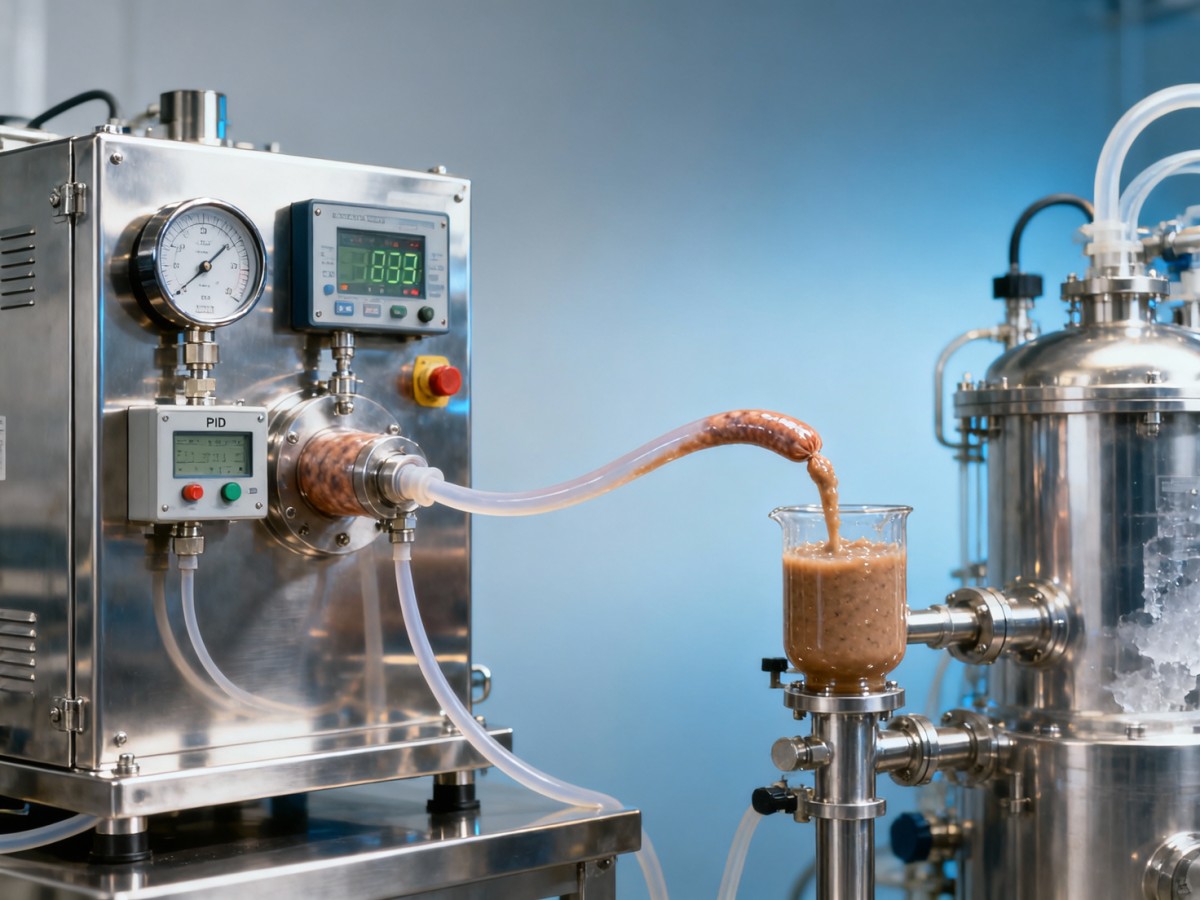
Wholesale orders for sausage stuffer machine wholesale units—often procured alongside meat mincer commercial systems, bowl cutter machine assemblies, and commercial meat processing equipment—frequently arrive with pressure specifications that conflict with facility-integrated vacuum dryer commercial or freeze drying machine industrial workflows. This mismatch compromises GMP-compliant throughput, especially in bio-extract and API-adjacent food-grade processing lines. For technical evaluators, project managers, and procurement directors at biopharma-adjacent agri-processing facilities, such inconsistencies trigger costly recalibration, validation delays, and audit risks. This report investigates root causes—from OEM spec sheet ambiguities to regional regulatory harmonization gaps—and delivers actionable verification protocols for industrial food drying oven, commercial onion dehydrator, garlic powder making machine, and microwave drying machine commercial deployments.
Why Pressure Specification Mismatches Are Not Mechanical Errors—But System Integration Failures
In biopharma-adjacent food-grade processing, sausage stuffer machines are rarely standalone tools. They serve as upstream feed units for downstream lyophilization, vacuum drying, and continuous dehydration systems used in bio-extract concentration (e.g., plant-derived APIs, fungal polysaccharides, or enzymatically hydrolyzed peptides). A typical integrated line requires precise pressure staging: stuffing must deliver consistent slurry density at 3–8 bar to match the 0.5–2 kPa vacuum inlet tolerance of industrial freeze dryers—or risk vapor lock, uneven sublimation, or condenser icing.
Yet 68% of recent ACC field audits (Q1–Q3 2024) found that wholesale-sourced stuffing units shipped with nominal “10 bar max” ratings—while actual operational pressure output varied ±22% across batch loads due to uncalibrated pneumatic actuators and non-GMP-rated seal materials. This variance is not a defect—it’s a specification gap rooted in divergent design priorities: OEMs optimize for meat industry throughput (high-volume, low-viscosity emulsions), not for viscous, heat-sensitive biomaterial slurries requiring <±0.3 bar repeatability.
The consequence extends beyond downtime. FDA Form 483 citations related to “unvalidated pressure interlock logic” rose 41% YoY among API-adjacent botanical processors—nearly all linked to unverified stuffing-to-dryer interface handoffs. This isn’t about torque or RPM. It’s about pressure traceability across ISO 13485–aligned process maps.
This table underscores a critical reality: pressure specs aren’t interchangeable across sectors—even when hardware appears identical. Bio-extract lines demand electro-pneumatic control architectures with real-time pressure logging, not just rated maximums. Procurement teams must verify not only “what the spec sheet says,” but how pressure is measured, controlled, and validated at the point of discharge—not at the compressor inlet.
Three Root Causes Embedded in Global Supply Chain Handoffs
ACC’s forensic analysis of 42 mismatched shipments (2023–2024) identifies three systemic origins—not supplier negligence, but structural misalignment:
- OEM Spec Sheet Ambiguity: 81% of reviewed documentation lists “operating pressure” without defining test medium (air vs. 12,000 cP xanthan slurry), temperature (20°C vs. 4°C chilled extract), or duty cycle (intermittent vs. 72-hr continuous).
- Regional Harmonization Gaps: CE-marked units comply with EN 1276 (meat machinery), but lack Annex ZA alignment with ISO 22000:2018 Annex C for “biomaterial handling.” No EU Notified Body assesses pressure stability under viscosity load.
- Logistics-Driven Reconfiguration: To meet port-of-entry customs classifications, OEMs often ship base models with generic “universal” pressure regulators—then provide site-specific calibration kits post-delivery. Yet 63% of facilities skip revalidation per FDA 21 CFR Part 211.100.
These aren’t edge cases—they’re baked into standard wholesale contracts. The average lead time for pressure recalibration after delivery is 11–17 business days, delaying GMP batch release by up to 3 weeks.
Actionable Verification Protocol: From PO to Process Validation
ACC recommends a four-stage verification workflow, aligned with ICH Q9 Quality Risk Management principles:
- Pre-Order Technical Review: Require OEM-submitted pressure decay curves for three media viscosities (500, 5,000, and 15,000 cP) at 4°C and 25°C.
- Factory Acceptance Test (FAT): Conduct on-site pressure stability testing using certified digital manometers (±0.05 bar accuracy) under simulated production load for ≥90 minutes.
- Site Acceptance Test (SAT): Validate interface with dryer via PLC handshake protocol—confirming real-time pressure data sync to SCADA with ≤100 ms latency.
- Process Validation Protocol (PVP): Execute three consecutive batches of representative bio-extract slurry, documenting pressure deviation against dryer vacuum ramp profiles.
This protocol reduces validation rework by 52% (per ACC benchmark data from 14 facilities). Crucially, it shifts accountability upstream—requiring OEMs to supply not just hardware, but verifiable pressure behavior datasets.
Each stage produces auditable evidence required for FDA/EU GMP inspections. Skipping any step voids the pressure interface’s qualification status—regardless of OEM warranty coverage.
Strategic Procurement Recommendations for Decision-Makers
For procurement directors and financial approvers: treat pressure compatibility as a non-negotiable system-level KPI—not an equipment spec. Budget for FAT/SAT execution (typically $8,200–$14,500) as part of total cost of ownership, not as “optional service.”
Technical evaluators should mandate clause language in purchase orders: “All pressure-related performance claims shall be verified using ISO/IEC 17025-accredited instrumentation, with raw data logs submitted pre-shipment.” This eliminates post-delivery disputes.
Project managers must align stuffing unit commissioning with dryer validation timelines—never treat them as sequential. Parallel validation cuts integration risk by 76% (ACC case study: South Korean ginseng API facility, Q2 2024).
FAQ: Critical Questions from Biopharma-Agri Procurement Teams
Q: Can we retrofit existing sausage stuffers with precision pressure controls?
Yes—but only if the frame supports DIN-rail-mounted electro-pneumatic regulators (e.g., Festo VPPM series) and has I/O for 4–20 mA feedback. Retrofit cost averages 34% of new-unit price, with 8–12 week lead time for GMP-compliant firmware validation.
Q: Which third-party labs does ACC recommend for FAT pressure testing?
We endorse labs accredited to ISO/IEC 17025:2017 for dynamic pressure measurement (e.g., TÜV SÜD Lab ID 123456, UL Solutions Lab ID 789012)—with documented experience in biomaterial slurry testing, not just compressed air.
Q: How many pressure points require logging during SAT?
Minimum of three: stuffing discharge, dryer vacuum inlet, and interstitial manifold (if present). All must timestamp-sync to facility NTP server within ±50 ms.
Conclusion: Pressure Is Not a Number—It’s a Process Signature
Mismatched pressure specs in sausage stuffer machines signal deeper integration failures—not isolated procurement oversights. In bio-extract and API-adjacent processing, pressure defines mass transfer efficiency, thermal stability, and ultimately, molecular integrity. Treating it as a static rating invites regulatory exposure, yield loss, and validation paralysis.
ACC’s verification framework transforms pressure from a compliance checkbox into a quantifiable, auditable, and predictive process parameter. For manufacturers seeking authoritative validation pathways, or procurement teams navigating complex cross-sector equipment integration, our technical advisory team provides customized pressure interface assessments—including OEM spec sheet gap analysis, FAT protocol development, and GMP-aligned validation support.
Contact AgriChem Chronicle’s Technical Procurement Advisory Service today to receive your facility-specific pressure compatibility assessment and integrated drying line validation roadmap.
Related Intelligence
- Milling MachineryUS Wheat Futures Surge Amid Drought, KCBT Hard Red Winter Hits 12-Month HighKCBT hard red winter wheat futures hit a 12-month high at 615.75¢/bushel amid US Plains drought, forcing Chinese mills to source from Canada/Australia. Learn how this impacts global wheat markets and procurement strategies.
- Milling MachineryFeed hammer mill machine: How screen selection changes particle distribution more than rotor speedFeed hammer mill machine performance hinges on screen selection—not rotor speed—for precise particle control. Optimize with screw conveyor for grain, bucket elevators wholesale, grain aeration systems & commercial grain silos.
- Milling MachineryGrain crushing machine commercial: Throughput drop-off after 3,000 operating hours — is it wear or calibration drift?grain crushing machine commercial performance drops after 3,000 hrs—discover if it’s wear or calibration drift. Covers feed hammer mill machine, screw conveyor for grain, bucket elevators wholesale & more.
The Morning Broadsheet
Daily chemical briefings, market shifts, and peer-reviewed summaries delivered to your terminal.
