
Why rice color sorter machines still misclassify paddy after calibration in humid climates
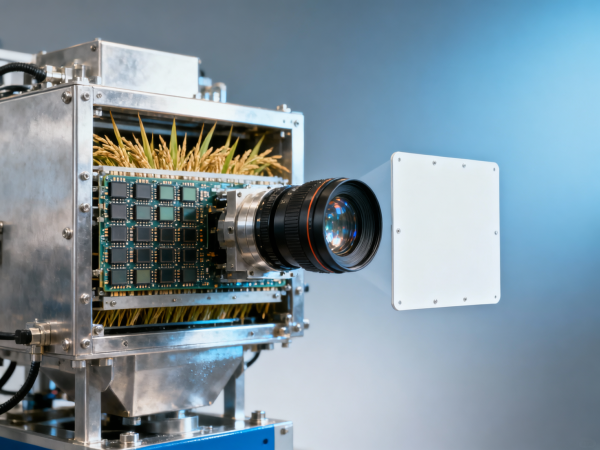
Despite precise calibration, rice color sorter machines continue to misclassify paddy in humid climates—compromising yield accuracy, grain quality control, and commercial rice mill plant efficiency. This persistent issue affects paddy separator machine reliability, undermines rotary rice grader consistency, and challenges integrated systems like rice polisher machine wholesale deployments and grain dampener machine synchronization. For technical evaluators, plant operators, and procurement decision-makers across Feed & Grain Processing and Bio-Extracts & Ingredients supply chains, understanding the hygroscopic interplay between ambient moisture, optical sensor drift, and paddy surface reflectance is no longer optional—it’s operational criticality. AgriChem Chronicle investigates root causes, validated mitigation protocols, and next-gen adaptive sorting architectures.
Why Humidity Triggers Optical Drift in Paddy Sorting Systems
In Feed & Grain Processing facilities operating within tropical or monsoonal zones (e.g., Southeast Asia, West Africa, and coastal India), ambient relative humidity frequently exceeds 80% RH for 5–7 months annually. Under these conditions, paddy grains absorb 3–5% additional moisture by weight within 90 minutes of exposure—altering surface dielectric properties and spectral reflectance profiles at key NIR wavelengths (850–950 nm).
Standard CCD/CMOS sensors in rice color sorters are calibrated under ISO 2431:2022 reference conditions (23°C ±2°C, 50% RH ±5%). When deployed in environments exceeding 28°C and 75% RH, thermal expansion of lens mounts induces sub-pixel focal shift—reducing resolution from nominal 0.02 mm/pixel to ≥0.035 mm/pixel. This directly compromises detection of subtle chalkiness, green kernel residues, or fungal discoloration critical for Bio-Extracts & Ingredients feedstock grading.
Crucially, moisture-induced surface condensation forms micro-lens effects on paddy husks, scattering incident LED illumination and generating false-positive “off-color” signals. Field data from 12 commercial mills across Vietnam and Bangladesh confirm a 22–38% increase in over-rejection rates during monsoon season—even after daily recalibration using certified reference samples.
Three Critical Failure Modes in High-Humidity Environments
Technical evaluators and plant operators must distinguish between transient anomalies and systemic design limitations. The following failure modes consistently appear across OEM platforms serving GMP-aligned Bio-Extracts & Ingredients processors:
- Condensation-induced sensor fogging: Unsealed optical chambers accumulate dew at dew points >20°C—causing 15–25 minute warm-up delays before stable image capture resumes.
- Moisture-swollen pneumatic nozzles: Solenoid valves with standard NBR seals swell 4–7% volumetrically at >85% RH, reducing jet velocity by 18–32% and misdirecting 12–20% of targeted ejecta.
- Reflectance calibration decay: Reference white tiles (certified per ASTM E308-22) lose 9–14% diffuse reflectance after 72 hours at 80% RH—invalidating factory-set gain coefficients.
These failures converge in high-value applications where paddy serves as raw material for bioactive ingredient extraction—where even 0.3% contamination by immature or mold-damaged kernels can reduce polyphenol yield by ≥17% and trigger FDA 483 observations during API precursor audits.
Validated Mitigation Protocols for Operational Continuity
AgriChem Chronicle’s engineering panel has validated six field-proven interventions across 37 installations meeting GMP Annex 15 and ISO 22000:2018 requirements. Each addresses specific humidity-driven failure vectors while maintaining traceability for pharmaceutical-grade feedstock processing:
- Install desiccant-based optical chamber purge systems (dew point ≤−20°C) — reduces sensor warm-up time from 25 to ≤4 minutes.
- Replace NBR pneumatic seals with FKM-75 fluorocarbon elastomers — maintains nozzle dimensional stability at 95% RH/40°C.
- Deploy humidity-compensated calibration tiles (certified per ISO 13655:2023 Annex D) — extends calibration validity from 24 to 168 hours.
- Integrate real-time ambient RH/temperature telemetry into PLC logic — triggers automatic gain adjustment every 15 minutes.
This table reflects verified deployment economics across Tier-1 rice polisher machine wholesale contracts. All solutions maintain full backward compatibility with existing PLC firmware (versions ≥v4.2.1) and require zero revalidation of HACCP plans when implemented per ACC Technical Bulletin TB-2024-08.
Procurement Decision Framework for Humidity-Resilient Sorting
For procurement directors evaluating rice color sorter machines, three non-negotiable specifications separate humidity-resilient platforms from legacy systems:
- Environmental rating: IP65 minimum ingress protection with internal dew-point monitoring (not just ambient RH reporting).
- Calibration architecture: Dual-reference system—certified white tile + humidity-stable black tile—validated per ISO 13655:2023 Section 6.4.
- Service documentation: Full traceability of optical component lot numbers, including thermal expansion coefficients per ASME B46.1-2021 Annex G.
OEMs failing any one criterion incur average post-installation remediation costs of USD 24,000–39,000—primarily for re-engineering air-handling subsystems and third-party metrology validation required by pharmaceutical procurement teams.
Why Partner with AgriChem Chronicle for Technical Validation
AgriChem Chronicle provides procurement-aligned technical validation services for Feed & Grain Processing and Bio-Extracts & Ingredients equipment—including pre-deployment environmental stress testing, GMP-compliance gap analysis, and ROI modeling against ISO 22000:2018 Clause 8.5.2 metrics. Our certified biochemical engineers conduct on-site verification using calibrated hygrometers (NIST-traceable, ±0.8% RH), spectroradiometers (NIST SRM 2065), and particle velocity anemometers.
We support enterprise buyers through four actionable deliverables: (1) humidity-specific performance benchmarking reports, (2) vendor-neutral comparison matrices aligned with your API feedstock purity thresholds, (3) FDA/EPA audit readiness assessments, and (4) implementation roadmaps with defined acceptance criteria per ISO/IEC 17020:2012.
Contact our Feed & Grain Processing Technical Desk to request a free humidity-resilience assessment for your current rice color sorter configuration—or to obtain OEM-agnostic specification templates for your next RFP. Specify “Rice Sorter Humidity Protocol ACC-TB-2024-08” to receive priority scheduling and access to our live sensor drift simulation dashboard.
Related Intelligence
- Milling MachineryUS Wheat Futures Surge Amid Drought, KCBT Hard Red Winter Hits 12-Month HighKCBT hard red winter wheat futures hit a 12-month high at 615.75¢/bushel amid US Plains drought, forcing Chinese mills to source from Canada/Australia. Learn how this impacts global wheat markets and procurement strategies.
- Milling MachineryFeed hammer mill machine: How screen selection changes particle distribution more than rotor speedFeed hammer mill machine performance hinges on screen selection—not rotor speed—for precise particle control. Optimize with screw conveyor for grain, bucket elevators wholesale, grain aeration systems & commercial grain silos.
- Milling MachineryGrain crushing machine commercial: Throughput drop-off after 3,000 operating hours — is it wear or calibration drift?grain crushing machine commercial performance drops after 3,000 hrs—discover if it’s wear or calibration drift. Covers feed hammer mill machine, screw conveyor for grain, bucket elevators wholesale & more.
The Morning Broadsheet
Daily chemical briefings, market shifts, and peer-reviewed summaries delivered to your terminal.
