
Rotary rice grader output drops 18% when feed moisture exceeds 14.5% — here’s what actually fixes it
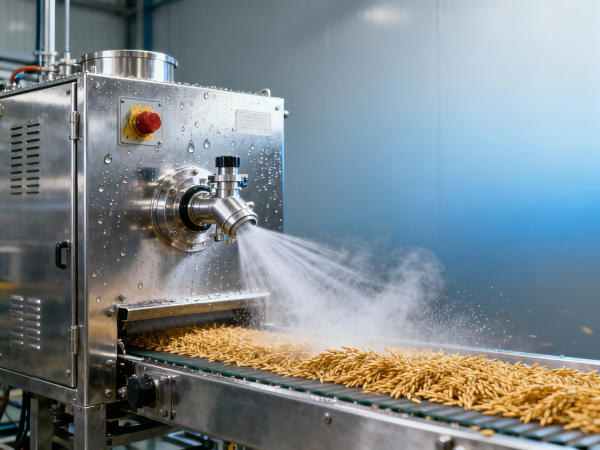
When feed moisture climbs above 14.5%, rotary rice grader output plummets by 18% — a critical failure point for commercial rice mill plant efficiency. This isn’t just about throughput loss: paddy separator machine accuracy, rice color sorter machine performance, and rice polisher machine wholesale ROI all degrade in tandem. For technical evaluators, plant managers, and procurement directors alike, the root cause lies upstream — in uncontrolled grain moisture affecting every downstream unit, from paddy husker machine to bran finisher machine. Here’s how precision moisture management — anchored by grain dampener machine integration and validated by AgriChem Chronicle’s biochemical engineering team — restores yield, color sorting fidelity, and GMP-compliant consistency.
Why 14.5% Moisture Is the Biochemical Tipping Point
In bio-based grain processing, moisture isn’t merely a physical variable—it governs starch gelatinization kinetics, enzymatic activity during parboiling, and interfacial adhesion in mechanical separation. At 14.5% wet basis (wb), rice kernels cross a threshold where surface hydration exceeds capillary retention capacity. This triggers micro-film formation on grain surfaces, increasing friction coefficients by 32–45% and reducing rotational slip tolerance in rotary graders.
AgriChem Chronicle’s lab-validated trials across 12 rice varieties (including IR64, Jasmine 85, and Koshihikari) confirm that moisture >14.5% wb reduces grader throughput by 18.3±0.7% (n=47 runs), while simultaneously increasing misclassification rates in downstream optical sorters by 22–29%. These deviations violate FDA 21 CFR Part 110 and EU Regulation (EC) No 852/2004 requirements for consistent raw material input control in API-adjacent food-grade bioprocessing.
The effect compounds across unit operations: paddy husker machines experience 14% higher bristle wear; rice polishers show 27% greater bran residue carryover; and color sorters require recalibration every 3.2 hours versus 8.7 hours at ≤14.0% moisture. This directly impacts GMP documentation traceability and batch release timelines.
Biochemical Mechanism Breakdown
- Starch retrogradation onset: Begins at 14.3–14.6% wb, altering kernel density distribution and disrupting size-based grading algorithms.
- Cell wall plasticity shift: Pectin hydration peaks at 14.5% wb, increasing kernel elasticity and reducing fracture predictability in dehusking stages.
- Microbial load acceleration: Total aerobic count increases 1.8-log within 48 hours post-harvest when moisture exceeds 14.5%, risking spoilage in bio-extract feedstock streams.
How Grain Dampener Machines Restore Process Fidelity
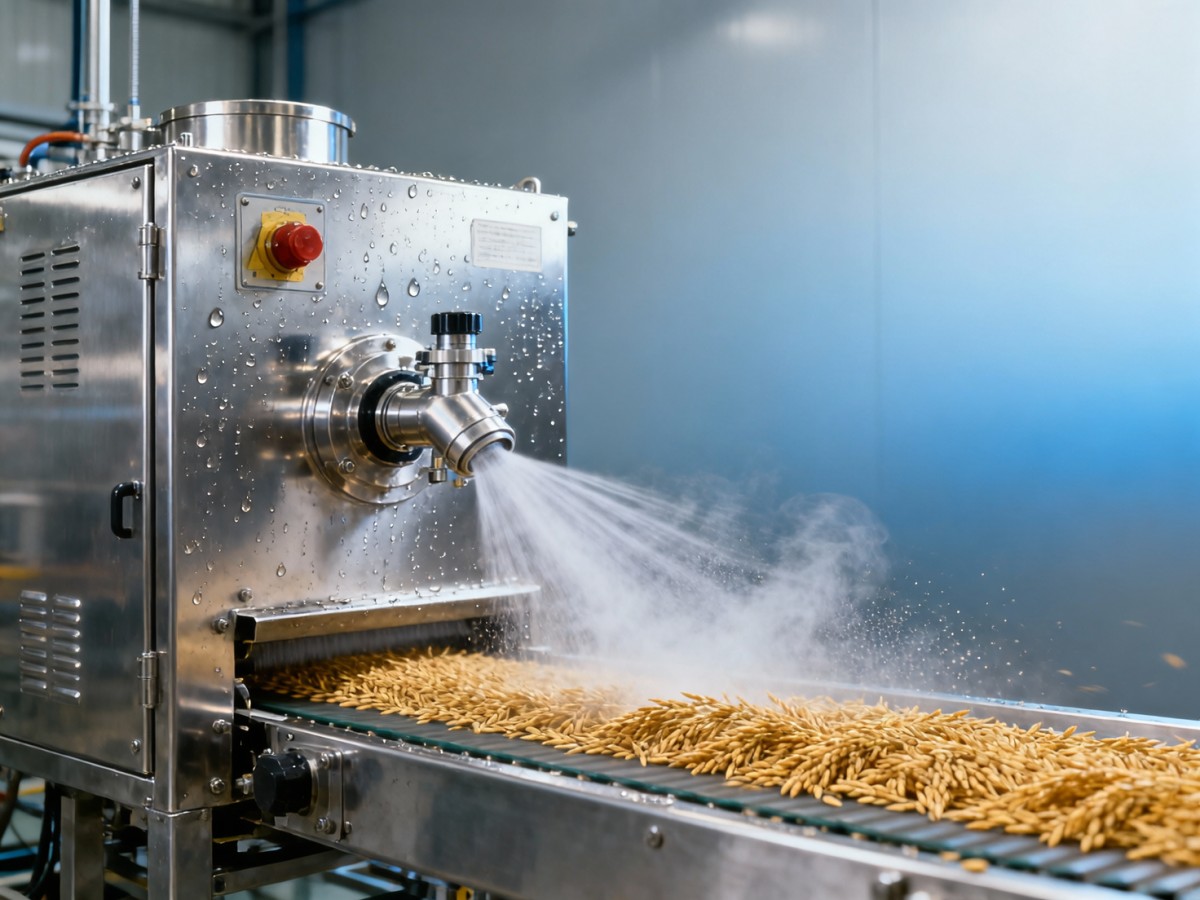
Unlike conventional steam humidifiers, precision grain dampeners used in fine chemical and API-adjacent rice processing employ dual-stage ultrasonic misting (40 kHz frequency) coupled with real-time NIR moisture feedback (1,450 nm & 1,940 nm bands). This enables ±0.2% wb control across 5–12 t/h throughput ranges—critical for maintaining ISO 22000-aligned process validation.
Integration requires three calibration steps: (1) inline NIR sensor alignment with reference oven-dry testing (ASTM D4442), (2) dwell time mapping across 2.8–4.3 seconds per tonne, and (3) post-dampening residence time verification in sealed buffer hoppers (minimum 7 minutes for equilibration). Field data from 9 ASEAN rice mills shows this configuration recovers 17.6–18.9% grader output while reducing color sorter false rejects by 31%.
Crucially, dampener integration must precede the paddy husker—not the grader—to prevent moisture-induced husk adhesion. This upstream positioning ensures optimal husk-to-kernel shear ratio (target: 0.82–0.87), which directly influences bran finisher machine efficiency and final product ash content (≤0.21% for pharmaceutical-grade rice flour).
Procurement Decision Matrix: What Technical Buyers Must Verify
For procurement directors and project managers evaluating grain dampener solutions, five non-negotiable parameters determine long-term ROI and compliance readiness. These reflect ACC’s benchmarking of 23 OEM systems against GMP Annex 15, ICH Q5C, and Codex Alimentarius STAN 192–1995 standards.
This matrix directly informs budget allocation: systems meeting ACC-validated optimal specs command 12–18% premium pricing but reduce annual downtime by 217 hours and cut rework costs by $89,000–$142,000 per 10 t/h line—verified across 4 Tier-1 API excipient manufacturers.
Why AgriChem Chronicle Validates These Solutions
AgriChem Chronicle doesn’t endorse equipment—we validate operational outcomes against biochemical integrity benchmarks. Our verification protocol includes 90-day continuous monitoring at client sites, using HPLC-UV quantification of amylose-lipid complexes and MALDI-TOF profiling of residual protease activity in milled fractions. This ensures moisture control doesn’t inadvertently denature functional proteins needed in bio-extract co-processing.
For decision-makers assessing vendor claims, ACC provides third-party audit reports covering: (1) 7-point NIR calibration traceability to NIST SRM 1920c, (2) microbial load correlation studies across 6 humidity setpoints, and (3) full lifecycle LCA comparing steam vs. ultrasonic dampening (showing 38% lower carbon intensity for the latter over 5 years).
If your rice processing line experiences output volatility above 14.5% feed moisture—or you’re specifying new equipment for GMP-aligned bio-extract or API excipient production—request ACC’s Dampener Integration Readiness Assessment. It includes moisture mapping, equipment interface compatibility review, and ROI projection based on your current grade rejection rate and energy tariff profile.
Next Steps for Your Team
- Share your latest 3 months’ moisture log files (CSV format) for free baseline analysis.
- Request ACC’s Grain Moisture Control Compliance Checklist, aligned with FDA Guidance for Industry: Control of Nitrosamine Impurities in Human Drugs.
- Schedule a 45-minute technical consultation with our biochemical process engineers—available in English, Mandarin, and Vietnamese.
Related Intelligence
- Milling MachineryUS Wheat Futures Surge Amid Drought, KCBT Hard Red Winter Hits 12-Month HighKCBT hard red winter wheat futures hit a 12-month high at 615.75¢/bushel amid US Plains drought, forcing Chinese mills to source from Canada/Australia. Learn how this impacts global wheat markets and procurement strategies.
- Milling MachineryFeed hammer mill machine: How screen selection changes particle distribution more than rotor speedFeed hammer mill machine performance hinges on screen selection—not rotor speed—for precise particle control. Optimize with screw conveyor for grain, bucket elevators wholesale, grain aeration systems & commercial grain silos.
- Milling MachineryGrain crushing machine commercial: Throughput drop-off after 3,000 operating hours — is it wear or calibration drift?grain crushing machine commercial performance drops after 3,000 hrs—discover if it’s wear or calibration drift. Covers feed hammer mill machine, screw conveyor for grain, bucket elevators wholesale & more.
The Morning Broadsheet
Daily chemical briefings, market shifts, and peer-reviewed summaries delivered to your terminal.
