
EU's New Eco-Design Regulation for Food Contact Machinery Takes Effect April 2026: Chinese Manufacturers Required to Install Energy Monitoring Modules
Introduction
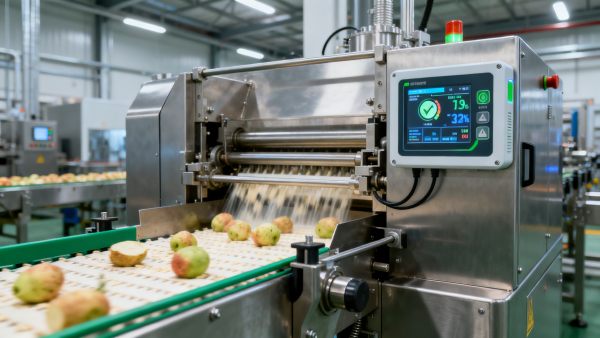
The European Union has introduced a new regulation, (EU) 2026/412, mandating that all food processing machinery exported to the EU must be equipped with real-time energy consumption monitoring and data export functions, effective April 1, 2026. This regulation, which aligns with the EN 50695 energy efficiency standard, directly impacts Chinese manufacturers exporting food processing equipment to the EU. Non-compliant machinery may face customs delays or rejection. This development is particularly relevant for industries involved in food processing machinery manufacturing, export trade, and compliance management.
Event Overview
On March 27, 2026, the European Commission issued Regulation (EU) 2026/412, requiring all food processing machinery—including filling, sealing, sterilization, and sorting equipment—exported to the EU to feature real-time energy monitoring and data export capabilities. The regulation, which takes effect on April 1, 2026, also mandates compliance with the EN 50695 energy efficiency classification standard. This move is part of the EU's broader push toward sustainable manufacturing practices.
Impact on Specific Industries
Food Processing Machinery Manufacturers
Chinese manufacturers exporting to the EU will need to retrofit existing equipment or design new models with energy monitoring modules. This could increase production costs and lead times, potentially affecting competitiveness in the EU market.
Export Trade Companies
Companies involved in the export of food processing machinery to the EU must ensure compliance with the new regulation to avoid customs delays or rejections. This may require additional documentation and testing to prove adherence to EN 50695 standards.
Compliance and Certification Services
Providers of compliance testing and certification services may see increased demand as manufacturers seek to verify their equipment meets the new EU requirements. This could create opportunities for specialized service providers.
Key Considerations and Recommended Actions
Assess Compliance Requirements
Manufacturers should immediately review the EN 50695 standard and evaluate whether their existing equipment meets the new energy monitoring and data export requirements. Non-compliant models may need redesign or retrofitting.
Engage with Certification Bodies
Proactively working with accredited testing laboratories can help streamline the compliance process and avoid last-minute hurdles. Early engagement may also reduce the risk of shipment delays.
Monitor Regulatory Updates
The EU may issue further clarifications or additional requirements. Companies should stay informed through official channels or industry associations to ensure ongoing compliance.
Editorial Perspective / Industry Observation
From an industry standpoint, this regulation signals the EU's continued focus on sustainability and energy efficiency in manufacturing. While it presents immediate challenges for Chinese exporters, it also aligns with global trends toward greener industrial practices. Manufacturers that adapt quickly may gain a competitive edge in the EU market. The regulation is not just a technical requirement but a reflection of evolving consumer and regulatory expectations for sustainable production.
Conclusion
The EU's new eco-design regulation for food contact machinery underscores the growing importance of energy efficiency in global trade. For Chinese manufacturers, this represents both a compliance hurdle and an opportunity to align with international sustainability standards. The key takeaway is that proactive adaptation—rather than reactive adjustments—will be critical for maintaining access to the EU market.
Source Information
Primary source: European Commission Regulation (EU) 2026/412, published March 27, 2026. Note: Further clarifications or implementation guidelines may be issued by the EU in the coming months.
Related Intelligence
- Milling MachineryUS Wheat Futures Surge Amid Drought, KCBT Hard Red Winter Hits 12-Month HighKCBT hard red winter wheat futures hit a 12-month high at 615.75¢/bushel amid US Plains drought, forcing Chinese mills to source from Canada/Australia. Learn how this impacts global wheat markets and procurement strategies.
- Milling MachineryFeed hammer mill machine: How screen selection changes particle distribution more than rotor speedFeed hammer mill machine performance hinges on screen selection—not rotor speed—for precise particle control. Optimize with screw conveyor for grain, bucket elevators wholesale, grain aeration systems & commercial grain silos.
- Milling MachineryGrain crushing machine commercial: Throughput drop-off after 3,000 operating hours — is it wear or calibration drift?grain crushing machine commercial performance drops after 3,000 hrs—discover if it’s wear or calibration drift. Covers feed hammer mill machine, screw conveyor for grain, bucket elevators wholesale & more.
The Morning Broadsheet
Daily chemical briefings, market shifts, and peer-reviewed summaries delivered to your terminal.
