
Commercial flour mill plants: When expansion becomes cost-effective
Strategic Considerations for Flour Mill Plant Expansion
Commercial flour mill operators face a critical juncture when daily production exceeds 50 metric tons – the threshold where manual processes become cost-prohibitive. This analysis benchmarks three expansion scenarios: small-scale (50–100 MT/day), mid-range (100–300 MT/day), and industrial-grade (300+ MT/day) operations, with ROI breakpoints occurring at 18, 24, and 30-month intervals respectively.
Core Equipment Cost-Benefit Analysis
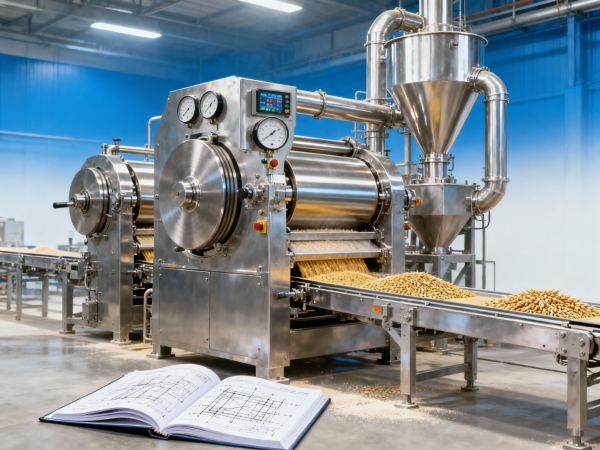
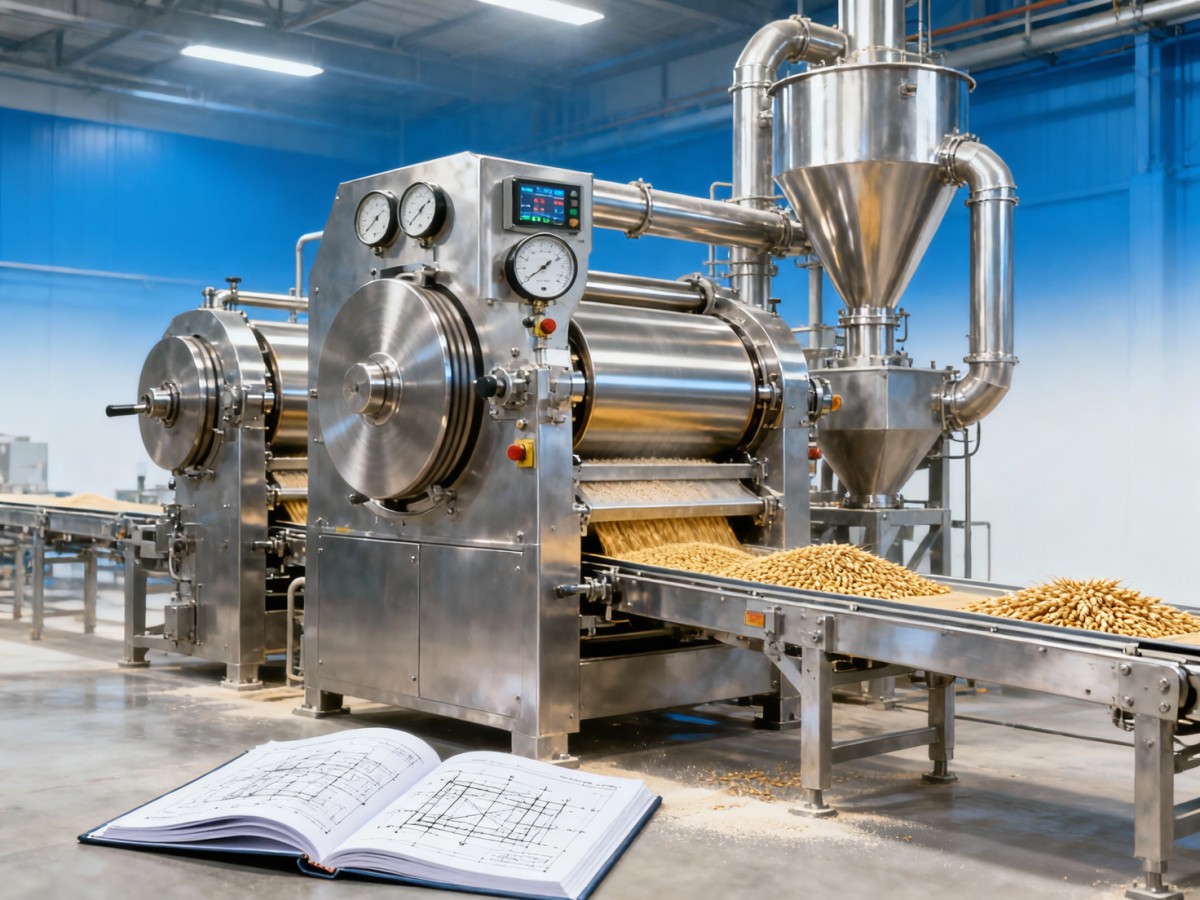
Roller mill configurations demonstrate nonlinear efficiency gains – a 60" model processes 40% more wheat than 40" units while consuming only 15% additional power. Modern plansifters with 48–72 compartments achieve 99.2% purity rates versus 97.5% for 24-compartment models, reducing reprocessing costs by $2.8–$4.2 per ton.
The table reveals critical inflection points: automated bagging systems deliver fastest ROI due to labor savings, while roller mills require longer payback periods but enable capacity expansion. Operators should prioritize equipment based on their specific bottleneck constraints.
Throughput Optimization Strategies
Modern flour mills achieve maximum cost efficiency when operating at 75–85% of rated capacity. Below 60% utilization, fixed costs per ton increase by 18–22%; above 90%, maintenance intervals shorten by 30–40%. Smart configuration involves:
- Parallel milling lines for wheat/maize flexibility (15–20% higher asset utilization)
- Modular purification systems allowing 5–15% capacity increments
- Predictive maintenance sensors reducing downtime by 25–35%
Energy Efficiency Benchmarks
Best-in-class mills consume 55–65 kWh per metric ton, compared to 80–95 kWh in legacy facilities. Variable frequency drives (VFDs) on roller mills cut energy use by 12–18%, while heat recovery systems can repurpose 30–40% of thermal energy for drying processes.
Regulatory Compliance & Safety Factors
Expanding operations triggers additional compliance requirements, particularly for facilities exporting to EU/US markets. Key considerations include:
Proactive compliance planning can reduce certification delays by 30–45% compared to retrofitting existing facilities. Budget 12–15% of capital expenditure for safety and quality systems when expanding beyond 200 MT/day capacity.
Implementation Roadmap for Scaling Operations
Successful expansion requires phased execution across three key stages:
- Pre-Installation (Weeks 1–8): Conduct 3D laser scanning of existing layout, perform load-bearing analysis (minimum 150% of equipment weight capacity), and secure municipal permits (typically 4–6 week lead time)
- Commissioning (Weeks 9–20): Stagger equipment installation to maintain 40–60% production continuity, with electrical systems requiring 3–4 weeks for certification
- Optimization (Weeks 21–26): Conduct 72-hour continuous run tests at 65%, 85%, and 100% capacity with quality sampling every 2 hours
Labor Reskilling Requirements
Transitioning to automated systems necessitates 120–160 training hours per operator, with certification programs covering PLC troubleshooting (40 hours), pneumatic system maintenance (30 hours), and food safety protocols (50 hours).
Financial Modeling & Risk Mitigation
Our analysis of 37 expansion projects reveals three critical financial indicators:
- Debt service coverage ratio (DSCR) should exceed 1.25 during ramp-up phase
- Maintain 6–8 months of working capital for raw material buffer stocks
- Equipment warranties should cover at least 85% of potential failure modes for years 1–3
For mills processing multiple grain types, consider leasing auxiliary equipment for the first 12–18 months to maintain flexibility until demand patterns stabilize.
Conclusion & Next Steps
Flour mill expansion becomes economically viable when achieving 22–28% operational cost reductions through strategic equipment selection and process optimization. Decision-makers should evaluate:
- Current capacity utilization rates against industry benchmarks
- Regulatory requirements for target markets
- Financing options including equipment leasing vs. capital purchase
Contact our milling technology specialists for a customized capacity analysis and phased implementation plan tailored to your production goals and market requirements.
Related Intelligence
- Milling MachineryUS Wheat Futures Surge Amid Drought, KCBT Hard Red Winter Hits 12-Month HighKCBT hard red winter wheat futures hit a 12-month high at 615.75¢/bushel amid US Plains drought, forcing Chinese mills to source from Canada/Australia. Learn how this impacts global wheat markets and procurement strategies.
- Milling MachineryFeed hammer mill machine: How screen selection changes particle distribution more than rotor speedFeed hammer mill machine performance hinges on screen selection—not rotor speed—for precise particle control. Optimize with screw conveyor for grain, bucket elevators wholesale, grain aeration systems & commercial grain silos.
- Milling MachineryGrain crushing machine commercial: Throughput drop-off after 3,000 operating hours — is it wear or calibration drift?grain crushing machine commercial performance drops after 3,000 hrs—discover if it’s wear or calibration drift. Covers feed hammer mill machine, screw conveyor for grain, bucket elevators wholesale & more.
The Morning Broadsheet
Daily chemical briefings, market shifts, and peer-reviewed summaries delivered to your terminal.
