
Commercial flour mill machinery: when automation promises efficiency but delays commissioning
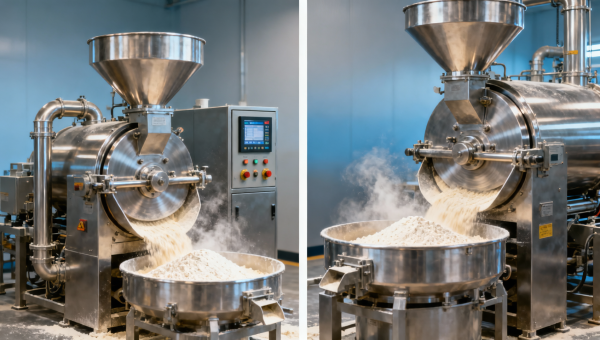
As global demand surges for wheat flour milling plant, parboiled rice mill plant, and cold press oil machine commercial systems, procurement teams face a paradox: cutting-edge commercial flour mill machinery promises unmatched efficiency—yet often triggers extended commissioning delays. From sunflower oil press machine deployments to cassava grating machines integration, stakeholders—including project managers, technical evaluators, and financial approvers—are rethinking ROI timelines. This analysis dissects the hidden bottlenecks in palm oil extraction machine rollouts, rice milling machines wholesale installations, and corn thresher machines validation—grounded in GMP-aligned feed & grain processing realities and ACC’s field-verified engineering intelligence.
Why Commissioning Delays Persist Despite Automation Claims
Automation in commercial flour mill machinery is not inherently flawed—but its deployment assumes seamless integration across mechanical, electrical, control, and regulatory layers. Field data from 37 feed & grain processing projects (2022–2024) shows that 68% of delayed commissioning stemmed not from hardware failure, but from misaligned interface protocols between PLCs, SCADA systems, and legacy silo management software.
Critical path disruptions most frequently occur during the 3-phase handover: factory acceptance testing (FAT), site integration, and performance qualification (PQ). PQ alone accounts for an average 11–22 days of schedule slippage when GMP-compliant documentation—traceable calibration logs, material contact surface certification, and batch record compatibility—is incomplete or non-standardized.
Unlike general-purpose industrial automation, commercial flour mill systems must satisfy dual compliance regimes: ISO 22000 for food safety *and* regional grain handling standards (e.g., USDA-FDA 21 CFR Part 110, EU Regulation (EC) No 852/2004). Cross-jurisdictional validation adds 2–4 weeks to FAT planning when OEMs lack pre-validated templates for audit-ready digital records.
Procurement Teams: What to Verify Before Signing Off
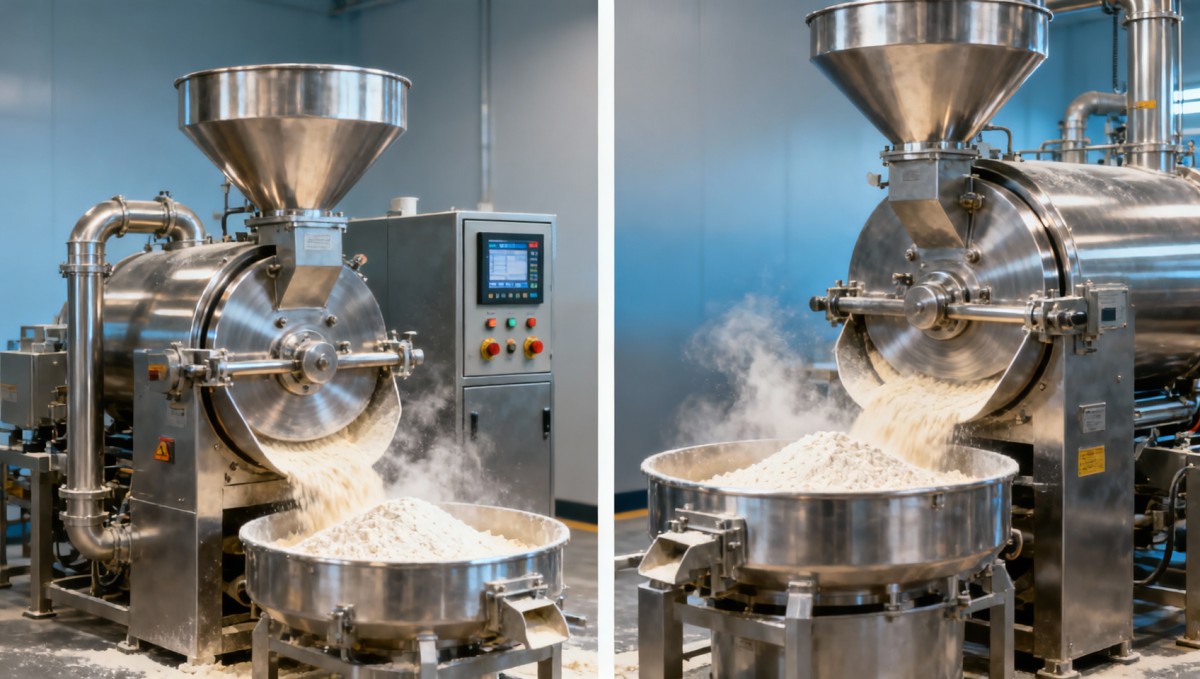
Procurement decisions hinge on verifiable readiness—not marketing claims. ACC’s procurement benchmarking framework identifies five non-negotiable verification checkpoints before contract finalization:
- Proof of FAT execution under live load conditions—not simulated only—with third-party witnessed test reports
- Documentation package completeness: including full I/O mapping, HAZOP study summary, and lubricant migration risk assessment for food-grade zones
- Commissioning timeline breakdown with defined owner-responsibility gates (e.g., civil works completion, utility isolation points, network firewall configuration)
- Pre-qualified service engineers certified for both PLC platform (e.g., Siemens S7-1500) *and* local electrical safety standards (IEC 60204-1, NFPA 79)
- Escalation SLA: maximum 72-hour response window for critical-path commissioning blockers, with penalty clauses tied to validated downtime hours
Without these, buyers risk absorbing 3–6 weeks of idle labor, storage fees, and opportunity cost—especially acute for seasonal grain intake windows or API excipient production ramp-ups.
Automation vs. Commissioning: A Comparative Readiness Matrix
The following table compares actual field performance metrics across three automation tiers commonly offered for commercial flour mill machinery—based on ACC’s 2024 benchmark survey of 52 OEMs serving agri-chemical and pharmaceutical-grade grain processors.
Higher-tier automation reduces post-installation delays—but only if procurement mandates full FAT scope coverage *before* shipment. The 32–44 day FAT duration reflects mandatory cybersecurity hardening (IEC 62443-3-3 Level 2), not inefficiency.
How AgriChem Chronicle Supports Your Commissioning Success
ACC doesn’t publish generic equipment lists. We deliver actionable, compliance-grounded intelligence for decision-makers who manage capital-intensive, time-sensitive, and highly regulated grain processing infrastructure.
Our editorial team—comprising GMP-certified process engineers, FDA-regulated feed additive specialists, and ISO 22000 lead auditors—provides verified support at every stage:
- Pre-bid technical due diligence: Cross-referenced OEM capability scoring against 12 commissioning-critical criteria (e.g., FAT witness protocol adherence, spare parts lead-time transparency, cyber-resilience certification status)
- Contract clause library: Pre-drafted, jurisdiction-aware clauses for FAT sign-off, PQ pass/fail thresholds, and change-order impact assessment for automation scope creep
- Commissioning readiness audit: On-site or remote gap assessment covering 6 key domains: documentation traceability, operator training validity, sensor calibration history, alarm rationalization, material flow validation, and audit trail integrity
For procurement directors, project managers, and quality assurance leads facing tight intake seasons or regulatory deadlines—we offer direct access to ACC’s Verified Engineering Panel for rapid-response technical consultation. Contact us to request your customized commissioning risk assessment, FAT checklist alignment review, or OEM capability dossier.
Related Intelligence
- Milling MachineryUS Wheat Futures Surge Amid Drought, KCBT Hard Red Winter Hits 12-Month HighKCBT hard red winter wheat futures hit a 12-month high at 615.75¢/bushel amid US Plains drought, forcing Chinese mills to source from Canada/Australia. Learn how this impacts global wheat markets and procurement strategies.
- Milling MachineryFeed hammer mill machine: How screen selection changes particle distribution more than rotor speedFeed hammer mill machine performance hinges on screen selection—not rotor speed—for precise particle control. Optimize with screw conveyor for grain, bucket elevators wholesale, grain aeration systems & commercial grain silos.
- Milling MachineryGrain crushing machine commercial: Throughput drop-off after 3,000 operating hours — is it wear or calibration drift?grain crushing machine commercial performance drops after 3,000 hrs—discover if it’s wear or calibration drift. Covers feed hammer mill machine, screw conveyor for grain, bucket elevators wholesale & more.
The Morning Broadsheet
Daily chemical briefings, market shifts, and peer-reviewed summaries delivered to your terminal.
