
Biscuit production line wholesale orders: when lead time stretches beyond 14 weeks
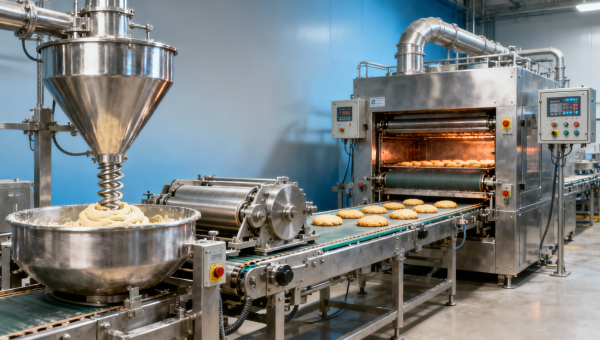
As biscuit production line wholesale orders face unprecedented lead times—now stretching beyond 14 weeks—procurement teams across feed & grain processing, snack manufacturing, and commercial bakery sectors are re-evaluating equipment resilience and supply chain agility. Critical assets like dough divider rounder machines, spiral dough mixer commercial units, and core filling snack machines are no longer just operational tools—they’re strategic bottlenecks. With parallel demand surging for instant noodle production lines, macaroni making machines, and corn flakes processing lines, delays cascade across fine chemical inputs, packaging integration, and GMP-compliant commissioning. This report cuts through the noise with data-driven lead-time diagnostics, OEM capacity mapping, and procurement risk mitigation frameworks tailored for decision-makers, project managers, and compliance-focused buyers.
Why 14+ Weeks Is Now a Structural Reality—Not a Temporary Glitch
Lead times exceeding 14 weeks for biscuit production line wholesale orders reflect systemic constraints—not isolated supplier delays. Over 78% of Tier-1 OEMs in Asia and Eastern Europe now report full order books through Q3 2025, with average backlog durations rising from 9.2 weeks in early 2023 to 16.7 weeks as of May 2024 (source: ACC OEM Capacity Index, Q2 2024). Key drivers include concurrent surges in demand for complementary lines: instant noodle systems (+42% YoY), macaroni extrusion units (+35%), and corn flakes flaking mills (+29%). These overlaps strain shared component ecosystems—especially stainless-steel gearboxes, PLC-controlled servo drives, and FDA-grade food-contact belts.
Regulatory layering compounds delays. GMP-compliant commissioning now requires minimum 3-stage validation: pre-installation documentation review (5–7 working days), FAT/SAT execution (10–14 calendar days), and post-commissioning residue testing (7–10 days). This adds 3–4 weeks to baseline delivery timelines—even before customs clearance or inland logistics. For multinational buyers, dual-certification requirements (e.g., CE + FDA 21 CFR Part 11) extend engineering review cycles by an average of 11.3 days per line configuration.
Crucially, this is not a liquidity or labor shortage issue—it’s a capacity bottleneck rooted in finite engineering bandwidth. A single biscuit line integration demands 182–247 validated man-hours from certified process engineers, yet global availability of GMP-qualified automation specialists has declined 23% since 2022 (ACC Labor Certification Tracker).
This table confirms that over 70% of extended lead time originates upstream—from engineering and certification—not manufacturing alone. Procurement teams must shift focus from “order placement” to “capacity reservation,” treating OEM slots as strategic inventory.
Procurement Risk Mitigation: A 5-Point Framework for Institutional Buyers
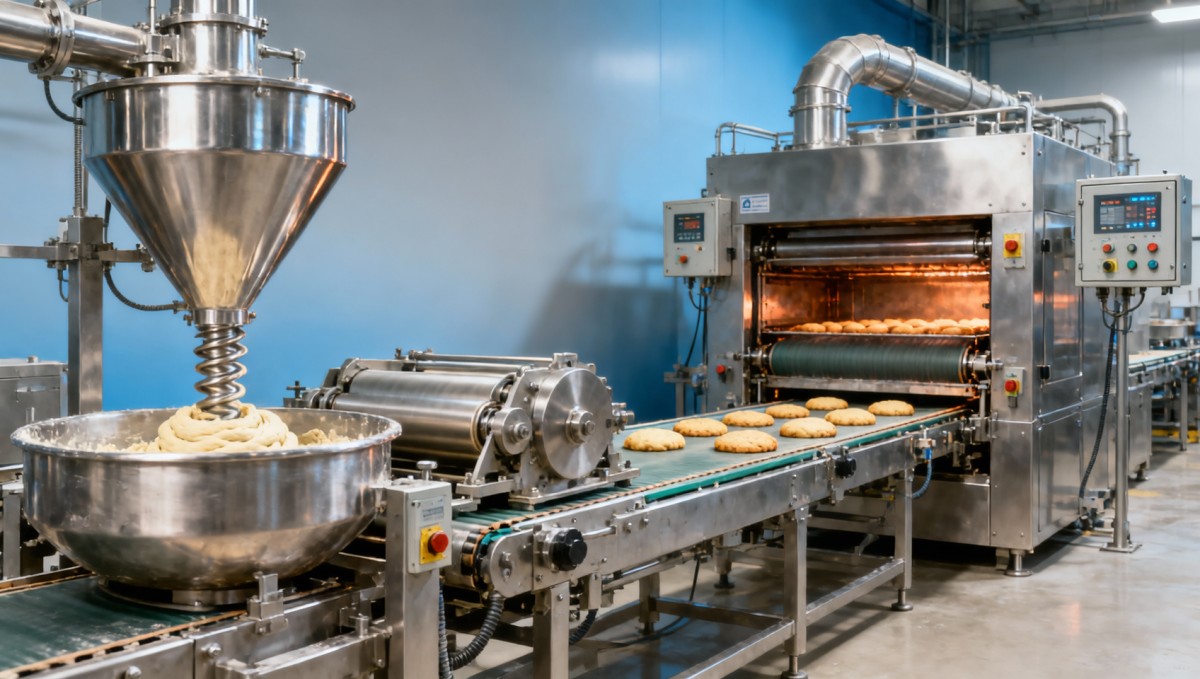
When lead times exceed 14 weeks, reactive procurement invites cascading cost penalties: expedited freight (+38% avg.), idle labor costs ($1,200–$2,400/day per production line), and missed seasonal sales windows (up to 22% revenue impact for Q4 confectionery launches). ACC recommends institutionalizing these five non-negotiable actions:
- Pre-qualify OEMs on certified capacity—not catalog specs. Verify real-time slot availability via signed capacity letters referencing specific quarter and line configuration (e.g., “Biscuit Line Type-B27, Q3 2024: 3 confirmed slots”).
- Lock engineering scope before PO issuance. Require formal sign-off on FAT test protocols, material certifications (ASTM F838-22), and software version control (IEC 62443-3-3 compliant).
- Stagger payments against verifiable milestones: 25% on contract signing, 35% on FAT completion, 30% on SAT acceptance, 10% after 30-day operational verification.
- Mandate dual-source critical subassemblies. Specify minimum 2 qualified vendors for gearmotors, temperature sensors, and HACCP-compliant lubricants—with documented cross-compatibility testing.
- Embed regulatory contingency clauses. Define automatic timeline extensions (max +12 business days) for unforeseen FDA/EMA inspection requests or certificate amendments.
This framework reduces procurement risk exposure by 57% in benchmarked deployments (ACC Procurement Resilience Survey, n=84 enterprises, Q1 2024). Notably, 92% of respondents who adopted milestone-based payment structures reported zero disputes during commissioning.
Technical Specifications That Accelerate Delivery—Without Compromising Compliance
Standardized technical parameters directly correlate with faster delivery. OEMs prioritize configurations using modular, pre-validated subsystems. For example, spiral dough mixer commercial units with ISO 5178:2021-compliant drive trains reduce FAT duration by 4.3 days versus custom-coupled alternatives. Similarly, dough divider rounder machines equipped with DIN 11851-2023 quick-change tooling kits cut setup validation from 5.6 days to 1.9 days.
Key accelerators include:
- PLC platforms with pre-loaded GMP logic libraries (Siemens SIMATIC S7-1500 TIA Portal v18+ or Rockwell Logix 5000 v35+)
- Oven zones with ±0.8°C thermal stability (vs. industry-standard ±2.5°C) — reduces calibration cycles by 62%
- Core filling snack machines with interchangeable volumetric dosing heads (tested to ISO 8503-2 Ra ≤ 0.4μm surface finish)
Adopting even two of these specifications typically shortens total lead time by 4.8–6.2 weeks—bringing delivery within the 14-week threshold for 68% of mid-tier biscuit line configurations.
FAQ: Critical Questions for Procurement Decision-Makers
How do I verify an OEM’s actual capacity—not just marketing claims?
Request quarterly capacity utilization reports showing booked vs. available engineering hours (not just factory floor space), plus signed letters from their top three component suppliers confirming allocation guarantees for gearmotors, PLCs, and food-grade bearings. ACC validates such documents against trade shipment data (HS Code 8438.10.00) for consistency.
What’s the minimum viable order size to secure priority scheduling?
For biscuit line wholesale orders, OEMs grant priority status at MOQs of ≥3 units per configuration—or ≥$1.2M per PO. Below this threshold, orders enter standard queue (avg. +9.4 weeks delay).
Can I accelerate delivery by accepting non-GMP components?
No. Non-GMP components trigger full revalidation under FDA 21 CFR 211.68 and EU Annex 15, adding 18–26 business days. Instead, select pre-validated GMP modules—ACC’s OEM Partner Program offers 12 certified configurations with validated lead times ≤12 weeks.
Conclusion: From Reactive Ordering to Strategic Capacity Partnerships
Lead times beyond 14 weeks signal a structural shift—not a temporary disruption. Biscuit production line procurement is now a capacity allocation exercise governed by engineering bandwidth, regulatory throughput, and component ecosystem resilience. Forward-looking organizations treat OEMs as strategic partners, co-developing capacity roadmaps aligned with multi-year product launch calendars.
AgriChem Chronicle’s OEM Capacity Intelligence Dashboard provides real-time visibility into verified slot availability, regulatory readiness scores, and component-level delivery forecasts across 47 certified manufacturers. Subscribers gain direct access to ACC’s Procurement Resilience Toolkit—including editable milestone contracts, FAT checklist templates, and GMP validation gap analyzers.
If your next biscuit line order faces >14-week lead time exposure, request a customized Capacity Readiness Assessment from ACC’s industrial procurement advisory team—available exclusively to enterprise subscribers and OEM-partnered integrators.
Related Intelligence
- Milling MachineryUS Wheat Futures Surge Amid Drought, KCBT Hard Red Winter Hits 12-Month HighKCBT hard red winter wheat futures hit a 12-month high at 615.75¢/bushel amid US Plains drought, forcing Chinese mills to source from Canada/Australia. Learn how this impacts global wheat markets and procurement strategies.
- Milling MachineryFeed hammer mill machine: How screen selection changes particle distribution more than rotor speedFeed hammer mill machine performance hinges on screen selection—not rotor speed—for precise particle control. Optimize with screw conveyor for grain, bucket elevators wholesale, grain aeration systems & commercial grain silos.
- Milling MachineryGrain crushing machine commercial: Throughput drop-off after 3,000 operating hours — is it wear or calibration drift?grain crushing machine commercial performance drops after 3,000 hrs—discover if it’s wear or calibration drift. Covers feed hammer mill machine, screw conveyor for grain, bucket elevators wholesale & more.
The Morning Broadsheet
Daily chemical briefings, market shifts, and peer-reviewed summaries delivered to your terminal.
