
Which aquaculture equipment fits small RAS projects?
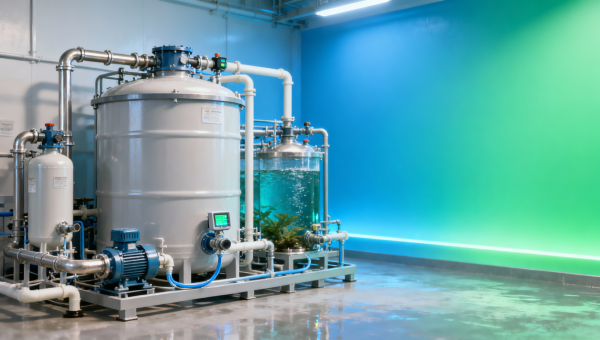
Selecting the right aquaculture equipment for a small RAS project requires more than matching tank size and budget. Buyers must balance aquaculture production goals, water quality control, and long-term operating efficiency while aligning with FDA Standards and broader Aquaculture Tech expectations. This guide uses Peer Analysis to help operators, project managers, and decision-makers identify practical systems that support reliable aquaculture products and scalable performance.
What equipment does a small RAS project actually need?
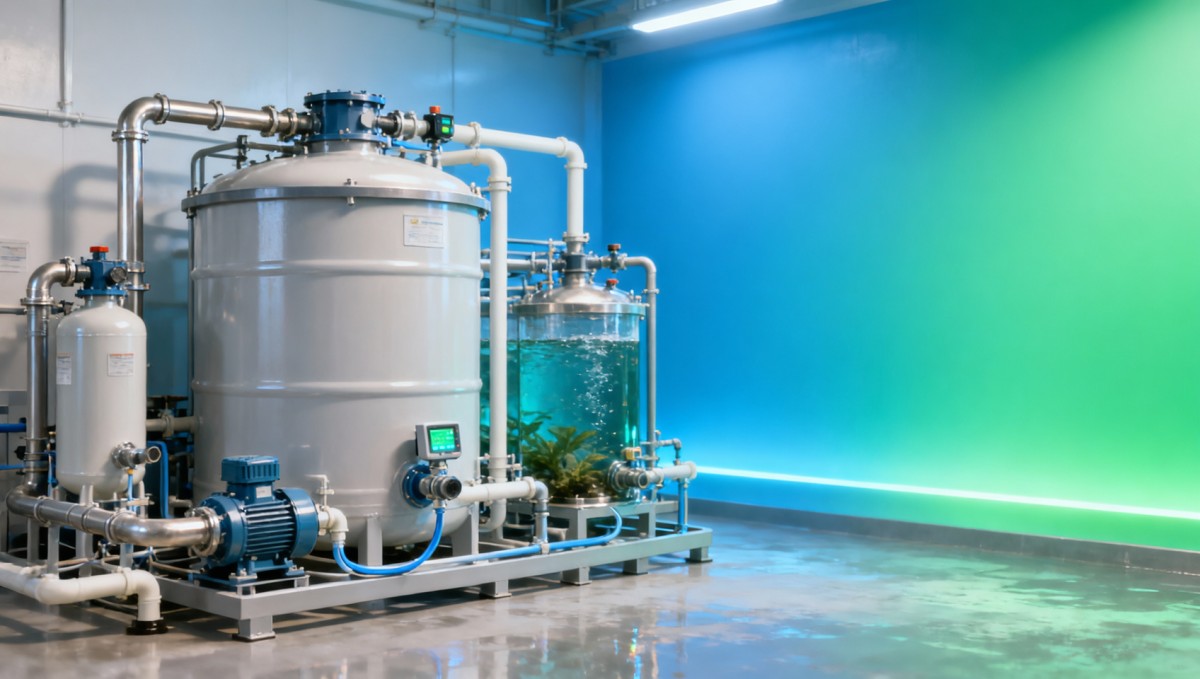
For most small recirculating aquaculture system installations, the best equipment set is not the biggest package but the one that controls biological load, labor intensity, and upgrade risk. A small RAS project typically starts with 3 core goals: stable water quality, predictable stocking density, and manageable maintenance. In practice, that means selecting equipment around flow stability, solids removal, biofiltration capacity, oxygen transfer, and monitoring visibility rather than choosing tanks first.
Operators often underestimate how quickly performance gaps appear when feed rates rise. Even a pilot system running 5 m³ to 50 m³ of total water can show sharp swings in ammonia, dissolved oxygen, and suspended solids if filtration and pump sizing are mismatched. For information researchers and project leads, the most useful question is simple: which components protect water quality during both normal operation and stress periods such as grading, biomass increase, or power interruptions?
A practical small RAS equipment list usually includes culture tanks, mechanical filtration, biofilter, circulation pumps, aeration or oxygenation, UV or ozone disinfection where appropriate, temperature control if species require it, degassing support, sludge discharge handling, and a basic automation layer. Financial approvers should also review whether each unit is modular. Modular equipment reduces replacement waste and can shorten expansion decisions from several months to a few procurement cycles.
ACC’s industry perspective is especially relevant here because small RAS procurement sits at the intersection of machinery, compliance, and operating chemistry. A system that looks affordable at purchase may become expensive if spare parts are inconsistent, validation records are weak, or service documentation is incomplete. In regulated supply environments, transparency on material contact surfaces, cleaning methods, and water treatment logic matters as much as initial capex.
Core equipment blocks for a small recirculating aquaculture system
- Culture tanks and piping network: The tank geometry should support species behavior, sludge movement, and safe harvesting. Small systems often use circular or dual-drain tanks because waste capture is easier and dead zones are reduced.
- Mechanical solids removal: Drum filters, settling units, or cartridge options are selected based on feed load and labor availability. For many small projects, efficient solids capture within the first filtration stage has an outsized effect on downstream biofilter stability.
- Biofiltration and gas control: Biofilters convert ammonia, while aeration, oxygenation, and degassing stabilize fish health. These units must be judged together, not in isolation, because nitrification performance is tightly linked to oxygen and carbon dioxide management.
- Monitoring and backup systems: Sensors for dissolved oxygen, temperature, pH, and oxidation-reduction potential are often more valuable than adding extra tank volume. A small RAS without alarms or emergency power planning carries avoidable operational risk.
The table below summarizes a practical starting configuration for small RAS projects. It is not a fixed recipe, but it helps procurement teams compare solutions by function, not by marketing description.
A useful reading of this table is that a small RAS project succeeds when equipment choices are linked to feed input, maintenance capacity, and compliance needs. If a buyer can clearly define those three variables, equipment fit becomes far easier to judge.
How should buyers compare equipment types for small RAS performance?
Comparison matters because small aquaculture equipment packages are often sold as complete systems, yet actual project performance depends on weak links between components. A low-cost drum filter may save budget upfront but increase rinse water loss. A compact biofilter may fit the room but become overloaded within 6–10 weeks if feed rates increase. Decision-makers should compare equipment by operational scenario, not only by brochure specification.
For operators, the most practical comparison categories are startup difficulty, cleaning effort, alarm responsiveness, spare part availability, and daily supervision time. For finance teams, the comparison should extend to electricity demand, replacement interval, commissioning support, and risk of unplanned stock loss. A component that lowers labor by 30–60 minutes per day may justify a higher purchase price in facilities with lean staffing.
Project managers should also compare equipment according to installation constraints. Many small RAS projects operate in retrofitted farm buildings, pilot halls, or research spaces where floor drains, ceiling height, and service access limit options. In these cases, vertical compactness and maintenance clearance can be more important than nominal capacity.
The comparison table below focuses on the small project buyer’s most frequent dilemma: choosing between simpler lower-capex arrangements and more controlled higher-automation equipment sets.
The best choice is rarely the most automated or the cheapest. It is the option that maintains stable water quality with the least operational strain across a 12-month cycle, including cleaning, calibration, feed ramp-up, and emergency response.
Three comparison checks that prevent expensive mistakes
- Match equipment to daily feed input, not just water volume. Feed load drives solids, ammonia, and oxygen demand more directly than tank size alone.
- Review the maintenance routine over a 7-day schedule. If cleaning, calibration, and sludge handling exceed available labor, the system is too complex for the site.
- Check failure mode behavior. Ask what happens during blocked drains, sensor drift, pump failure, or 15–30 minutes of power loss. Small systems need predictable fallback plans.
Why Peer Analysis matters in equipment comparison
Peer Analysis is useful because many small RAS projects share similar constraints even across different species. Lessons from pilot hatcheries, farm diversification projects, and demonstration units often reveal the same pattern: overspending on tanks while underspending on monitoring and solids control creates instability. ACC’s editorial framework is built to extract those procurement lessons and translate them into practical comparison logic for industrial buyers.
Which technical parameters and compliance points deserve the closest review?
Technical review should focus on parameters that directly affect fish health, operator workload, and regulatory confidence. For small RAS systems, the most important checks usually include turnover rate, filtration sequence, dissolved oxygen support, sensor accuracy, cleanability, material compatibility, and backup planning. Quality and safety teams should ask not only whether the equipment works, but whether it can be validated, cleaned, monitored, and maintained without introducing avoidable process risk.
In practical terms, many small projects target water turnover intervals that support stable solids movement and gas control, often assessed on an hourly basis. Temperature control ranges may vary widely by species, but the buyer should still define acceptable operating windows before ordering. If the system is expected to run continuously, 24/7 equipment duty rating is not optional. It is a baseline requirement.
Where FDA Standards or broader food-safety expectations influence procurement, documentation becomes important. Buyers should review contact material declarations, cleaning instructions, monitoring records, and traceable component lists. Even when a small RAS unit is not sold as a pharmaceutical-grade process line, disciplined records help with internal quality systems, audits, and downstream customer confidence.
Environmental controls also matter. Water discharge, sludge handling, and chemical use in sanitation or disinfection should be aligned with local requirements and operating permits. A compact system that produces difficult-to-manage waste streams can become a hidden compliance burden.
Five technical checkpoints for procurement and QA review
- Hydraulic design: Confirm pipe routing, drain logic, and pump duty against actual site elevation and head loss. A design that works on paper may underperform after installation bends and valve losses are added.
- Filtration sizing: Ask the supplier to explain how solids and biofiltration capacity were matched to expected biomass stages over at least 3 operating phases.
- Instrumentation: Review calibration frequency, probe replacement intervals, and alarm escalation method. A sensor without a maintenance plan is not a control system.
- Material and sanitation compatibility: Verify that tank, pipe, seal, and housing materials are suitable for water treatment conditions and routine cleaning agents.
- Redundancy and emergency response: Check backup aeration, power continuity, and spare pump strategy. For small RAS, one failed component can affect the whole biomass within a short time window.
Compliance is not separate from equipment fit
A common mistake is to treat compliance as a final paperwork step. In reality, good compliance starts in equipment selection. If service records, cleaning access, and component traceability are weak, the project team will carry that weakness into operation. ACC’s cross-sector knowledge in regulated machinery and biochemical supply chains is valuable because it emphasizes documentation discipline early, before installation locks in avoidable risks.
How do budget, operating cost, and implementation timelines change the best choice?
For many buyers, the equipment that fits a small RAS project is the one that keeps total ownership cost under control across procurement, installation, commissioning, and daily operation. Initial budget pressure is real, especially in pilot projects or diversification programs. Yet a lower entry price can be offset by higher labor, energy, water replacement, sensor downtime, or stock loss exposure. Finance approvers should request a 12-month operating view, not only a purchase quote.
Implementation timing also affects equipment fit. A standard package can often move faster through procurement and installation than a heavily customized system. In many industrial projects, routine lead times may fall within 2–8 weeks for simpler components, while integrated skid assemblies or custom control panels can require longer planning. If the production window is seasonal, delivery risk may outweigh small differences in equipment efficiency.
Small RAS projects should also budget for training and startup stabilization. The first 2–6 weeks after commissioning often reveal tuning issues related to solids capture, biofilter maturation, feed progression, and alarm thresholds. Buyers who ignore this phase may mistakenly blame the hardware when the real problem is incomplete startup planning.
A balanced procurement plan usually separates costs into four groups: core equipment, installation materials, automation and monitoring, and support after startup. This structure helps project managers compare bids on equal terms and prevents key support items from disappearing into vague line items.
A practical decision model for budget-limited projects
- Protect non-negotiables first: reliable filtration, oxygen security, and monitoring visibility should be funded before cosmetic upgrades or unnecessary tank accessories.
- Use modular expansion logic: buy for current biomass plus a realistic near-term increase, not for an undefined long-term maximum that may never be used.
- Price the service layer: include commissioning, operator training, spare parts, and remote troubleshooting. These items often determine whether a small RAS performs smoothly after handover.
- Check utility impact: power draw, water use, and rinse discharge can materially change monthly operating cost even in small systems.
When lower-cost alternatives make sense
Lower-cost alternatives may be suitable when biomass targets are modest, the team can perform manual checks several times per day, and the site accepts slower expansion. They are less suitable where stock value is high, staffing is limited, or the system must produce consistent output for commercial buyers. In those cases, more controlled aquaculture equipment often pays back through reduced operational uncertainty rather than through headline production gains.
What mistakes do small RAS buyers make, and how can they avoid them?
The most common mistake is buying aquaculture equipment as a list of separate products instead of a linked process system. A strong pump cannot compensate for weak solids capture. A large tank does not solve poor oxygen distribution. A good biofilter cannot perform if cleaning routines let excess solids accumulate upstream. Small RAS projects fail less often from one catastrophic error than from several moderate mismatches occurring at the same time.
Another frequent mistake is ignoring who will actually run the system. Operators need clear access for cleaning, valve control, and sensor maintenance. If routine tasks take too long, they will be delayed. Over 30 days or 90 days, delayed tasks become water quality problems. This is why user-focused layout review should happen before procurement approval, not after delivery.
Quality and safety teams also see issues when documentation is thin. Missing maintenance logs, unclear spare part references, and inconsistent operating procedures can turn minor deviations into repeated downtime. Even for a small project, the basic discipline of standard operating routines matters.
The final mistake is assuming that one system architecture fits all species and all commercial goals. Fingerling production, live holding, nursery culture, and premium food fish trials do not place the same stress on equipment. Buyers should define production intent before finalizing the equipment package.
FAQ for buyers, operators, and project teams
How do I know if a small RAS needs automated monitoring?
If the system runs continuously, contains multiple tanks, or holds stock that cannot tolerate overnight losses, automated monitoring is usually justified. At minimum, dissolved oxygen and temperature should be visible and reviewed on a defined schedule. For projects with limited staffing, alarm notifications can be more valuable than adding extra tank volume.
Which aquaculture equipment should never be under-specified?
Mechanical filtration, aeration or oxygen support, and circulation reliability are the most dangerous areas to under-specify. These three affect solids, ammonia formation pressure, and fish stress within short operating windows. If budget is tight, reduce non-critical features before reducing these core controls.
What delivery and startup questions should procurement ask?
Ask for expected component lead times, installation prerequisites, startup support scope, spare part list, and calibration requirements for the first 30 days. Also request a commissioning checklist with clear acceptance points such as leak testing, circulation verification, alarm testing, and sensor validation.
Are FDA Standards always directly applicable to small RAS equipment?
Applicability depends on product destination, operating model, and jurisdiction. Even where direct formal obligations differ, using equipment with traceable materials, cleanable surfaces, and documented maintenance supports stronger food-safety practice and better buyer confidence.
Why work with ACC when evaluating aquaculture equipment for small RAS projects?
Small RAS procurement is no longer a simple equipment purchase. It is a technical and commercial decision shaped by compliance expectations, utility costs, water treatment logic, and supply-chain transparency. ACC supports this decision process by combining editorial rigor with cross-sector insight from aquaculture technology, agricultural machinery, biochemical processing, and regulated industrial sourcing.
For information researchers, ACC helps turn scattered supplier claims into structured comparison criteria. For operators and project managers, our peer-level analysis highlights the equipment details that change daily performance. For finance and approval teams, we focus attention on ownership cost, documentation quality, and implementation risk rather than short-term pricing alone.
If you are evaluating which aquaculture equipment fits a small RAS project, you can consult ACC on parameter confirmation, equipment selection logic, likely delivery windows, modular expansion paths, compliance documentation expectations, and quotation comparison frameworks. These discussions are especially valuable when your team must balance technical fit with budget control and fast project execution.
Contact ACC to discuss your planned water volume, target species, feed profile, monitoring requirements, and approval constraints. We can help you structure supplier questions, review specification gaps, assess practical alternatives, and identify the equipment package most aligned with reliable aquaculture products, operational safety, and scalable commercial performance.
Related Intelligence
- RAS SystemsSASO Opens Fast VOC Channel for RAS Systems in Saudi ArabiaSASO RAS VOC fast track now live: Get Saudi VOC certification in 10 days with CNAS reports & ISO 22000 — accelerate exports of integrated aquaculture systems.
- RAS SystemsSASO Accelerates RAS Systems Local Certification for Chinese FirmsSASO accelerates RAS systems local certification for Chinese firms—leverage CNAS & ISO 22000 to skip retesting and get VOC in 7 days!
- RAS SystemsSASO Streamlines RAS Systems VOC for Chinese ExportersSASO Streamlines RAS Systems VOC for Chinese exporters: Get mandatory Saudi VOC in just 12 days with CNAS testing & ISO 22000 — faster clearance, smarter compliance.
The Morning Broadsheet
Daily chemical briefings, market shifts, and peer-reviewed summaries delivered to your terminal.
