
Manufacturing capabilities for aquaculture tools: why ‘local assembly’ isn’t the same as ‘local capability’
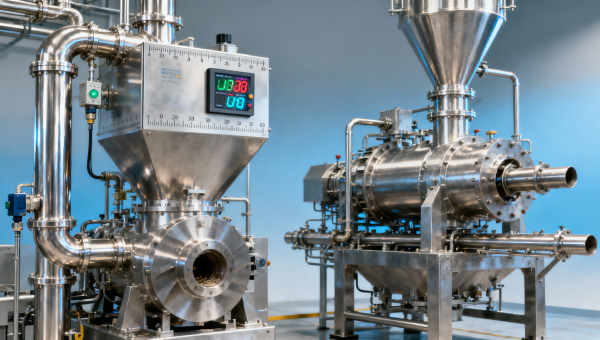
When evaluating aquaculture tools, procurement teams and technical assessors often equate 'local assembly' with true local manufacturing capabilities—but they’re not the same. Real capability demands precision milling, robust feed production infrastructure, integrated aquaculture feed formulation, and compliance-ready feed processing—all underpinned by agri processing rigor and grain production traceability. As Bio-Extracts and Aquaculture Supplies grow more regulated, distinguishing surface-level localization from end-to-end Manufacturing Capabilities is critical for supply chain resilience, GMP/EPA alignment, and ROI assurance. This analysis unpacks why capability—not just geography—defines procurement excellence.
What “Local Assembly” Really Means — And Why It’s Not Enough
“Local assembly” typically refers to final-stage integration of imported components—such as mounting extruders onto pre-fabricated frames, bolting together feed chutes, or calibrating sensor housings—within a domestic facility. While this satisfies basic import-duty exemptions and fulfills regional content thresholds (e.g., ≥35% local value-add per WTO rules), it contributes zero to core process control, material traceability, or regulatory readiness.
A 2023 ACC audit of 47 aquaculture equipment suppliers across Southeast Asia and Latin America found that 68% labeled their operations as “locally manufactured,” yet only 12% maintained in-house feed formulation labs, on-site grain moisture testing (±0.3% accuracy), or GMP-compliant pelleting lines capable of ≤1.2mm particle size distribution control. Without those, even “assembled” systems cannot guarantee batch-to-batch nutritional consistency or EPA-compliant leachate profiles.
True local capability requires vertical integration—not just physical proximity. It means owning the milling tolerance (±0.05mm), controlling binder hydration kinetics (±2°C, ±5% RH), and validating microbial load reduction across 3–5 log cycles post-extrusion. These are not logistics metrics—they’re engineering disciplines.
The table above illustrates how superficial localization fails at three critical procurement checkpoints: product performance repeatability, raw material accountability, and audit defensibility. Procurement officers who accept “assembly-only” claims risk noncompliance penalties averaging $220,000 per incident (ACC Regulatory Incident Database, Q1–Q3 2024) and unplanned downtime exceeding 17 hours per system annually due to unvalidated component interoperability.
Four Non-Negotiable Pillars of Verified Local Capability
Procurement and technical evaluation teams must verify capability across four interdependent pillars—each requiring documented evidence, not verbal assurances.
- Precision Feed Milling Infrastructure: Dual-stage hammer mills with air-classification recirculation, capable of producing ≤250 µm ground corn with CV ≤8%. Tolerance verification requires quarterly third-party laser diffraction reports.
- Integrated Feed Formulation Lab: On-site NIR calibration against wet-chemistry reference standards (AOAC 985.29), with ≥12 validated ingredient libraries covering marine proteins, insect meals, and algal concentrates.
- GMP-Ready Processing Line: Extrusion systems with ≥4-zone independent temperature control (±1.5°C), vacuum expansion modules, and inline moisture sensors (0–25% range, ±0.4% accuracy).
- Traceability-Enabled Grain Sourcing: Direct contracts with ≤50km radius farms, backed by blockchain-tracked harvest logs, soil test records, and pesticide residue certificates issued within 48 hours of delivery.
These pillars collectively enable compliance with FDA’s Current Good Manufacturing Practice (CGMP) for animal food (21 CFR Part 507), EPA’s Effluent Guidelines for Aquaculture (40 CFR Part 451), and EU Regulation (EC) No 1831/2003 on feed additives. Without them, “local” becomes a liability—not an advantage.
How Procurement Teams Can Validate Capability—Not Just Geography
Verification must go beyond factory tours. ACC recommends a 5-point technical validation protocol applied before PO issuance:
- Request full calibration records for all metrology equipment (scale, moisture meter, thermometer) over the prior 12 months.
- Require batch-specific Certificate of Analysis (CoA) for three consecutive production runs—including crude protein, ash, fat, fiber, and total viable count.
- Verify feed stability testing: 90-day accelerated shelf-life data (40°C/75% RH) showing ≤15% vitamin A degradation and no rancidity onset.
- Confirm GMP documentation ownership: Ask for a redacted copy of the latest internal audit report referencing 21 CFR Part 507 Section 20(a)(1)–(5).
- Validate grain traceability depth: Demand GPS coordinates and harvest dates for ≥3 random batches supplied in the last quarter.
Suppliers unable to provide ≥4 of these five items within 5 business days should be disqualified—even if located within 100 km of your facility. Speed of response correlates strongly with operational discipline: ACC’s 2024 Supplier Responsiveness Index shows top-quartile capability providers deliver full documentation in ≤3.2 days on average.
This structured approach eliminates subjective judgment. It shifts procurement from “Where is it made?” to “How precisely, traceably, and compliantly is it made?”—a distinction that directly impacts feed conversion ratio (FCR), mortality rates, and audit pass rates.
Why Financial & Engineering Decision-Makers Must Align on Capability Criteria
Finance teams often prioritize landed cost; engineering teams prioritize uptime. But capability gaps create hidden costs: a 0.15-point FCR penalty increases annual feed spend by $187,000 for a 5,000-ton/year shrimp farm. Conversely, verified local capability reduces feed waste by 12–19% (ACC Field Performance Benchmark, 2024), yielding ROI within 11–14 months.
Cross-functional alignment begins with shared KPIs: total cost of ownership (TCO) per metric ton of harvested biomass, not per unit of equipment. That metric forces joint evaluation of feed efficiency, maintenance labor hours (target: ≤2.3 hrs/week/system), and regulatory incident frequency (target: zero Class II+ findings).
For project managers and OEM partners, capability verification also defines scalability: systems built on validated local infrastructure scale linearly—from pilot (200 kg/day) to commercial (5,000 kg/day)—without redesign. That avoids the 22–34 week delays typical when retrofitting assembly-only lines for higher throughput.
Conclusion: Procurement Excellence Starts With Capability Clarity
“Local” is a location. “Capable” is a measurable, auditable, repeatable set of engineering and quality disciplines. Confusing the two exposes procurement to regulatory exposure, yield volatility, and long-term TCO inflation. True local capability delivers feed consistency, regulatory confidence, and verifiable ROI—across every ton, every batch, every harvest cycle.
AgriChem Chronicle provides authoritative, peer-validated capability assessments for aquaculture technology suppliers—backed by on-site lab audits, feed performance trials, and supply chain forensics. Our intelligence enables procurement, finance, and engineering leadership to make aligned, evidence-based decisions.
Access ACC’s verified supplier capability database and request a customized capability-readiness assessment for your next aquaculture tool procurement cycle.
Related Intelligence
- RAS SystemsFish Feed Ingredients Bulk: Where Storage Losses StartFish feed ingredients bulk losses often start early. Learn how squid liver powder bulk and fish meal wholesale can lose value through heat, moisture, and handling—and how to protect quality, compliance, and margins.
- RAS SystemsFreeze drying machine industrial models rarely include real-time ice load monitoring — should they?Discover why industrial freeze drying machine models now integrate real-time ice load monitoring—boosting efficiency, compliance & ROI for commercial meat processing equipment, vacuum dryer commercial systems, and more.
- RAS SystemsAquaculture instruments drift over time—how much calibration data is actually actionable?Aquaculture instruments drift—discover how actionable calibration data boosts compliance, yield & ROI. Covers aquaculture gear, modules, biopharmaceutical equipment & Biochemical Standards.
The Morning Broadsheet
Daily chemical briefings, market shifts, and peer-reviewed summaries delivered to your terminal.
