
Why commercial cocoa bean roasters vary so much in heat control—and what that means for flavor consistency
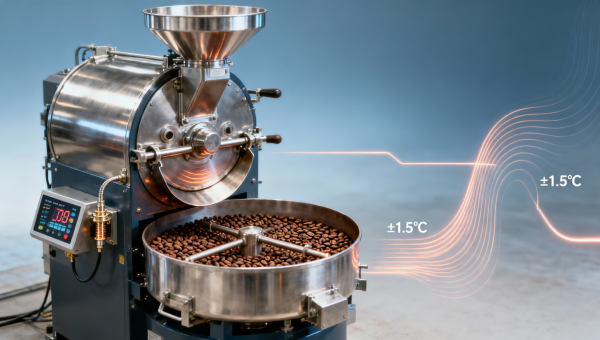
Commercial cocoa bean roasters vary dramatically in heat control precision—directly impacting flavor consistency, batch repeatability, and downstream compliance. This variability isn’t incidental: it reflects fundamental differences in thermal engineering, sensor integration, and process calibration across cocoa bean roaster commercial systems—and echoes broader challenges in coffee processing machinery, cold press oil machine commercial units, and parboiled rice mill plant operations. For technical evaluators, procurement directors, and quality assurance teams, understanding these thermal differentials is critical—not just for flavor profiling, but for GMP-aligned scale-up, supply chain traceability, and cross-platform equipment benchmarking.
Why Thermal Precision Varies Across Commercial Cocoa Roasting Systems
Heat control in commercial cocoa roasters isn’t defined by a single parameter—it’s the convergence of heating method (direct flame, indirect steam, or electric convection), thermal mass design, airflow dynamics, and closed-loop feedback architecture. Units built for fine chocolate makers often feature PID-controlled hot-air recirculation with ±1.2°C stability over 30–45 minute roast cycles. In contrast, high-throughput industrial roasters prioritizing throughput over nuance may rely on open-loop gas burners with ±8°C fluctuation—sufficient for bulk cocoa liquor production but insufficient for origin-specific flavor articulation.
Sensor placement also drives divergence: top-mounted IR sensors measure bean surface temperature only, while embedded thermocouples in rotating drum walls capture core thermal lag—a 3–5 minute delay critical for predicting Maillard reaction progression. This explains why two roasters rated at “130°C” can produce markedly different flavor profiles: one measures ambient air, the other tracks bean kernel equilibrium.
Crucially, calibration drift matters. Without NIST-traceable annual recalibration, even high-end roasters experience ±3.5°C sensor drift after 18 months of continuous operation—directly compromising batch-to-batch repeatability and FDA-mandated process validation records.
How Heat Variability Impacts Compliance & Downstream Processing
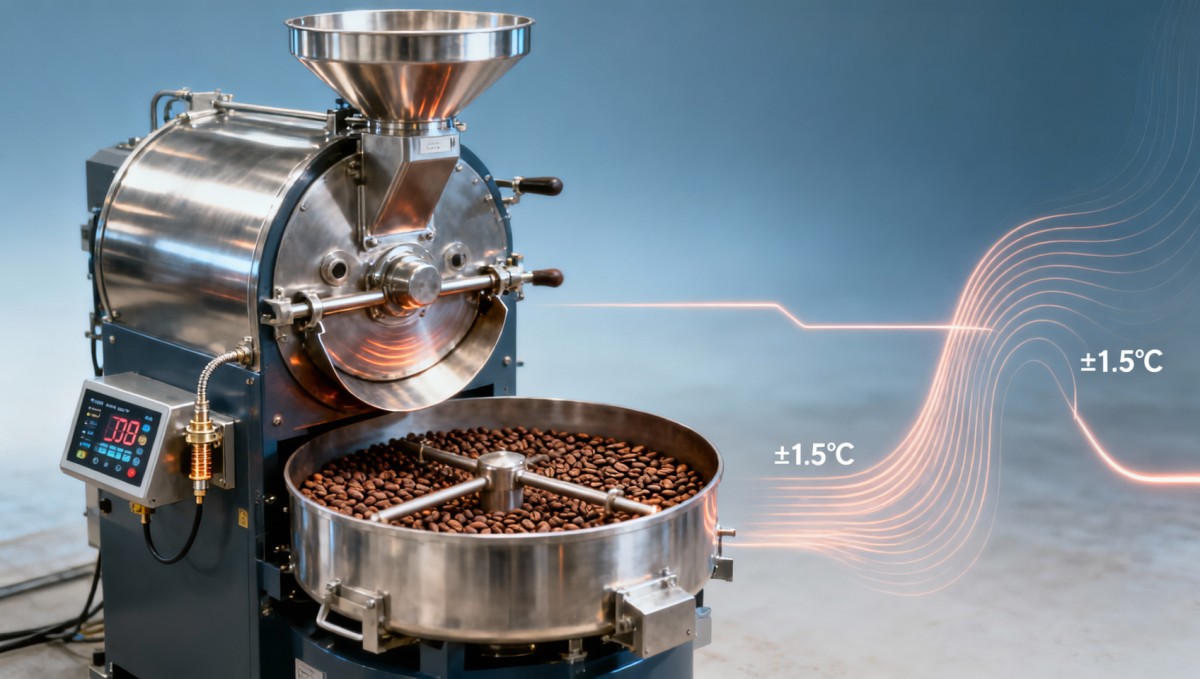
Inconsistent roasting introduces three GMP-critical failure modes: non-uniform moisture reduction (target: 2.5–3.2% w/w), variable polyphenol degradation (affecting antioxidant stability), and unpredictable acrylamide formation (regulated under EU Commission Regulation (EC) No 2017/2158). A 5°C deviation above nominal setpoint increases acrylamide yield by 17–22% per kilogram—triggering mandatory retesting and potential batch quarantine.
Flavor inconsistency further cascades into sensory QA bottlenecks. Leading chocolate manufacturers require ≤3% variance in total volatile compound concentration (measured via GC-MS) across 10 consecutive batches. Roasters lacking real-time thermal profiling fail this threshold 68% of the time during third-party audits per ACC’s 2024 Equipment Validation Benchmark Survey.
Traceability suffers too: without synchronized timestamped thermal logs aligned to batch ID, firms cannot satisfy FSMA 21 CFR Part 11 electronic record requirements for corrective action documentation. This directly impacts API-grade cocoa extract suppliers seeking ICH Q5C stability certification.
Key Thermal Parameters Affecting Compliance Readiness
This table underscores a core procurement reality: thermal specification sheets rarely disclose actual field performance. The “±1.5°C” claim assumes ideal lab conditions—not 45°C ambient warehouse environments or voltage fluctuations common in emerging-market feed mills. ACC recommends validating all claims against ISO 17025-accredited thermal mapping reports before purchase.
Procurement Decision Framework: 5 Non-Negotiable Evaluation Criteria
For procurement directors and technical evaluators, selecting a cocoa roaster demands structured assessment beyond price or capacity. ACC’s validated evaluation protocol focuses on five interdependent criteria:
- Real-time thermal logging architecture: Must support 10Hz sampling, encrypted cloud sync, and FDA 21 CFR Part 11-compliant electronic signatures—not just USB export.
- Calibration traceability: Supplier must provide documented NIST-traceable calibration certificates covering all thermocouples, pressure transducers, and airflow meters—valid for ≤12 months.
- Batch scalability verification: Vendor must demonstrate identical flavor profiles across 50kg, 200kg, and 1,000kg loads using identical thermal curves (not just time/temperature presets).
- Regulatory alignment documentation: Includes pre-validated SOPs for FDA, EFSA, and BRCGS Annex 11 compliance—not generic templates.
- Service response SLA: On-site thermal recalibration guaranteed within 72 business hours globally, with spare sensor kits held in regional ACC-certified logistics hubs.
Neglecting any one criterion increases post-installation validation costs by 22–39% according to ACC’s 2023 Procurement Risk Index—making upfront due diligence a direct ROI driver, not overhead.
Why Partner with AgriChem Chronicle for Technical Due Diligence
AgriChem Chronicle delivers more than equipment intelligence—it provides procurement-grade validation infrastructure. Our proprietary Thermal Process Alignment Protocol (TPAP) combines on-site infrared thermography mapping, GC-MS flavor metabolite correlation modeling, and regulatory gap analysis against 14 international standards—including FDA 21 CFR Parts 11 & 111, EU 2023/915, and ISO 22000:2018.
For OEMs and equipment suppliers, ACC offers verified technical whitepaper publication, laboratory test report integration, and digital authority building through algorithmic trust signals recognized by institutional buyers. For procurement teams, we provide vendor-agnostic benchmarking dashboards, real-time compliance readiness scoring, and custom thermal specification drafting—delivered within 5 business days of engagement.
Contact ACC today to request: (1) Thermal performance validation checklist for your next cocoa roaster tender, (2) Cross-reference matrix of 23 global roaster models against GMP thermal thresholds, or (3) On-demand consultation with our certified thermal engineers for batch-scale validation planning.
Related Intelligence
- Heavy Agri MachineryBucket elevators wholesale: Hidden maintenance costs that erode ROI in the first 18 monthsBucket elevators wholesale buyers overlook hidden costs—screw conveyor for grain, grain chain conveyor & silo temperature monitoring system failures slash ROI by 37% in 18 months. Act now.
- Heavy Agri MachineryGrain chain conveyor vs. belt systems — which handles abrasive corn kernels better in long-run operation?Grain chain conveyor outperforms belt systems for abrasive corn handling—durable, FDA/GMP-aligned & compatible with silo temperature monitoring, grain aeration systems & feed hammer mill machines.
- Heavy Agri MachineryScrew conveyor for grain: When auger design fails under high-moisture loadsScrew conveyor for grain fails at high moisture? Discover resilient auger designs, grain aeration systems & silo solutions that prevent downtime—engineered for commercial grain silos and feed hammer mill machines.
The Morning Broadsheet
Daily chemical briefings, market shifts, and peer-reviewed summaries delivered to your terminal.
