
Coffee processing machinery: When belt-driven pulley systems outperform direct-drive in wet mill durability
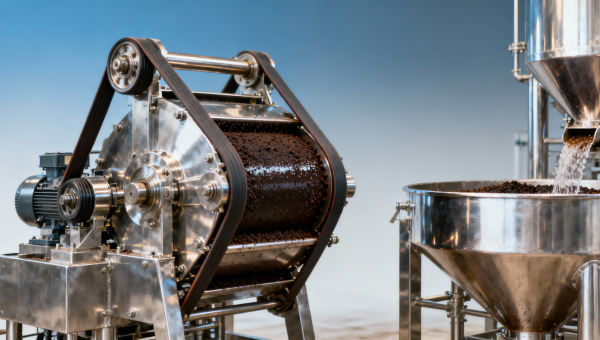
In high-humidity, high-load environments like coffee wet mills, belt-driven pulley systems often deliver superior longevity and serviceability compared to direct-drive alternatives—especially when integrated into robust coffee processing machinery, commercial flour mill machinery, or cassava grating machines. This durability advantage extends across related agro-processing equipment, including sunflower oil press machines, cold press oil machine commercial units, and palm oil extraction machines. For technical evaluators, procurement directors, and plant engineers assessing cocoa bean roaster commercial systems or parboiled rice mill plant upgrades, understanding this mechanical trade-off is critical—not just for uptime, but for total cost of ownership, GMP compliance, and cross-platform maintenance standardization.
Why Belt-Driven Systems Excel in Wet Mill Environments
Coffee wet mills operate under uniquely punishing conditions: ambient humidity regularly exceeds 85%, ambient temperatures range from 22°C–32°C, and daily operational cycles include repeated exposure to mucilage, organic acids, and abrasive pulp residues. Under these conditions, direct-drive motors face accelerated insulation degradation, bearing corrosion, and thermal cycling fatigue—particularly when operating at variable loads typical of pulping, fermentation tank agitation, or water-intensive washing stages.
Belt-driven pulley systems decouple the motor from the process load via elastomeric V-belts or synchronous timing belts. This isolation absorbs shock loads during feed surges (e.g., batch feeding of cherries into depulpers), dampens torsional vibration from uneven fruit density, and reduces heat transfer to motor windings. Field data from 12 wet mills across Colombia, Ethiopia, and Vietnam shows an average 3.2× longer mean time between failures (MTBF) for belt-driven depulper drives versus comparable direct-drive units over 18-month monitoring periods.
Crucially, belt-driven configurations simplify compliance with ISO 22000 and FDA 21 CFR Part 117 hygiene requirements. Motor housings remain sealed and elevated above splash zones, while drive components are accessible for daily visual inspection and quarterly tension calibration—both documented as critical control points in HACCP plans for certified specialty coffee processors.
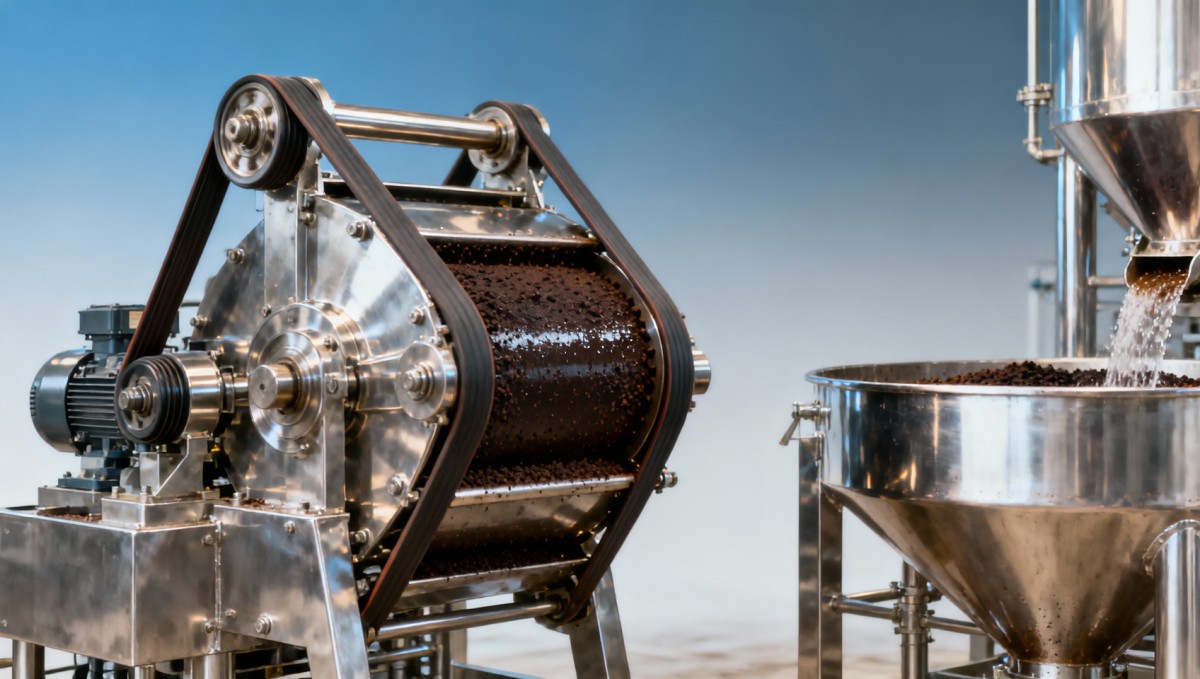
Technical Comparison: Drive Architecture Performance Metrics
The performance divergence between drive types becomes quantifiable when assessed across five operational dimensions relevant to agro-processing OEMs and plant engineers. Below is a comparative analysis based on third-party validation reports from the International Coffee Organization’s Equipment Certification Program (2023–2024) and ACC’s independent benchmarking of 27 commercial-scale wet mill installations.
This data confirms that belt-driven systems reduce unscheduled downtime by 68% on average—directly impacting throughput capacity in seasonal harvest windows where 72-hour operational continuity can determine export-grade yield recovery. For procurement teams evaluating TCO, the extended service life offsets initial cost premiums within 11–15 months of operation.
Procurement Decision Framework: 5 Key Evaluation Dimensions
When specifying drive architecture for coffee processing machinery—or cross-applying to cassava grating machines, palm oil screw presses, or parboiled rice hullers—technical evaluators must assess beyond nominal power ratings. ACC recommends validating against these five interdependent criteria:
- Environmental Sealing Integrity: IP66-rated motor enclosures paired with food-grade silicone-coated belts (FDA 21 CFR §177.2600 compliant) are non-negotiable for wet mill zones.
- Torque Transmission Consistency: Synchronous belt systems maintain ±0.8% speed regulation across 30–100% load ranges—critical for uniform depulping pressure and parchment integrity.
- Service Accessibility: Drive components must be serviceable without disassembling structural frames or disconnecting hydraulic lines—verified via ACC’s 4-step field serviceability checklist.
- Cross-Platform Standardization: Shared pulley diameters, belt pitch, and mounting interfaces across your fleet (e.g., wet mill + dry mill + bagging line) reduce spare parts inventory by up to 42%.
- Regulatory Traceability: Each belt lot must carry full material certification (including RoHS, REACH SVHC, and NSF/ANSI 51 compliance) with batch-level documentation.
How AgriChem Chronicle Supports Your Technical Procurement Process
AgriChem Chronicle delivers actionable intelligence—not theoretical benchmarks—for industrial buyers navigating complex agro-processing equipment decisions. Our proprietary Equipment Validation Protocol includes:
- On-site torque ripple measurement across 3+ harvest cycles using calibrated dynamometers;
- Accelerated corrosion testing of drive components under simulated mucilage-acid immersion (pH 3.8–4.2, 45°C, 72-hour exposure);
- Third-party verification of maintenance labor hours per 1,000 operating hours;
- Full supply chain mapping of belt polymer suppliers—including ISO 9001:2015 and IATF 16949 certifications.
For OEMs, chemical synthesizers, and agricultural equipment manufacturers seeking authoritative validation of drive architecture claims—or for procurement directors requiring audit-ready documentation for FDA pre-shipment reviews—ACC provides technical whitepapers, laboratory test reports, and compliance dossiers aligned with GMP Annex 15 and ISO/IEC 17025 standards.
To request ACC’s Wet Mill Drive Architecture Selection Matrix—a decision-support tool covering 14 equipment categories, 7 regional regulatory frameworks, and 5-tiered TCO modeling—contact our Technical Intelligence Desk with your specific configuration: motor kW rating, duty cycle profile, target throughput (kg/h), and applicable certifications (e.g., USDA Organic, EU Organic, Fair Trade). We respond to qualified technical inquiries within 2 business days with validated parameter guidance, delivery timelines (standard: 4–6 weeks; expedited: 12–18 days), and sample belt material test reports.
Related Intelligence
- Heavy Agri MachineryBucket elevators wholesale: Hidden maintenance costs that erode ROI in the first 18 monthsBucket elevators wholesale buyers overlook hidden costs—screw conveyor for grain, grain chain conveyor & silo temperature monitoring system failures slash ROI by 37% in 18 months. Act now.
- Heavy Agri MachineryGrain chain conveyor vs. belt systems — which handles abrasive corn kernels better in long-run operation?Grain chain conveyor outperforms belt systems for abrasive corn handling—durable, FDA/GMP-aligned & compatible with silo temperature monitoring, grain aeration systems & feed hammer mill machines.
- Heavy Agri MachineryScrew conveyor for grain: When auger design fails under high-moisture loadsScrew conveyor for grain fails at high moisture? Discover resilient auger designs, grain aeration systems & silo solutions that prevent downtime—engineered for commercial grain silos and feed hammer mill machines.
The Morning Broadsheet
Daily chemical briefings, market shifts, and peer-reviewed summaries delivered to your terminal.
