

The Authority in Global Agricultural Chemistry & Bio-Resources
Which Agri & Forestry machinery specifications matter in real use?
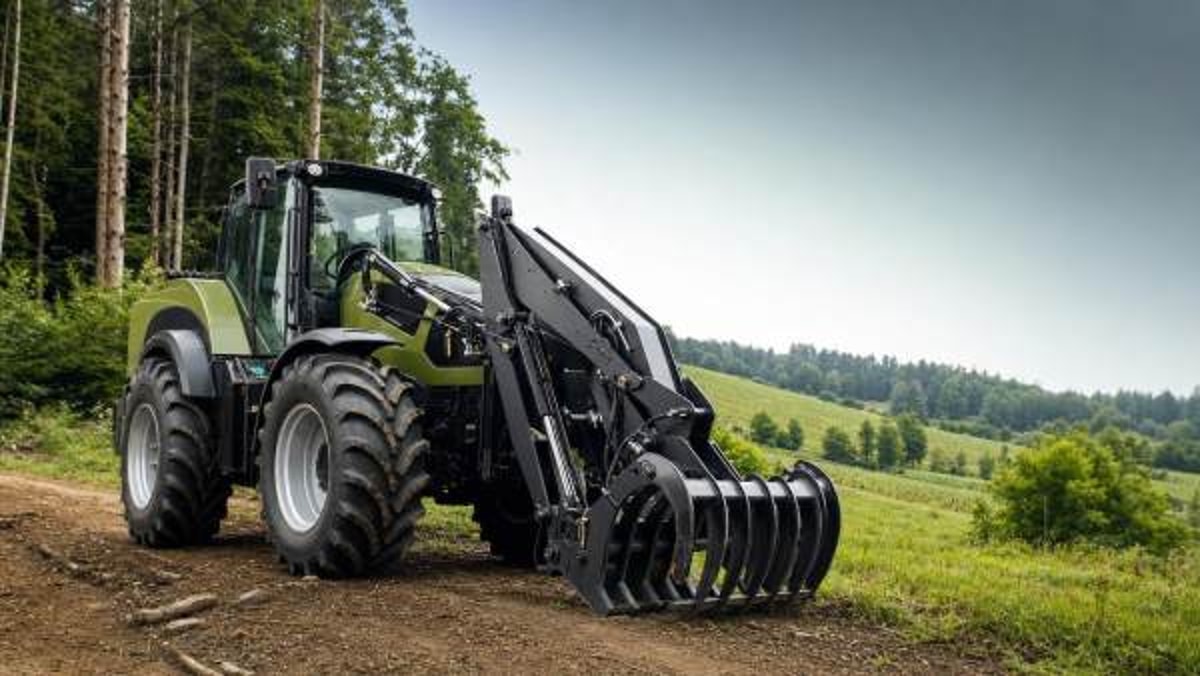
When evaluating equipment for fieldwork, transport, or timber operations, Agri & Forestry machinery specifications often look impressive on paper but vary sharply in real-world value. For buyers and technical researchers, the key is understanding which ratings directly affect efficiency, compliance, durability, and operating cost. This introduction explores how to read specifications beyond marketing language and focus on what truly matters in practical use.
Why application context changes the value of Agri & Forestry machinery specifications
The same machine can perform brilliantly in one environment and underdeliver in another, even when its brochure appears competitive. That is why Agri & Forestry machinery specifications should never be read in isolation. A row-crop farm, a mixed-terrain orchard, a contractor moving bales on public roads, and a forestry operator handling steep woodland all face different duty cycles, loads, compliance burdens, and maintenance realities.
For information researchers, the most useful approach is to connect each specification to a practical outcome: does it improve traction in wet soil, reduce fuel burn during transport, support hydraulic implements, survive dust-heavy harvesting, or meet local road and emissions standards? A high horsepower number, for example, may matter less than torque rise, cooling capacity, hydraulic flow stability, axle strength, and ease of service access in continuous use.
This is especially relevant in cross-border sourcing and industrial procurement. Published ratings may follow different testing methods, optional configurations, or region-specific standards. In real use, procurement teams need to compare not only headline performance but also safety features, component sourcing, operator ergonomics, uptime support, spare-parts lead time, and compatibility with attachments already in service.
Core specification groups that matter across most scenarios
Before splitting by use case, it helps to group Agri & Forestry machinery specifications into functional categories. This makes it easier to judge which figures deserve attention and which are mostly marketing shorthand.
- Powertrain specifications: engine horsepower, PTO horsepower, torque curve, transmission type, gear range, and travel speed.
- Hydraulic specifications: total flow, pressure, number of remotes, load-sensing capability, and pump response under simultaneous functions.
- Mobility and ground interaction: tire options, track system, ground clearance, turning radius, wheelbase, axle load rating, and braking performance.
- Structural and lifting capacity: hitch lift, front loader rating, drawbar pull, frame strength, boom reach, crane capacity, and stability under uneven loads.
- Durability and serviceability: filtration, cooling package design, ingress protection, grease-point access, maintenance interval, and onboard diagnostics.
- Compliance and operator protection: ROPS/FOPS, lighting, emissions stage, noise level, guarding, road-homologation features, and emergency shutdown systems.
These categories become more meaningful once tied to a specific operating scenario. The priority order changes according to crop system, haul distance, terrain, payload variability, and labor skill level.
Scenario comparison: which specifications rise to the top
The table below shows how Agri & Forestry machinery specifications should be weighted differently depending on use case. This helps researchers avoid overvaluing a feature that looks strong on paper but contributes little in the intended workflow.
In practice, good selection starts when researchers stop asking which machine has the biggest numbers and start asking which Agri & Forestry machinery specifications match the actual task profile.
Field crop operations: power delivery matters more than peak output
In broadacre farming, machinery often runs for long hours at sustained load. Here, the most relevant Agri & Forestry machinery specifications are not simply maximum horsepower figures but the quality of power delivery. Buyers should examine engine torque characteristics, PTO output under working speed, transmission efficiency, cooling capacity, and the machine’s ability to maintain hydraulic function while pulling mounted or trailed equipment.
A tractor with strong peak horsepower but weak torque rise may struggle in variable soil resistance. Similarly, if hydraulic flow drops when steering, lifting, and seeding functions operate together, field productivity suffers. In this scenario, ballast options and axle load distribution also matter because usable power depends on traction rather than engine rating alone.
Researchers comparing machines for tillage, planting, or fertilization should also confirm implement matching. Hitch category, lift capacity at the correct distance behind the linkage, PTO type, and remote valve configuration often determine whether an existing implement fleet can be used efficiently.
Orchards, vineyards, and specialty crops: compact dimensions can outweigh raw strength
Specialty crop environments create a very different priority set. Agri & Forestry machinery specifications for orchard and vineyard work should center on width, height, turning circle, under-branch clearance, operator visibility, cooling package resilience, and low-speed maneuverability. A machine that performs well in open fields may be unsuitable if it clips canopy, compacts root zones, or requires repeated repositioning in narrow rows.
Hydraulic performance is still important, especially where sprayers, pruners, platforms, or mulchers are used, but compact packaging and thermal stability often become equally critical. Dust management, radiator screen design, and ease of daily cleaning directly affect uptime in these environments. If a machine will be shared across spraying, mowing, and hauling tasks, quick attachment changes and intuitive controls can create more real value than higher top-end specifications.
Transport-heavy use: safety, braking, and driveline efficiency deserve closer review
Many buyers underestimate how often agricultural machines spend time moving between fields, storages, depots, and public roads. In transport-led operations, the most useful Agri & Forestry machinery specifications include braking performance under load, transmission spacing, legal road speed, suspension behavior, trailer compatibility, lighting package, and operator comfort for repetitive travel.
This scenario is especially important for contractors and larger farms where fuel use, turnaround time, and road safety influence profitability. A machine optimized for draft work may consume too much fuel or create operator fatigue if much of the duty cycle involves transport. Reviewing tire speed ratings, turning stability with trailers, and engine speed at cruising velocity often reveals more than a basic horsepower comparison.
Compliance should also be verified early. Depending on market, transport use may require road-homologated lighting, braking systems, mirrors, warning devices, and emissions conformity that differ from off-road assumptions.
Forestry operations: protection, stability, and hydraulic endurance are decisive
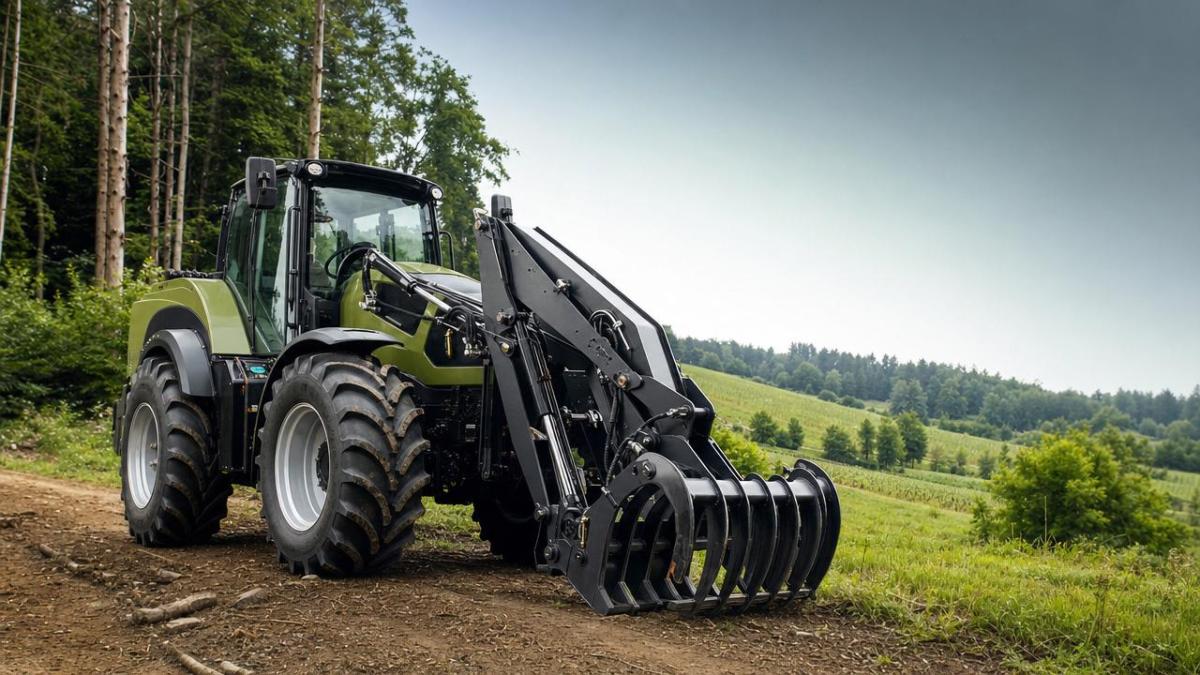
Forestry is where misunderstanding Agri & Forestry machinery specifications can become expensive very quickly. Machines working in timber extraction, forwarding, chipping, or log loading face impact risk, uneven terrain, branch intrusion, mud, moisture, and long hydraulic duty cycles. In this setting, structural protection is not an accessory; it is a core operational requirement.
Key specifications include reinforced guarding, underbody shielding, hose routing protection, cooling package protection against debris, crane lift capacity across reach positions, articulation durability, slope stability, and tire or track suitability for low ground disturbance. Cab protection standards such as ROPS and FOPS carry particular weight where falling object and rollover risk are material.
Hydraulic system performance should be studied carefully. For grapples, harvest heads, cranes, and winches, steady flow under heat stress matters more than a nominal flow figure quoted under ideal conditions. Maintenance access is another high-value factor: if filters, coolers, and wear points are difficult to service, uptime drops sharply in remote forestry conditions.
How priorities change by buyer type and operating scale
The right interpretation of Agri & Forestry machinery specifications also depends on who is buying. A family farm, a regional contractor, an agro-industrial processor, and a timber logistics operator may study the same model for very different reasons.
- Smaller owner-operators often prioritize versatility, easy servicing, and attachment compatibility because one machine may cover many jobs.
- Contractors usually focus on uptime, fuel economy, transport efficiency, and operator productivity because machine hours directly drive revenue.
- Larger enterprises place stronger weight on telematics, fleet standardization, compliance documentation, and parts supply continuity across regions.
- Institutional buyers and procurement researchers may need verified testing standards, supplier auditability, and lifecycle cost evidence before shortlisting suppliers.
This is why a technically “better” machine can still be a poor fit. If the service network is thin, electronic systems are too specialized for local technicians, or critical components have long replenishment times, real-world ownership risk may outweigh performance advantages.
Common misreads when comparing Agri & Forestry machinery specifications
Several recurring errors distort equipment evaluation. First, buyers often compare gross engine horsepower across brands without checking PTO power, usable hydraulic power, or power loss through transmission setup. Second, lift capacity is sometimes quoted at a point that does not reflect actual implement geometry or safe operating reach.
Third, dimensions are reviewed without considering turning space, canopy restrictions, trailer loading, or legal road width. Fourth, emission-compliance labels may be noted, but the operational impact of DEF systems, regeneration cycles, or fuel quality sensitivity is overlooked. Fifth, maintenance intervals can appear similar while actual service accessibility differs sharply, changing labor time and downtime cost.
For forestry and rough-terrain applications, another frequent mistake is assuming agricultural design protection equals forestry-duty protection. It rarely does. Proper guarding, hydraulic hose shielding, and cab protection should be verified directly rather than inferred from general marketing descriptions.
A practical checklist for scenario-based selection
To turn research into a shortlisting method, teams should review Agri & Forestry machinery specifications in the order below.
- Define the dominant duty cycle: draft work, transport, loader work, forestry handling, or mixed use.
- List mandatory limits: row width, trailer law, slope angle, emissions stage, attachment interface, operator protection, and local service reach.
- Match specifications to the real bottleneck: traction, hydraulic speed, maneuverability, stability, cooling, or serviceability.
- Request test conditions behind published ratings, especially for lift, flow, fuel use, and transport claims.
- Estimate lifecycle cost, not just purchase cost, including downtime risk, consumables, and parts availability.
FAQ: what researchers usually ask first
Is horsepower the most important Agri & Forestry machinery specification?
Not by itself. Horsepower matters, but usable traction, torque delivery, hydraulic performance, and transmission efficiency often decide whether that power becomes productive output.
Which specifications matter most for attachment-heavy operations?
Hydraulic flow and pressure, remote valve configuration, hitch or coupler compatibility, lift capacity at working geometry, and control precision are usually the most relevant.
What should be checked first for forestry use?
Start with protection, stability, hydraulic endurance, and cab safety standards. Forestry environments expose weaknesses that may not appear in general agricultural operation.
Final takeaway: judge specifications by task fit, not by brochure size
The real value of Agri & Forestry machinery specifications emerges only when they are tied to operating scenario, buyer profile, and business objective. Open-field users need efficient power delivery and implement matching. Specialty crop operators need compact maneuverability and cooling resilience. Transport-heavy fleets need road safety and driveline efficiency. Forestry teams need protection, stability, and hydraulic durability above all.
For technical researchers and procurement teams, the best next step is to build a scenario-based comparison sheet before contacting suppliers. That approach makes it easier to separate high-impact specifications from headline figures, reduce selection risk, and identify equipment that supports compliance, uptime, and long-term operating value in real use.
Related Intelligence
- Heavy Agri MachineryHow Agri & Forestry machinery manufacturers differ after deliveryAgri & Forestry machinery manufacturers differ most after delivery—compare parts support, technical service, training, and compliance to reduce downtime and total ownership cost.
- Heavy Agri MachineryWhich Agri & Forestry machinery specifications matter in real use?Agri & Forestry machinery specifications explained for real use: learn which ratings truly affect efficiency, safety, durability, and cost before you compare or buy.
- Heavy Agri MachineryRound baler machine pickup width vs field efficiencyRound baler machine pickup width affects field efficiency, fuel use, and bale quality. Learn how to match width to windrows, crop conditions, and tractor capacity.
The Morning Broadsheet
Daily chemical briefings, market shifts, and peer-reviewed summaries delivered to your terminal.
