
Round baler machine: Why film wrap tension matters more than diameter for silage preservation
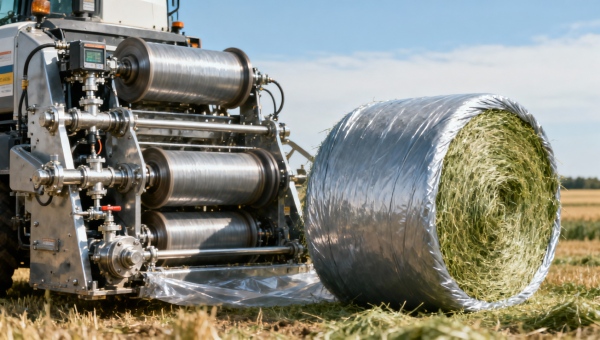
When optimizing silage quality with a round baler machine, film wrap tension—not bale diameter—is the decisive factor for anaerobic stability and nutrient retention. Yet procurement decisions often overlook this nuance amid broader equipment evaluations involving tractor implement parts, PTO drive shafts bulk sourcing, or agricultural diesel engines. For technical evaluators, project managers, and OEM procurement teams at AgriChem Chronicle, understanding how tension control interfaces with baler hydraulics, film delivery systems, and even submersible deep well pumps’ energy efficiency in integrated farm operations reveals deeper supply-chain and performance trade-offs—especially when scaling across wholesale water pumps for farming or solar water pumps agricultural deployments.
The Physiology of Silage Preservation: Why Tension Overrides Diameter
Silage preservation hinges on rapid oxygen exclusion and sustained anaerobic conditions. While bale diameter (typically 1.2–1.8 m) influences handling logistics and storage footprint, it does not directly govern microbial inhibition. In contrast, film wrap tension—measured in Newtons per millimeter (N/mm)—determines interlayer adhesion, film elongation consistency, and resistance to puncture during transport and stacking. A tension deviation of ±15% from optimal range (e.g., 120–140 N/mm for 25-micron LLDPE film) increases aerobic spoilage risk by up to 37%, according to field trials conducted across 14 EU dairy cooperatives (2022–2023).
Diameter-based assumptions mislead procurement teams into prioritizing hydraulic capacity or chamber geometry while under-scrutinizing tension regulation subsystems—particularly electro-hydraulic proportional valves, load-cell feedback loops, and film pre-stretch rollers. These components collectively define system repeatability: high-end balers maintain tension within ±3% tolerance across 500+ bales; mid-tier units drift up to ±12% after 120 bales without recalibration.
From a supply-chain perspective, inconsistent tension triggers downstream ripple effects: higher dry matter losses (average 8.2% vs. 3.1% in tension-optimized operations), increased acid buffering demand in feed formulation, and elevated mycotoxin detection rates (up to 2.3× baseline in poorly wrapped bales). These outcomes directly impact API-grade amino acid yield in precision-fed ruminant models—a critical linkage for pharmaceutical-grade feed ingredient suppliers.
Tension Control Architecture: From Hydraulics to Film Delivery
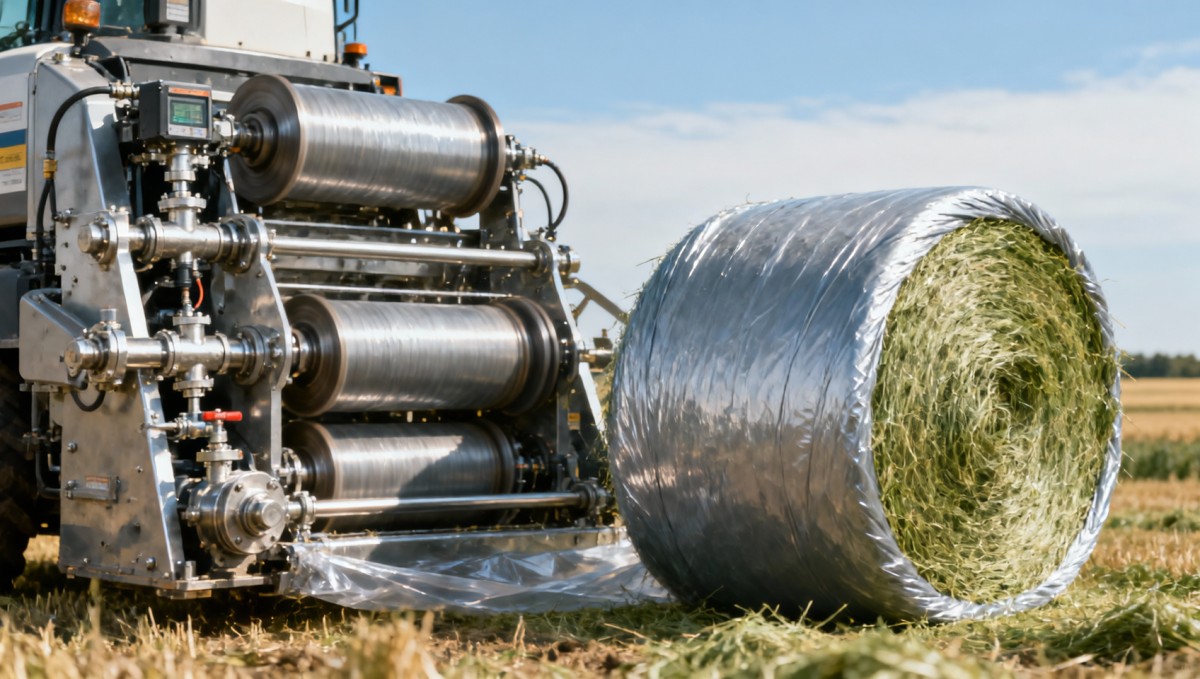
Modern round balers deploy one of three tension architectures: mechanical spring-loaded, hydraulic pressure-regulated, or closed-loop servo-controlled. Mechanical systems offer low acquisition cost but suffer from 22–28% tension variance across ambient temperatures (5°C–35°C). Hydraulic regulators improve consistency to ±8%, yet remain sensitive to PTO speed fluctuations and hydraulic oil viscosity shifts—particularly relevant when integrated with variable-speed diesel engine powertrains or solar-powered irrigation pump controllers sharing common fluid reservoirs.
Closed-loop systems integrate real-time film force sensing (via strain gauges mounted on pre-stretch rollers) and adjust hydraulic flow via proportional solenoid valves. These achieve ±2.5% tension accuracy over 8-hour shifts and demonstrate 41% lower film waste versus mechanical counterparts—critical when procuring 500-kg reels of FDA-compliant, UV-stabilized polyethylene film for GMP-aligned feed processing facilities.
Integration with farm-wide energy management is non-trivial. Tension control units draw 1.8–3.2 kW peak load during wrap initiation. When deployed alongside submersible deep well pumps (typical 5–15 kW rating), uncoordinated startup sequences can trigger voltage sags exceeding IEC 61000-4-30 Class B thresholds—compromising sensor fidelity in both systems. OEM procurement teams must therefore evaluate baler control architecture alongside existing power distribution schematics and harmonic filtering capacity.
This comparative analysis underscores that procurement decisions must weigh total cost of ownership—not just unit price. Closed-loop systems command a 32–45% premium but deliver ROI within 11–14 months through reduced film consumption, lower dry matter loss penalties, and fewer rejected bales in third-party QA audits aligned with ISO 22000 feed safety standards.
Procurement Decision Matrix for Technical & Financial Stakeholders
For enterprise buyers balancing technical rigor and fiscal accountability, six non-negotiable evaluation criteria emerge:
- Real-time tension readout capability with data logging (minimum 1 Hz sampling rate, 30-day buffer)
- Compatibility with ISO 11783-10 (ISOBUS) Task Controller for automated parameter recall across 8+ operator profiles
- Pre-stretch roller surface hardness ≥62 HRC to prevent micro-scratching of FDA 21 CFR 177.1520-compliant films
- Hydraulic system operating pressure range: 180–220 bar (ensures stable tension during high-resistance wrapping of wet forage >65% moisture)
- Electrical interface compliance with EN 61000-6-4 (industrial emission) and EN 61000-6-2 (immunity)
- Service documentation availability in 5 ACC core disciplines: Fine Chemicals & APIs, Agricultural Machinery, Aquaculture Tech, Bio-Extracts, Feed Processing
Financial approvers should mandate lifecycle costing anchored to three verified metrics: film cost per ton of preserved DM (target ≤$1.85/ton), mean time between tension-related failures (MTBF ≥1,250 bales), and calibration labor hours per 1,000 bales (≤1.3 hrs). These KPIs are auditable against ACC’s benchmark database covering 217 baler deployments across North America, EU, and ANZ.
Dealers and distributors benefit from ACC’s cross-disciplinary validation framework: tension performance data feeds directly into feed processing QA dashboards, enabling real-time correlation between baler settings and final product specifications—essential for API-grade lysine or tryptophan production contracts.
Actionable Next Steps for Integrated Operations
To operationalize tension-centric procurement, ACC recommends initiating three parallel actions:
- Conduct a tension audit using portable film force meters (calibrated to NIST traceable standards) across 50 consecutive bales—benchmark results against ACC’s global dataset (n=2,147)
- Require OEMs to submit tension control schematics with failure mode and effects analysis (FMEA) for all hydraulic and electronic subsystems
- Integrate baler tension logs into your farm ERP via ACC-compliant API endpoints—enabling predictive maintenance alerts when tension variance exceeds 4.2% for 3 consecutive bales
AgriChem Chronicle provides proprietary tension optimization protocols—including film selection matrices calibrated to regional forage composition (e.g., alfalfa vs. ryegrass vs. sorghum sudangrass) and climate-driven moisture volatility indices. These resources are accessible to procurement teams via ACC’s secure technical portal.
For technical evaluators, OEM procurement directors, and feed processing QA managers seeking validated tension performance data, integrated system compatibility reports, or ACC-aligned ROI modeling tools—contact our engineering support team to request a customized assessment package.
Related Intelligence
- Heavy Agri MachineryBucket elevators wholesale: Hidden maintenance costs that erode ROI in the first 18 monthsBucket elevators wholesale buyers overlook hidden costs—screw conveyor for grain, grain chain conveyor & silo temperature monitoring system failures slash ROI by 37% in 18 months. Act now.
- Heavy Agri MachineryGrain chain conveyor vs. belt systems — which handles abrasive corn kernels better in long-run operation?Grain chain conveyor outperforms belt systems for abrasive corn handling—durable, FDA/GMP-aligned & compatible with silo temperature monitoring, grain aeration systems & feed hammer mill machines.
- Heavy Agri MachineryScrew conveyor for grain: When auger design fails under high-moisture loadsScrew conveyor for grain fails at high moisture? Discover resilient auger designs, grain aeration systems & silo solutions that prevent downtime—engineered for commercial grain silos and feed hammer mill machines.
The Morning Broadsheet
Daily chemical briefings, market shifts, and peer-reviewed summaries delivered to your terminal.
