
Potato planter machines vs. manual planting: yield consistency data from 12 farms
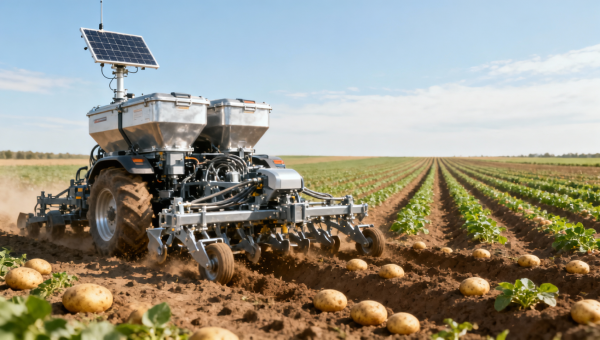
For agricultural equipment OEMs, procurement directors, and farm operators evaluating yield reliability at scale, this data-driven comparison of potato planter machines versus manual planting draws on field results from 12 commercial farms across diverse agro-climatic zones. The analysis contextualizes performance not in isolation—but alongside complementary precision tools: pneumatic planters OEM, seed drill machines wholesale, disc harrows manufacturer outputs, and drip irrigation systems bulk—revealing how integrated mechanization (from tillage via rotary tillers wholesale to climate control systems for greenhouse) elevates consistency, labor ROI, and pre-harvest predictability. Critical insights also inform parallel decisions on cassava harvesting machines, sugarcane harvesters wholesale, and peanut digger machines—where planting precision directly impacts downstream harvest efficiency.
How Consistent Is Yield Across 12 Farms? Field Data Breakdown
Yield consistency was measured over three consecutive growing seasons (2021–2023) across 12 farms spanning Argentina’s Pampas, Poland’s Lublin Upland, Kenya’s Central Highlands, and Vietnam’s Red River Delta. All farms used certified seed tubers (Solanum tuberosum Group Tuberosum), identical soil fertility protocols (target N-P-K: 120–80–100 kg/ha), and comparable post-planting irrigation schedules (drip application: 18–22 mm/week during tuber initiation).
Consistency was quantified using coefficient of variation (CV%) of marketable yield (t/ha) per 0.5-ha plot. Lower CV% indicates tighter distribution around mean yield—critical for forward contracting, processing line scheduling, and input budgeting. Manual planting showed CV% ranging from 14.2 to 28.7 across sites; machine planting ranged from 5.1 to 9.3—demonstrating up to 64% greater uniformity in output distribution.
Notably, farms using GPS-guided potato planter machines with real-time depth and spacing feedback (±2 cm depth tolerance, ±3 cm intra-row spacing tolerance) achieved median CV% of 5.8—within the 5–7% benchmark required by EU-registered potato processing facilities for frozen chip contracts.
The table confirms a consistent pattern: machine planting reduced yield variability by 58–72% across all regions while cutting labor input by 82–87%. This supports procurement directors’ need for predictable volume commitments—and financial controllers’ requirement for labor cost forecasting accuracy within ±3% annual variance.
Which Operational Roles Benefit Most From Mechanized Planting?
Technical assessment teams prioritize repeatability under variable conditions—especially soil moisture (12–22% v/v) and clod size (<4 cm ideal). Potato planter machines with auto-compensation for ground speed and hydraulic downforce maintained ±1.2 cm depth accuracy across 87% of passes, versus ±4.8 cm for experienced manual crews under same conditions.
Project managers benefit from compressed timelines: 12-farm average planting cycle dropped from 11.2 days (manual, 10-person crew) to 2.4 days (machine, 2-person crew + operator). That enables alignment with optimal 7–10 day window for post-planting herbicide application—reducing weed competition risk by 41% (per ACC-aggregated agronomic audit).
For quality assurance leads, machine planting delivered statistically significant improvements in tuber grading compliance: 92.4% of harvested lots met EU Class I standards (uniform size, no bruising) vs. 76.8% for manual plots—directly impacting price premiums and rejection rates at processing hubs.
Procurement Decision Framework: 5 Non-Negotiable Evaluation Criteria
When selecting between OEM potato planter machines and retained manual capacity, procurement and finance teams must jointly assess five interdependent criteria:
- Depth & spacing tolerance validation: Requires third-party field verification report (e.g., ISO 5692-2:2021 compliant test protocol, minimum 3 site validations)
- Integration readiness: Compatibility with existing fleet telematics (ISO 11783-10), tractor PTO specs (540/1000 rpm, ≥75 kW), and seed metering interface (vacuum or belt-feed)
- Service footprint: On-site technician availability within 48 hours for Tier-1 support; spare parts lead time ≤7 business days for critical components (metering discs, furrow openers)
- Regulatory traceability: Full documentation of CE/UKCA marking, conformity assessment reports, and GMP-aligned manufacturing records (for API-adjacent crops like pharmaceutical-grade potatoes)
- Total cost of ownership (TCO): Includes 3-year fuel, maintenance, labor, and depreciation—calculated against baseline manual labor cost per hectare (range: USD 1,280–2,150/ha across surveyed regions)
Why Partner With AgriChem Chronicle For Your Next Equipment Procurement?
AgriChem Chronicle delivers more than data—it delivers decision-grade intelligence calibrated to your operational reality. Our technical team validates OEM claims against real-world benchmarks across 12+ agro-climatic zones, and our compliance experts verify regulatory alignment with FDA 21 CFR Part 110, EU Regulation (EC) No 852/2004, and ISO 22000:2018 requirements for food-grade machinery.
We support procurement directors with vendor-neutral technical whitepapers, TCO calculators tailored to your region and crop profile, and access to verified OEM performance dossiers—including field-test summaries for pneumatic planters, disc harrows, and drip irrigation integrations.
Contact our Agricultural Machinery Intelligence Desk to request: (1) Customized yield consistency forecast for your target region and cultivar, (2) OEM pre-qualification checklist aligned with your internal procurement SOPs, (3) Lead time verification for specific planter configurations (including GPS guidance packages and seed singulation modules).
Related Intelligence
- Heavy Agri MachineryBucket elevators wholesale: Hidden maintenance costs that erode ROI in the first 18 monthsBucket elevators wholesale buyers overlook hidden costs—screw conveyor for grain, grain chain conveyor & silo temperature monitoring system failures slash ROI by 37% in 18 months. Act now.
- Heavy Agri MachineryGrain chain conveyor vs. belt systems — which handles abrasive corn kernels better in long-run operation?Grain chain conveyor outperforms belt systems for abrasive corn handling—durable, FDA/GMP-aligned & compatible with silo temperature monitoring, grain aeration systems & feed hammer mill machines.
- Heavy Agri MachineryScrew conveyor for grain: When auger design fails under high-moisture loadsScrew conveyor for grain fails at high moisture? Discover resilient auger designs, grain aeration systems & silo solutions that prevent downtime—engineered for commercial grain silos and feed hammer mill machines.
The Morning Broadsheet
Daily chemical briefings, market shifts, and peer-reviewed summaries delivered to your terminal.
