
FDA Updates Cybersecurity Rules for Food Equipment: Chinese PLCs Must Meet UL 2900-2-1
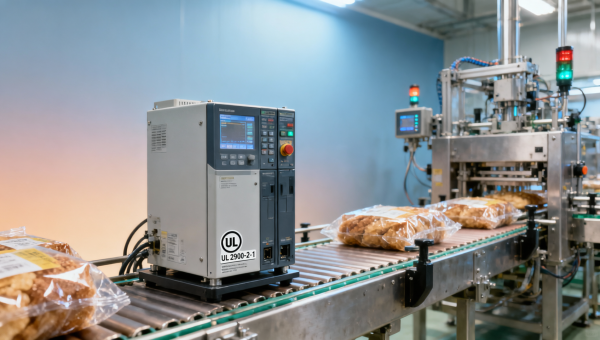
FDA Updates Cybersecurity Rules for Food Equipment: Chinese PLCs Must Meet UL 2900-2-1
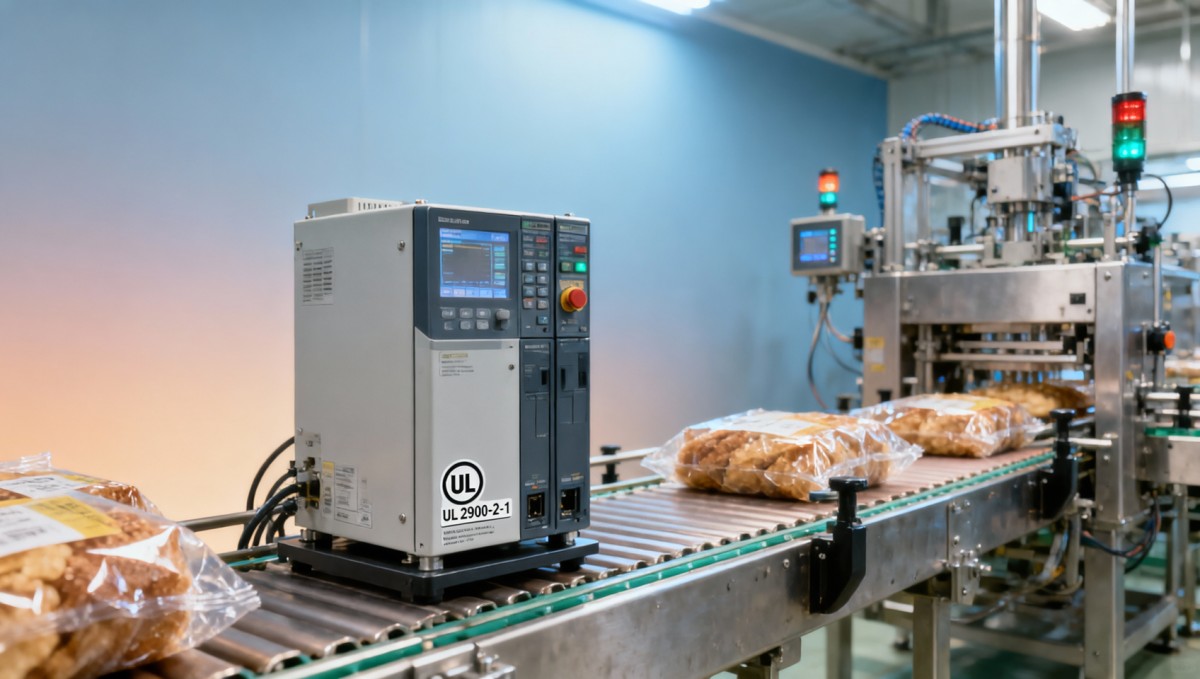
Introduction
On March 26, 2026, the U.S. FDA issued revised Cybersecurity Guidelines for Food Processing Equipment, explicitly requiring all food production line control systems (including PLCs, HMIs, and SCADA) exported to the U.S. to comply with UL 2900-2-1 certification and provide proof of vulnerability management and security update capabilities. This update has already delayed deliveries of Chinese smart packaging lines and central control systems to the U.S. The regulation impacts food equipment manufacturers, automation solution providers, and supply chain stakeholders, signaling heightened scrutiny over industrial control system security in critical sectors.
Event Overview
The FDA's updated guidelines mandate that all food processing control systems must now pass UL 2900-2-1 certification—a standard previously applied primarily to medical devices and industrial IoT. Key requirements include documented vulnerability assessment processes, secure update mechanisms, and third-party validation for networked components. The policy took immediate effect, with enforcement phased in over 12 months. Notably, Chinese manufacturers supplying PLCs for U.S.-bound food production lines reported shipment holds due to pending certifications.
Impacted Sub-Sectors
1. Food Automation Equipment Exporters
Chinese manufacturers of PLC-based packaging lines and processing systems face immediate compliance hurdles. UL 2900-2-1 requires redesigns of legacy firmware and additional testing cycles, potentially increasing costs by 15-20% for affected systems.
2. U.S. Food Processing Facilities
Plants relying on Chinese automation solutions may experience delayed upgrades or retrofits. Contingency sourcing from UL-certified alternatives (e.g., Siemens, Rockwell) could raise capital expenditure in the short term.
3. Component Suppliers
Providers of HMIs, industrial PCs, and communication modules must now validate interoperability with UL 2900-2-1 certified systems, requiring revised technical documentation and testing protocols.
Key Action Points
1. Prioritize Certification Roadmaps
Manufacturers should initiate UL 2900-2-1 gap analyses immediately, focusing on remote access interfaces and update mechanisms—the most common compliance pain points.
2. Reassess Procurement Timelines
U.S. importers of Chinese food equipment should build 6-8 month buffers for certification-related delays and explore interim solutions like modular system upgrades.
3. Monitor FDA Enforcement Patterns
Early enforcement appears concentrated on high-risk networked systems (e.g., cloud-connected SCADA). Companies should track inspection trends through FDA's Medical Device Cybersecurity portal, which now includes food equipment cases.
Industry Perspective
This move reflects growing U.S. regulatory alignment between food safety and industrial cybersecurity. While UL 2900-2-1 adoption was expected for medical devices, its extension to food systems suggests broader ICS security expectations. From an industry standpoint, this likely foreshadows similar requirements for other critical infrastructure sectors like agriculture and pharmaceuticals. The immediate bottleneck lies in limited UL-accredited testing labs capable of handling the surge in food automation certifications.
Conclusion
The FDA's update transforms cybersecurity from a best practice to a compliance necessity for food equipment. Rather than viewing this as a trade barrier, manufacturers should treat UL 2900-2-1 as a baseline for global market access—similar to CE marking for EU exports. Proactive certification planning will be crucial as other jurisdictions may adopt comparable standards.
Sources
- FDA Revised Guidance: Cybersecurity in Food Processing Equipment (March 26, 2026)
- UL 2900-2-1 Technical Standard (2025 Edition)
- Pending: FDA's phased enforcement timelines for small-scale food processors (expected Q2 2026)
Related Intelligence
- Heavy Agri MachineryBucket elevators wholesale: Hidden maintenance costs that erode ROI in the first 18 monthsBucket elevators wholesale buyers overlook hidden costs—screw conveyor for grain, grain chain conveyor & silo temperature monitoring system failures slash ROI by 37% in 18 months. Act now.
- Heavy Agri MachineryGrain chain conveyor vs. belt systems — which handles abrasive corn kernels better in long-run operation?Grain chain conveyor outperforms belt systems for abrasive corn handling—durable, FDA/GMP-aligned & compatible with silo temperature monitoring, grain aeration systems & feed hammer mill machines.
- Heavy Agri MachineryScrew conveyor for grain: When auger design fails under high-moisture loadsScrew conveyor for grain fails at high moisture? Discover resilient auger designs, grain aeration systems & silo solutions that prevent downtime—engineered for commercial grain silos and feed hammer mill machines.
The Morning Broadsheet
Daily chemical briefings, market shifts, and peer-reviewed summaries delivered to your terminal.
