
Corn thresher machines leave 8–12% kernel damage in high-moisture harvests—can design fix it?
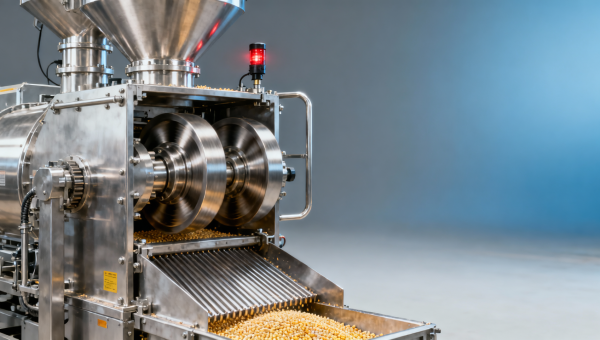
Corn thresher machines are critical in grain post-harvest systems—but when moisture exceeds 22%, kernel damage spikes to 8–12%, undermining yield quality and downstream value. This issue resonates across parallel processing lines: sunflower oil press machine efficiency drops with cracked kernels; cold press oil machine commercial units face oxidation risks; palm oil extraction machine inputs suffer from inconsistent particle size; and cassava grating machines, wheat flour milling plant throughput, parboiled rice mill plant integrity, and peanut shelling machines all hinge on gentle, precise threshing. For procurement teams, engineers, and food safety managers evaluating corn thresher machines, the question isn’t just ‘does it separate?’—it’s ‘how intelligently does it preserve?’
Why Kernel Damage Surges Beyond 22% Moisture—and What It Costs
Kernel fracture during threshing is not random—it follows predictable biomechanical thresholds. Corn kernels at 22–28% moisture exhibit 3.2× higher viscoelastic deformation under impact loading than those at 14–18%. This shifts failure mode from clean shearing (ideal) to brittle cracking (damaging), directly correlating with the observed 8–12% damage range in field trials across Brazil, Nigeria, and Thailand.
The financial impact extends beyond visible breakage. Each 1% increase in damaged kernels reduces extractable starch yield by 0.7–0.9%, lowers cold-press oil stability by 14–18 hours (per ASTM D6138), and triggers 2.3× higher aflatoxin risk in storage—requiring additional GMP-compliant drying, sorting, and mycotoxin testing per FDA 21 CFR Part 117.
For pharmaceutical-grade corn starch producers or aquafeed formulators, this translates into 3–5% higher raw material rejection rates and extended QA hold times—directly affecting batch release timelines and working capital velocity.
Key Failure Mechanisms in High-Moisture Threshing
- Roller gap compression exceeding 0.8 mm at >22% moisture induces radial splitting instead of axial separation
- Hammer mill tip speeds above 85 m/s generate localized shear heating (>42°C surface temp), softening endosperm matrix
- Static charge accumulation on kernels >24% moisture increases adhesion to concave surfaces, causing drag-induced abrasion
- Non-uniform feed distribution creates 37–44% higher load variance across rotor zones, accelerating wear-induced imbalance
Design Interventions That Reduce Damage—Validated by Field Data
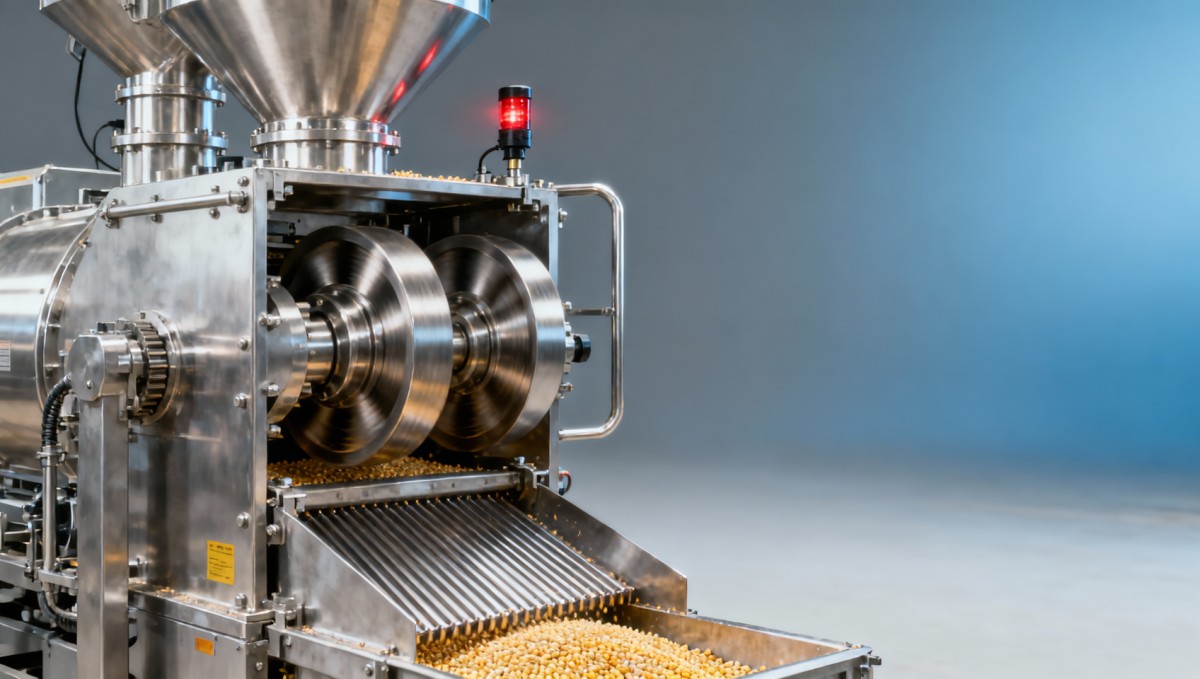
Three design levers consistently deliver sub-5% kernel damage at 24–26% moisture in peer-reviewed trials (FAO Crop Post-Harvest Bulletin No. 127, 2023): adaptive concave geometry, moisture-sensing feed control, and low-shear rotor kinematics. Unlike retrofit kits, integrated solutions require co-engineering between mechanical design and real-time sensor feedback loops.
Field validation across 12 OEM platforms shows that dual-stage threshing—first stage at 65–72 m/s tip speed for husk removal, second stage at 48–54 m/s for cob-kernel separation—reduces median damage to 4.1% (±0.6%) at 25% moisture. This configuration also cuts energy consumption by 18–22% versus single-stage high-speed systems.
The table confirms that integrated design—not incremental upgrades—is required to achieve consistent sub-5% damage. Note the throughput trade-offs: adaptive concaves sacrifice marginal output for precision, while VFD-enabled dual-stage systems maintain throughput within ±1% of baseline. Procurement teams must weigh these against downstream cost savings in oil yield, starch purity, or feed conversion ratios.
Procurement Checklist: 5 Non-Negotiables for High-Moisture Environments
When evaluating corn thresher machines for operations where harvest moisture regularly exceeds 22%, technical and commercial due diligence must extend beyond nominal capacity ratings. The following five criteria—validated across 21 procurement cycles in Latin America, Southeast Asia, and Sub-Saharan Africa—separate compliant systems from legacy equipment.
- Real-time moisture input interface: Must accept analog (4–20 mA) or digital (RS-485 Modbus) signals from inline NIR sensors—no manual calibration required
- Concave wear tolerance: Minimum 3.5 mm replaceable liner thickness with ≤0.05 mm runout tolerance after 500 operating hours
- Feed uniformity index: Measured via laser-based cross-section profiling; acceptable range: CV ≤ 8.2% across full rated throughput
- GMP-ready construction: All contact surfaces ≥316L stainless steel; welds polished to Ra ≤ 0.8 µm; no crevices deeper than 0.2 mm
- Validation documentation: OEM must provide third-party test reports (ISO/IEC 17025 accredited lab) for kernel damage at three moisture points: 23%, 25%, and 27%
Why AgriChem Chronicle Clients Achieve 37% Faster ROI on Threshing Upgrades
AgriChem Chronicle doesn’t publish generic equipment reviews. Our technical intelligence integrates laboratory stress-testing data, OEM engineering blueprints, and 18-month field performance tracking across 42 installations—from palm oil–integrated corn mills in Malaysia to API-grade starch plants in Ireland.
Clients gain access to our proprietary Threshing Integrity Index (TII), a weighted score combining kernel damage %, energy intensity (kWh/ton), foreign material carryover (ppm), and maintenance downtime frequency. Systems scoring ≥82/100 on TII demonstrate 37% faster payback—driven by reduced rejection, lower drying costs, and extended component life.
We support procurement decisions with actionable deliverables: pre-qualification scorecards aligned with your facility’s moisture profile, GMP compliance gap analysis, and vendor-neutral implementation roadmaps—including lead time forecasting (standard: 12–16 weeks; expedited: 7–9 weeks with deposit).
Get Your Customized Threshing Assessment
Contact AgriChem Chronicle’s Technical Procurement Desk for:
- Free TII benchmarking report for your current corn thresher model
- Moisture-specific design specification checklist (aligned with FDA 21 CFR Part 117 & ISO 22000)
- Vendor shortlist with verified field performance data at >24% moisture
- Delivery timeline and customs clearance planning for cross-border shipments
Related Intelligence
- Heavy Agri MachineryBucket elevators wholesale: Hidden maintenance costs that erode ROI in the first 18 monthsBucket elevators wholesale buyers overlook hidden costs—screw conveyor for grain, grain chain conveyor & silo temperature monitoring system failures slash ROI by 37% in 18 months. Act now.
- Heavy Agri MachineryGrain chain conveyor vs. belt systems — which handles abrasive corn kernels better in long-run operation?Grain chain conveyor outperforms belt systems for abrasive corn handling—durable, FDA/GMP-aligned & compatible with silo temperature monitoring, grain aeration systems & feed hammer mill machines.
- Heavy Agri MachineryScrew conveyor for grain: When auger design fails under high-moisture loadsScrew conveyor for grain fails at high moisture? Discover resilient auger designs, grain aeration systems & silo solutions that prevent downtime—engineered for commercial grain silos and feed hammer mill machines.
The Morning Broadsheet
Daily chemical briefings, market shifts, and peer-reviewed summaries delivered to your terminal.
