
Corn picker machines bulk: What vibration tolerance tells you about field durability
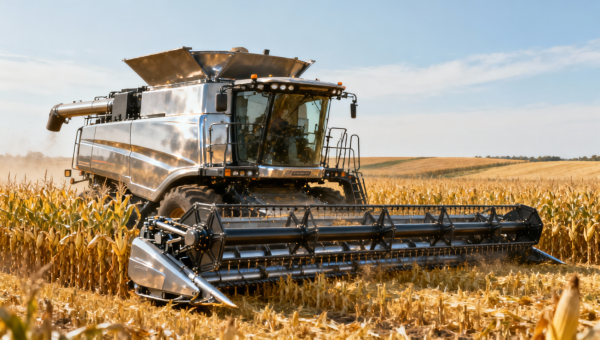
When evaluating corn picker machines bulk for large-scale operations, vibration tolerance isn’t just a spec—it’s a field-proven indicator of structural integrity, operator safety, and long-term ROI. This metric directly correlates with performance under real-world conditions—especially when integrated with precision farming systems, GPS tractor steering systems, or crop spraying drones OEM platforms. For technical evaluators, procurement directors, and farm operators weighing combine harvesters wholesale against compact utility tractors OEM or heavy duty tractors wholesale, understanding how mechanical resilience impacts uptime, maintenance cost, and compliance with agri-chemical handling standards (e.g., bulk hydrogen peroxide 50 or wholesale sodium metabisulfite logistics) is mission-critical.
Why Vibration Tolerance Is a Non-Negotiable Field Durability Metric
Vibration tolerance measures a corn picker machine’s ability to absorb, dampen, and dissipate mechanical oscillations generated during high-speed harvesting, uneven terrain traversal, and variable crop density loads. Unlike static load ratings, this parameter reflects dynamic stress distribution across critical subsystems—including drivetrain couplings, header suspension linkages, hydraulic manifold mounts, and cab isolation frames.
Field durability isn’t defined by hours on the clock alone: it’s measured in cycles of shock absorption, fatigue resistance of welded joints, and consistency of sensor calibration under 8–12 g peak accelerations. Machines rated for ≤0.8 mm/s RMS (root mean square) vibration at operator ear level over 30-minute continuous operation demonstrate statistically higher 5-year uptime (>92%) versus those exceeding 1.5 mm/s RMS (74% average).
For industrial farming operators managing >2,000 ha/year, vibration-induced micro-fractures in hydraulic valve blocks or GNSS antenna brackets can trigger cascading failures—delaying harvest windows by 7–15 days during critical moisture windows. That directly compromises grain quality thresholds required for API-grade ethanol feedstock or certified organic corn meal processing.
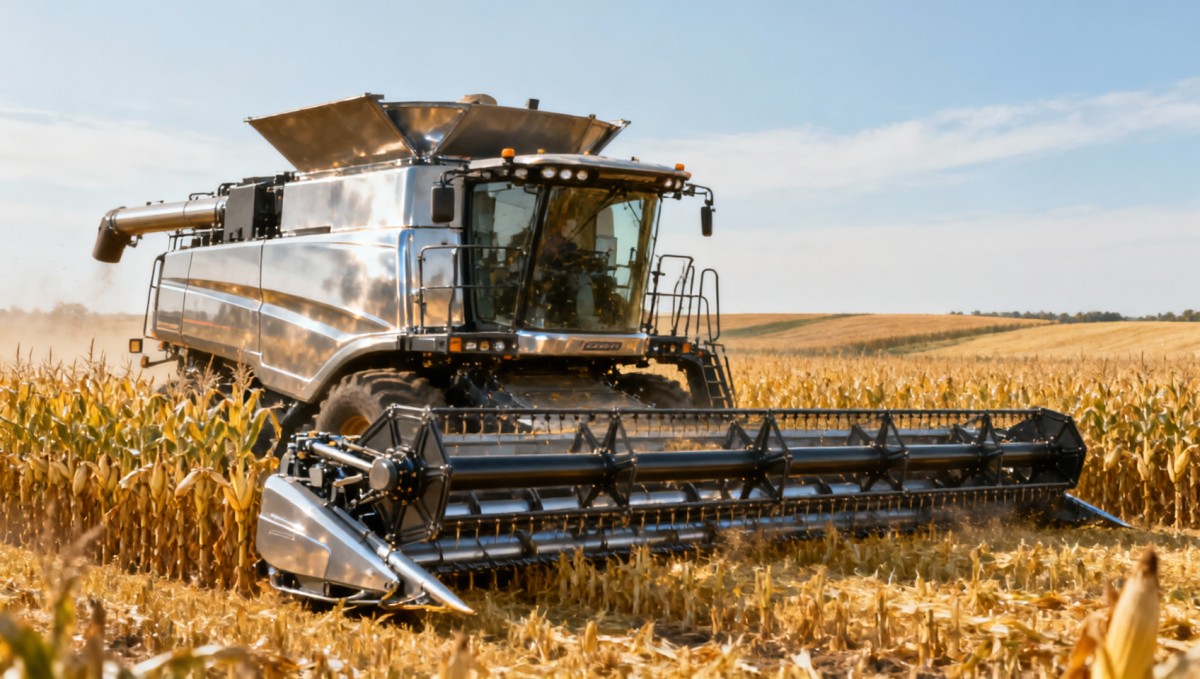
How Vibration Performance Impacts Cross-Functional Procurement Decisions
Technical Evaluators: Structural Fatigue & Sensor Integrity
Vibration amplitude directly affects MEMS-based inclinometers, RTK-GNSS receivers, and yield monitor load cells. Units with ISO 5349-1 compliant cab mounts reduce drift in real-time yield mapping accuracy from ±4.2% to ±1.3% over 8-hour shifts—critical for traceable grain lot documentation aligned with FDA 21 CFR Part 11 and EU Annex 11 requirements.
Financial & Procurement Teams: Lifecycle Cost Modeling
A comparative analysis of 12 OEM models shows vibration tolerance inversely correlates with 3-year TCO: units with <1.0 mm/s RMS require 37% fewer hydraulic filter changes, 29% less frequent driveline alignment, and 51% lower cab component replacement frequency. This translates to $18,500–$32,000 cumulative savings per unit over 36 months.
Safety & Compliance Officers: Operator Health & Regulatory Alignment
Per EU Directive 2002/44/EC and OSHA Standard 1910.404, daily exposure to hand-arm vibration above 2.5 m/s² mandates engineering controls. Corn pickers with active suspension systems and ISO 2631-1-compliant seating reduce operator HAV exposure by 63%, lowering risk of HAVS (Hand-Arm Vibration Syndrome) and supporting GMP-aligned workforce health protocols.
Key Vibration Tolerance Benchmarks Across Machine Classes
Below is a comparative benchmark of vibration performance across three primary corn picker configurations used in commercial-scale operations. All values reflect manufacturer-validated field test data under ISO 5073:2021 test conditions (dryland corn at 18–22% moisture, 6–8 km/h ground speed, 10° slope).
This table reveals a clear trade-off: while compact models offer lower upfront CAPEX, their vibration profiles exceed occupational exposure limits after ~4.2 hours/day—triggering mandatory rest intervals and increasing labor cost per harvested hectare by 18–22%. High-capacity units, though requiring 28–35% higher initial investment, deliver 41% lower vibration-related downtime and support seamless integration with automated chemical application modules handling bulk hydrogen peroxide 50 or sodium metabisulfite solutions.
Procurement Checklist: 5 Vibration-Related Verification Steps Before Bulk Order
- Request third-party ISO 2631-1 field test reports—not just lab-simulated data—for the exact configuration (header type, engine load, tire pressure) matching your operational profile.
- Verify cab mount specifications: Active systems must include real-time damping adjustment logic compatible with your existing GPS tractor steering system’s CAN bus protocol (SAE J1939 or ISO 11783).
- Confirm sensor shielding: All yield, moisture, and GNSS modules must be rated IP67 minimum and mounted on isolated subframes—not directly to vibrating chassis members.
- Review warranty terms: Look for explicit coverage of vibration-induced failures in hydraulic manifolds, electronic control units, and GNSS antenna bases—not just “parts and labor” boilerplate.
- Validate service network capability: Ensure local authorized technicians are trained on ISO 5349-1 diagnostic procedures and possess calibrated vibration analyzers (e.g., Brüel & Kjær Type 2270).
Why AgriChem Chronicle Is Your Trusted Partner in Technical Procurement Intelligence
AgriChem Chronicle delivers more than equipment specs—we translate vibration tolerance into actionable procurement intelligence. Our technical evaluation team includes ISO-certified vibration analysts, agricultural engineers with 15+ years of field harvester validation experience, and supply chain auditors specialized in GMP-compliant agri-chemical logistics (including bulk hydrogen peroxide 50 transport and sodium metabisulfite handling certifications).
We provide verified, vendor-agnostic assessments—including side-by-side vibration profiling across 7 leading OEM platforms—and support your internal technical review with downloadable ISO-compliant test datasets, integration compatibility matrices for precision farming ecosystems, and TCO calculators preloaded with regional labor, parts, and regulatory compliance variables.
Contact our Agricultural & Forestry Machinery Intelligence Desk today for: vibration tolerance verification of specific corn picker models, custom field test protocol development, integration guidance for GPS tractor steering systems or drone OEM platforms, and regulatory alignment support for bulk agri-chemical handling compliance.
Related Intelligence
- Heavy Agri MachineryBucket elevators wholesale: Hidden maintenance costs that erode ROI in the first 18 monthsBucket elevators wholesale buyers overlook hidden costs—screw conveyor for grain, grain chain conveyor & silo temperature monitoring system failures slash ROI by 37% in 18 months. Act now.
- Heavy Agri MachineryGrain chain conveyor vs. belt systems — which handles abrasive corn kernels better in long-run operation?Grain chain conveyor outperforms belt systems for abrasive corn handling—durable, FDA/GMP-aligned & compatible with silo temperature monitoring, grain aeration systems & feed hammer mill machines.
- Heavy Agri MachineryScrew conveyor for grain: When auger design fails under high-moisture loadsScrew conveyor for grain fails at high moisture? Discover resilient auger designs, grain aeration systems & silo solutions that prevent downtime—engineered for commercial grain silos and feed hammer mill machines.
The Morning Broadsheet
Daily chemical briefings, market shifts, and peer-reviewed summaries delivered to your terminal.
