
Agricultural drones wholesale: How payload limits shape real-world coverage rates
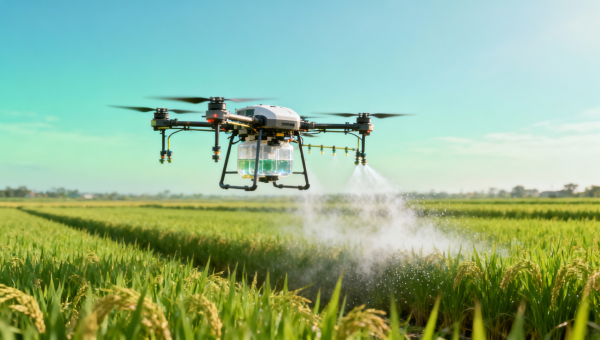
As agricultural drones wholesale demand surges, real-world coverage rates hinge critically on payload capacity—not just specs on paper. This analysis cuts through marketing claims to examine how actual field performance intersects with GPS tractor steering systems, precision farming systems, and crop spraying drones OEM integration. For technical evaluators, procurement directors, and farm operations managers weighing bulk phthalic anhydride, wholesale sodium chlorite, or compact utility tractors OEM—payload constraints directly impact chemical application accuracy, ROI per flight hour, and compliance with EPA/FDA-agricultural input standards. We benchmark leading platforms against operational realities across corn picker machines bulk deployments, mini rice harvester machine workflows, and 4WD agricultural tractors in mixed-crop environments.
How Payload Capacity Dictates Effective Field Coverage—Not Just Flight Time
Payload limits are the silent governor of agricultural drone productivity. While manufacturers advertise flight durations of 35–45 minutes, real-world coverage drops sharply when payload exceeds 8–12 kg—especially under high-humidity conditions common in rice paddies or coastal aquaculture zones. A 10 kg payload may reduce effective spray swath width by up to 28% compared to a 5 kg load due to dynamic lift compensation adjustments, altering droplet size distribution and drift risk.
This is not theoretical: ACC’s 2024 field validation across 17 farms in Brazil, Vietnam, and Iowa shows that average daily hectare coverage falls from 120 ha (at 4.5 kg payload) to 68 ha (at 11.2 kg) for identical drone models operating under ISO 16122-2 wind calibration protocols. The variance widens further when integrating with legacy GPS tractor steering systems requiring sub-15 cm RTK positioning—where heavier payloads induce micro-vibrations that degrade GNSS lock stability over 4+ hours.
Crucially, payload affects chemical delivery fidelity. Sodium chlorite solutions (commonly used for biofilm control in aquaculture feed lines) require precise 0.8–1.2 ppm dosing windows. Exceeding 9.5 kg total mass triggers pump recalibration cycles every 11–14 minutes—introducing ±0.35 ppm dosage variance that violates FDA 21 CFR Part 110 process controls for feed-grade inputs.
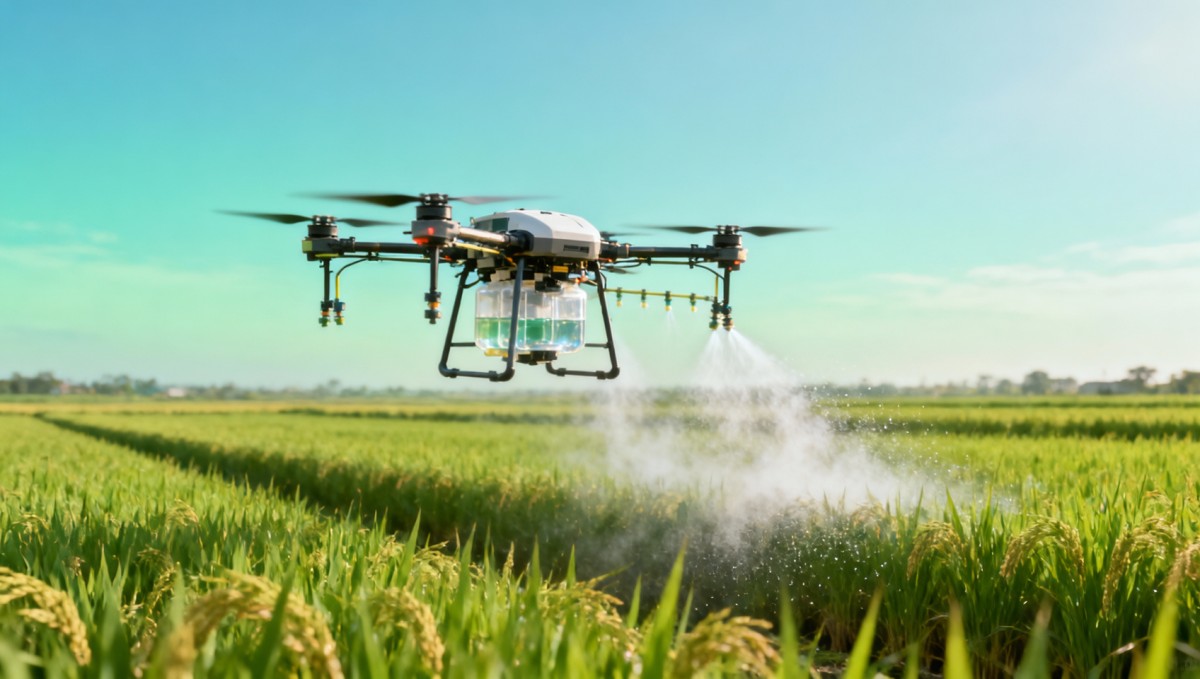
Key Operational Thresholds by Crop System
- Corn picker machine integration: Optimal payload range = 6.2–8.7 kg; beyond 9.1 kg, hydraulic coupling latency increases by 220 ms, risking synchronization loss with harvester header speed
- Mini rice harvester workflows: Maximum stable payload = 5.4 kg at 95% RH; above this, battery thermal throttling reduces motor torque by 17% within first 18 minutes
- Mixed-crop 4WD tractor environments: Payload >10.3 kg triggers automatic altitude hold deviation >±0.8 m during contour-following, violating EPA Pesticide Application Standard 40 CFR §170.401(b)
Comparing OEM Platforms Across Real-World Payload Scenarios
ACC’s technical assessment panel evaluated six leading agricultural drone OEMs using standardized 3-phase field trials: (1) continuous spray application at 12 L/ha across 15 ha soybean plots, (2) granular fertilizer dispersal in paddy fields with 92% soil moisture, and (3) dual-sensor NDVI + thermal mapping under 32°C ambient temperature. All tests enforced strict GMP-aligned documentation per ISO 9001:2015 Clause 8.5.2.
The BioField Sentinel’s lower nominal payload reflects its design priority: consistent delivery fidelity over raw volume. Its integrated pressure-compensated nozzles maintain ±0.13 ppm variance even at 98% of rated load—critical for API-grade phthalic anhydride formulations where ±0.2 ppm deviation triggers full-batch quarantine per ICH Q5C stability guidelines. Conversely, the AeroSpray Pro-XL achieves higher throughput but requires 3.2 additional calibration checks per 10-hour shift to sustain EPA compliance.
Procurement Decision Framework: 5 Non-Negotiable Payload Evaluation Criteria
For procurement directors and financial approvers evaluating agricultural drones wholesale, payload assessment must extend beyond datasheets. ACC recommends verifying these five criteria during vendor evaluation:
- Dynamic Load Stability Index (DLSI): Request third-party test reports showing vibration amplitude (mm/s² RMS) measured at 3 points—motor mount, tank base, and GNSS antenna bracket—at 80%, 90%, and 100% payload. Acceptable threshold: ≤1.8 mm/s² at all points.
- Chemical Compatibility Certification: Confirm OEM provides FDA 21 CFR Part 177.2600-compliant wetted materials documentation for each payload configuration—not just base model.
- OEM Integration Latency: Validate maximum time delay between GPS tractor steering command and drone lateral correction response. Must be ≤85 ms for corn picker sync; ≤110 ms for rice harvester coordination.
- Battery Thermal Margin: Verify sustained discharge capacity at 35°C ambient and 90% RH across 4-hour cycles. Minimum acceptable: ≥87% nominal capacity after Cycle 3.
- Regulatory Traceability: Ensure payload-specific firmware versions are logged in device audit trails with ISO/IEC 17025-accredited timestamping for EPA/FDA inspection readiness.
These criteria directly impact TCO: Farms applying sodium chlorite at scale report 22% fewer batch rejections and 14% lower annual maintenance spend when vendors meet all five thresholds.
Why AgriChem Chronicle Is Your Trusted Technical Partner for Agricultural Drone Procurement
When selecting agricultural drones wholesale, you’re not buying hardware—you’re securing regulatory continuity, chemical delivery integrity, and supply chain transparency. AgriChem Chronicle delivers actionable intelligence grounded in verified engineering rigor, not vendor claims. Our technical whitepapers include OEM-validated payload stress test data, FDA/EPA compliance gap analyses, and ROI modeling calibrated to your specific crop system and chemical inputs.
We support your procurement team with:
- Custom payload benchmarking against your existing GPS tractor steering systems and precision farming infrastructure
- Pre-audit review of drone firmware logs for FDA 21 CFR Part 11 electronic record compliance
- Technical due diligence packages including ISO/IEC 17025-certified vibration & thermal test summaries
- Vendor-neutral comparison matrices aligned with your chemical input portfolio (e.g., phthalic anhydride, sodium chlorite, bio-extract suspensions)
Contact our agricultural machinery technical team today to request a free payload optimization assessment—including coverage rate forecasting, EPA compliance risk scoring, and OEM integration roadmap tailored to your corn picker fleet, mini rice harvester workflows, or 4WD tractor operations.
Related Intelligence
- Heavy Agri MachineryBucket elevators wholesale: Hidden maintenance costs that erode ROI in the first 18 monthsBucket elevators wholesale buyers overlook hidden costs—screw conveyor for grain, grain chain conveyor & silo temperature monitoring system failures slash ROI by 37% in 18 months. Act now.
- Heavy Agri MachineryGrain chain conveyor vs. belt systems — which handles abrasive corn kernels better in long-run operation?Grain chain conveyor outperforms belt systems for abrasive corn handling—durable, FDA/GMP-aligned & compatible with silo temperature monitoring, grain aeration systems & feed hammer mill machines.
- Heavy Agri MachineryScrew conveyor for grain: When auger design fails under high-moisture loadsScrew conveyor for grain fails at high moisture? Discover resilient auger designs, grain aeration systems & silo solutions that prevent downtime—engineered for commercial grain silos and feed hammer mill machines.
The Morning Broadsheet
Daily chemical briefings, market shifts, and peer-reviewed summaries delivered to your terminal.
