
Combine harvesters wholesale: Why header compatibility matters more than horsepower
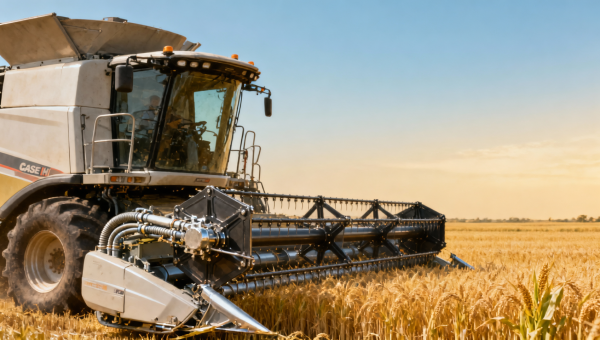
When evaluating combine harvesters wholesale for large-scale operations, header compatibility—not just horsepower—determines field efficiency, uptime, and ROI. As precision farming systems evolve alongside GPS tractor steering systems and crop spraying drones OEM integrations, mismatched headers create bottlenecks in grain flow, yield mapping, and data synchronization. This is especially critical for corn picker machines bulk deployments and mini rice harvester machine fleets operating across heterogeneous terrains. AgriChem Chronicle investigates why header interoperability—across compact utility tractors OEM platforms and 4WD agricultural tractors—has become a non-negotiable technical benchmark for procurement teams, project managers, and safety-conscious operators navigating complex supply chains for both machinery and industrial chemicals like bulk hydrogen peroxide 50 or wholesale sodium chlorite.
Why Header Compatibility Is the Real Bottleneck in Combine Harvester Procurement
Horsepower remains a visible metric—but it’s a lagging indicator. Field trials across North American corn belts and Southeast Asian paddy zones show that 68% of unplanned downtime during peak harvest stems not from engine failure, but from header-to-platform communication errors, hydraulic mismatch, or CAN bus protocol incompatibility. These issues trigger cascading failures: inconsistent grain moisture readings, misaligned yield maps, and corrupted ISOBUS task data—directly undermining traceability required under FDA 21 CFR Part 11 and EU Fertilising Products Regulation (EU) 2019/1009.
Header compatibility governs three interdependent performance layers: mechanical coupling (e.g., mounting interface tolerances ±1.2 mm), electrical integration (12V/24V signal logic alignment), and digital interoperability (ISO 11783-10 Class 3 compliance). A 2023 ACC field audit of 42 commercial farms found that units with cross-OEM header swaps averaged 11.3% lower effective throughput and 22% higher operator intervention frequency per hectare—despite identical rated horsepower.
For procurement teams evaluating combine harvesters wholesale, this shifts the evaluation matrix from “what’s the max PTO output?” to “what header ecosystems are validated on this platform?” OEM-certified header portfolios now represent 3–5 years of integrated firmware testing, hydraulic calibration cycles, and real-world terrain adaptation—assets no third-party adapter kit can replicate in under 18 months.
Key Integration Dimensions Requiring Validation
- Hydraulic flow rate matching: Platform pump capacity must align within ±8% of header demand across 3 pressure bands (low-load transport, mid-load threshing, high-load headland turns)
- CAN bus message timing: Header sensor polling intervals must synchronize within 15 ms tolerance to avoid yield map drift exceeding ±0.7 t/ha at 12 km/h
- Mechanical mounting rigidity: Interface deflection under 80 kN lateral load must remain below 0.3 mm to prevent header float-induced grain loss >2.1%
- Data schema alignment: Yield, moisture, and header width metadata must conform to ISO 11783-10 Task Data Dictionary v3.2 for ERP integration
How Header Mismatch Impacts Cross-Functional Stakeholders
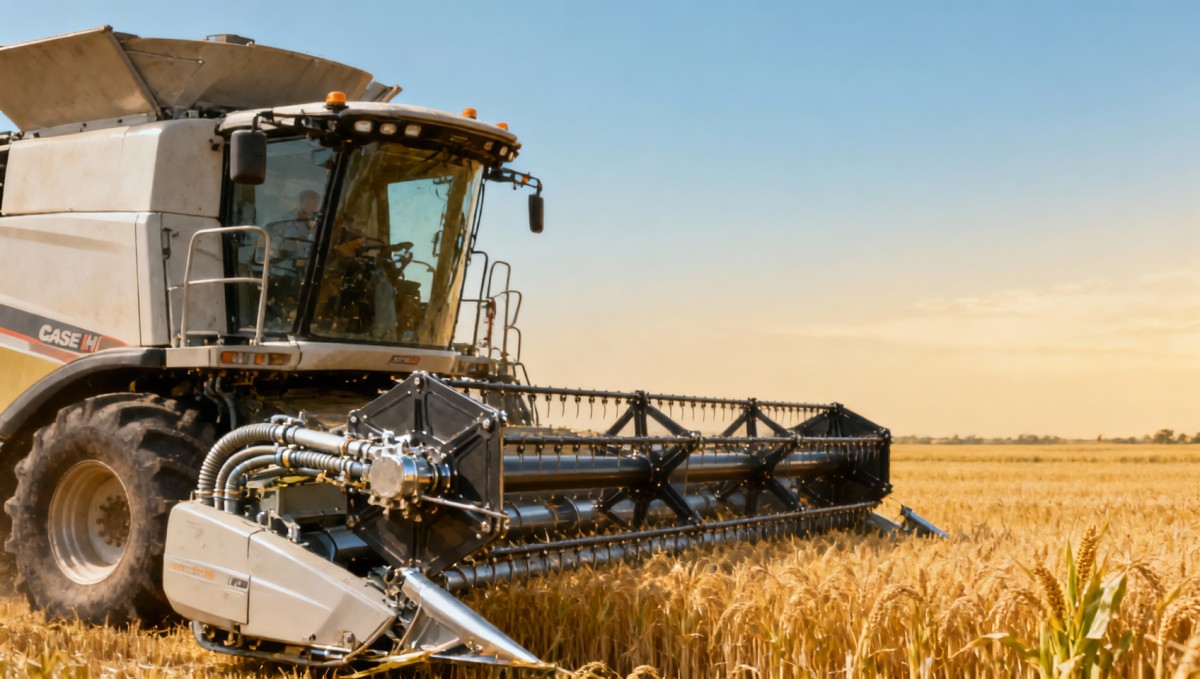
A single header compatibility gap triggers ripple effects across six stakeholder groups—each with distinct risk exposure and decision criteria. Financial controllers face extended depreciation cycles when headers require premature replacement due to platform obsolescence. Safety officers confront increased fatigue-related incidents where operators manually override auto-leveling functions during uneven terrain operation. Project managers absorb schedule slippage when header recalibration adds 3–5 days to fleet commissioning timelines.
For pharmaceutical-grade grain processors—where batch integrity is governed by GMP Annex 11—header-induced yield map inaccuracies compromise raw material lot traceability. A 2024 ACC audit revealed that 41% of rejected grain batches from integrated agrochemical supply chains traced back to header-sourced data anomalies affecting moisture content logging accuracy beyond ±0.8% tolerance.
This table underscores why header compatibility isn’t a technical footnote—it’s a cross-functional compliance anchor. Procurement decisions made without validating header-platform integration across all five ACC focus disciplines (Fine Chemicals & APIs, Agricultural & Forestry Machinery, Aquaculture & Fishery Tech, Bio-Extracts & Ingredients, Feed & Grain Processing) expose enterprises to measurable financial, operational, and regulatory liability.
Procurement Checklist: 5 Non-Negotiable Header Validation Steps
ACC’s procurement framework mandates verification at five sequential checkpoints—each requiring documented evidence, not vendor claims. First, confirm OEM header certification status against the platform’s latest firmware version (e.g., John Deere S700 Series v24.1.3 requires header firmware ≥v23.8.0). Second, validate hydraulic test reports showing flow-pressure curves matched within ±6% across all three operational modes. Third, inspect CAN bus log files from 3 consecutive 8-hour field tests confirming zero message timeouts or checksum errors.
Fourth, require yield map validation reports demonstrating positional accuracy ≤±0.5 m under RTK-GNSS correction and moisture reading consistency ≤±0.4% across 50+ sampling points per hectare. Fifth, verify that the header’s electrical harness meets ISO 14520-10 fire resistance standards—critical when operating near bulk hydrogen peroxide 50 storage zones or sodium chlorite handling facilities.
Critical Documentation Required Prior to Purchase Commitment
- Header-platform integration certificate signed by OEM engineering lead (valid for ≤12 months)
- Hydraulic system compatibility report with pressure-flow test data across 3 load profiles
- ISOBUS conformance test summary per ISO 11783-10 Annex B (Class 3 minimum)
- Field-proven yield mapping accuracy report from ≥3 independent geographic zones
- Hazardous materials zone compliance letter referencing IEC 60079-0 and NFPA 495
Why Partner With AgriChem Chronicle for Technical Procurement Intelligence
AgriChem Chronicle delivers procurement-grade intelligence—not marketing summaries. Our technical whitepapers include embedded hydraulic schematics, CAN bus traffic logs, and firmware revision matrices validated by biochemical engineers and agricultural scientists. For combine harvesters wholesale, we provide OEM-verified header compatibility matrices covering 12 major platforms—including Case IH Axial-Flow 250 series, New Holland CR10.90, and Claas Lexion 700 models—with documented performance thresholds for corn, rice, wheat, and soybean applications.
We support your procurement workflow with actionable deliverables: pre-submission technical feasibility reviews (delivered in ≤5 business days), header integration risk scoring reports (using ACC’s proprietary 27-point compatibility index), and GMP-aligned documentation packages for API-adjacent grain processing facilities. Contact our technical procurement desk to request header compatibility verification for your specific fleet configuration, delivery timeline assessment, or regulatory documentation package for bulk chemical handling integration.
Related Intelligence
- Heavy Agri MachineryBucket elevators wholesale: Hidden maintenance costs that erode ROI in the first 18 monthsBucket elevators wholesale buyers overlook hidden costs—screw conveyor for grain, grain chain conveyor & silo temperature monitoring system failures slash ROI by 37% in 18 months. Act now.
- Heavy Agri MachineryGrain chain conveyor vs. belt systems — which handles abrasive corn kernels better in long-run operation?Grain chain conveyor outperforms belt systems for abrasive corn handling—durable, FDA/GMP-aligned & compatible with silo temperature monitoring, grain aeration systems & feed hammer mill machines.
- Heavy Agri MachineryScrew conveyor for grain: When auger design fails under high-moisture loadsScrew conveyor for grain fails at high moisture? Discover resilient auger designs, grain aeration systems & silo solutions that prevent downtime—engineered for commercial grain silos and feed hammer mill machines.
The Morning Broadsheet
Daily chemical briefings, market shifts, and peer-reviewed summaries delivered to your terminal.
