
The Authority in Global Agricultural Chemistry & Bio-Resources
Agricultural shade net bulk: when shade percentage misleads buyers
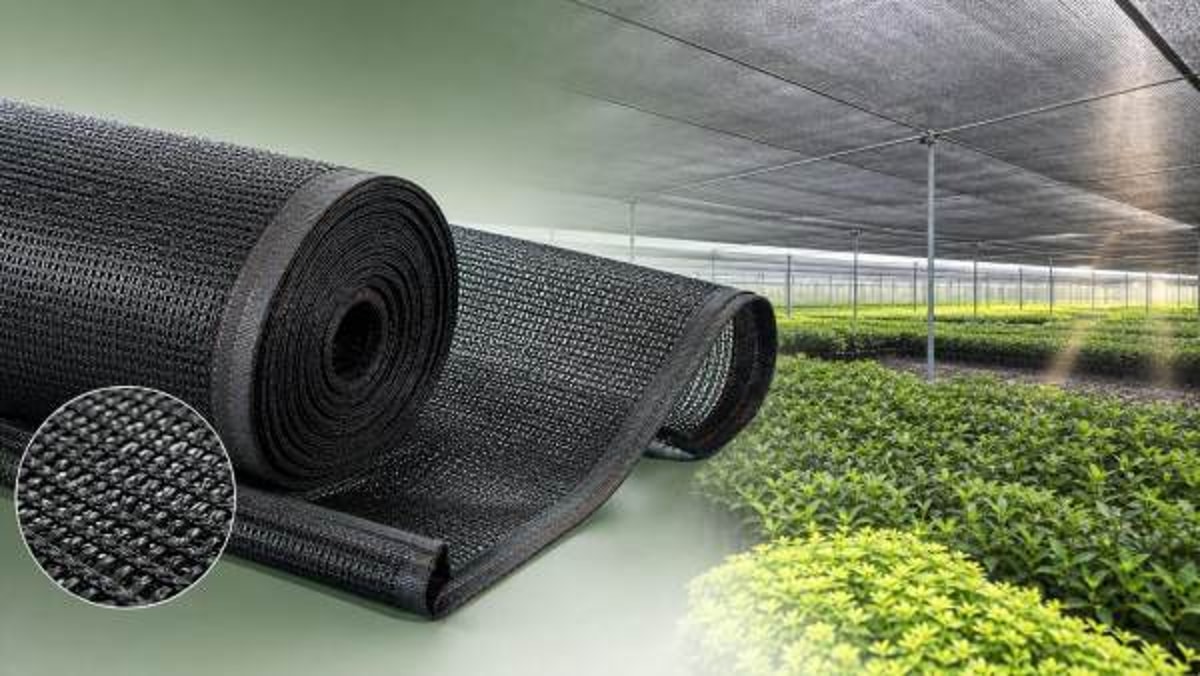
In agricultural shade net bulk sourcing, buyers often treat shade percentage as the primary benchmark, yet this single figure can conceal critical differences in yarn quality, UV stability, airflow, tensile strength, and service life. For technical evaluators, understanding what shade ratings do not reveal is essential to avoiding costly specification errors and ensuring the net performs reliably across climate, crop, and operational demands.
Why technical evaluators need a checklist before comparing shade percentages
For agricultural shade net bulk procurement, the risk is not simply buying the wrong shade level. The deeper risk is assuming two nets with the same stated percentage will behave the same in the field. They rarely do. Shade percentage is usually measured under specific test conditions, while actual performance depends on polymer grade, tape geometry, knitting density, color, UV package, and installation method. A 50% net from one supplier may cool effectively and last five seasons, while another 50% net may embrittle quickly, restrict airflow, or create uneven light distribution.
A checklist approach helps technical teams compare measurable values rather than brochure claims. It also supports clearer internal communication between agronomy, procurement, engineering, and compliance functions. In practical terms, this means evaluating the net as a functional system component, not as a single percentage label.
First-pass checklist: what to confirm before requesting quotes
Before collecting prices for agricultural shade net bulk, technical evaluators should define the operating context. This reduces quote variation and prevents suppliers from filling gaps with low-grade alternatives.
- Target crop or use case: greenhouse vegetables, nurseries, livestock areas, aquaculture support zones, or post-harvest yards all require different light and airflow behavior.
- Climate profile: peak solar intensity, seasonal UV load, wind exposure, humidity, hail risk, and average daily temperature swing.
- Expected service life: one season, two to three years, or long-term infrastructure use.
- Installation geometry: flat cover, tunnel, side wall, retractable system, or perimeter windbreak application.
- Mechanical constraints: span length, support spacing, fastening method, and expected tension during installation.
- Compliance expectations: UV resistance test data, material declarations, and consistency across batches.
If these inputs are unclear, quoted shade percentage becomes misleading because suppliers will optimize for price rather than field performance.
Core technical checks for agricultural shade net bulk evaluation
1. Verify what the shade percentage actually represents
Ask how the percentage was measured and whether it reflects light blockage, solar radiation reduction, or a nominal commercial grade. Some suppliers use simplified marketing categories rather than certified test results. Technical evaluators should request test methodology, tolerance range, and whether the value changes by color or fabric width. A net labeled 70% may perform differently under direct summer radiation than under diffused greenhouse light.
2. Check yarn material and polymer quality
Virgin HDPE is generally preferred for stable outdoor performance. Recycled content can reduce cost, but if not controlled it may weaken tensile integrity and shorten life under UV exposure. Ask whether the yarn is virgin, blended, or recycled, and request consistency statements. In agricultural shade net bulk buying, hidden material downgrades are one of the main causes of early failure.
3. Review UV stabilization package, not just UV wording
“UV treated” is too vague for engineering review. Confirm whether the net includes UV stabilizers appropriate for the intended climate, the expected lifetime under local radiation conditions, and any accelerated weathering data. The key question is not whether UV additives exist, but whether they are dosed and formulated for the site. A low-cost net may carry a UV claim yet fail after prolonged exposure in high-radiation regions.
4. Compare GSM together with construction pattern
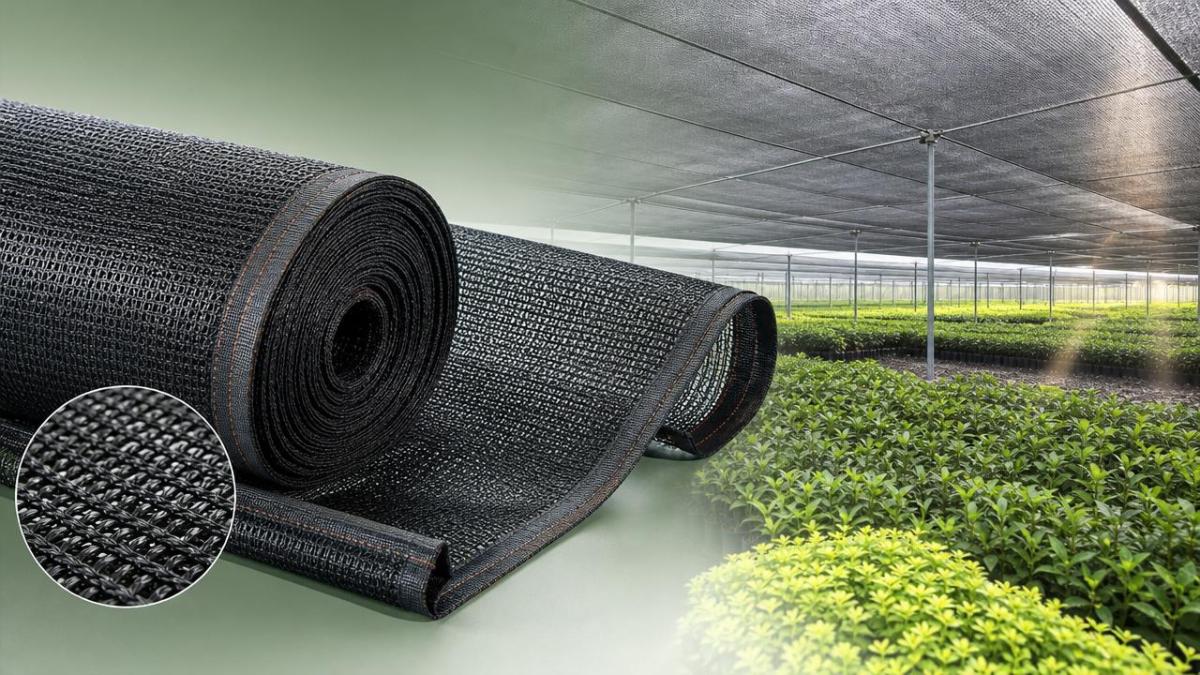
Weight per square meter helps, but GSM alone is not enough. A heavier net may still perform poorly if the knit structure is unstable or if yarn quality is weak. Review GSM alongside mono tape design, stitch pattern, and edge reinforcement. For bulk orders, ask for both nominal and production tolerance values. Large project teams should also verify whether the supplied roll weight aligns with the declared area and density.
5. Evaluate airflow and thermal behavior
Two nets with the same shade percentage can produce very different internal temperatures. Dense fabric may reduce light but trap heat. Better knitted geometry may preserve ventilation and reduce plant stress. For technical evaluators, this is especially important in greenhouses and nurseries where leaf temperature, humidity accumulation, and disease pressure matter more than nominal shading. Ask for porosity or airflow data when available.
6. Test tensile strength, elongation, and seam or edge durability
Field failure often starts at fastening points or edges rather than across the center panel. Request machine direction and cross direction tensile values, elongation data, and information about reinforced selvedges. If the net will be tensioned over long spans or exposed to wind, edge design becomes a major technical criterion. This is where many agricultural shade net bulk comparisons fail: the product looks similar in sample swatches but behaves differently after installation.
A practical comparison table for supplier review
Use a standardized review sheet when screening suppliers. This helps technical teams avoid overvaluing a single quoted percentage.
Scenario-based checks: the right net depends on the application
Greenhouse crop production
For protected cultivation, light diffusion, airflow, and heat control are often more important than simple darkness. Technical evaluators should ask whether the shade net supports crop-specific light management, especially for vegetables, herbs, and ornamentals sensitive to heat stress. Installation orientation and seasonal retractability may also matter.
Nursery and seedling operations
Young plants require consistent protection rather than the cheapest available cover. Uniform shading, low hotspot risk, and moderate airflow are key. In agricultural shade net bulk procurement for nurseries, inconsistency across rolls can create uneven growth and grading problems.
Livestock and perimeter use
For animal shade or yard protection, structural durability and tear resistance often outrank precision light control. Wind loading, abrasion, and fastening design become critical. Nets exposed to mechanical contact should be checked for tougher construction and stronger edge reinforcement.
High-UV export markets or harsh climates
If the final destination has strong sunlight, coastal salinity, or large seasonal temperature shifts, request more than standard test sheets. Ask for climate-relevant aging evidence, reference projects, and warranty terms tied to real exposure conditions.
Common blind spots that mislead buyers
- Assuming darker color always means better cooling. In reality, thermal response depends on radiation behavior and ventilation, not color alone.
- Accepting nominal shade values without tolerance. Production variation can materially affect performance across large installations.
- Comparing sample swatches instead of full-roll data. Small pieces do not reveal dimensional stability or edge quality.
- Ignoring fastening and support design. Even strong fabric can fail early if installation details are mismatched.
- Choosing solely by price per square meter. The correct metric is cost over service life, including replacement labor and crop risk.
- Treating all supplier warranties as equivalent. Some cover UV degradation only, while excluding wind damage, improper installation, or dimensional drift.
Execution advice: how to validate agricultural shade net bulk orders before approval
A disciplined approval process should include technical sampling, document review, and installation planning. For medium and large orders, evaluators should not approve based only on catalog sheets.
- Request pre-production samples from the exact construction offered, not a generic equivalent.
- Ask for test reports covering shade, UV resistance, tensile values, and material declaration.
- Confirm roll dimensions, tolerances, and labeling methods to simplify site verification.
- Run a pilot installation if the project scale is large or the climate is demanding.
- Align agronomy and engineering teams on acceptable trade-offs between light reduction, temperature control, and ventilation.
- Document warranty triggers, exclusions, and required installation conditions before issuing the purchase order.
FAQ for technical buyers reviewing agricultural shade net bulk
Is shade percentage useless?
No. It is a useful starting point, but it is not a complete specification. It should be treated as one parameter within a wider technical review.
Can two 50% nets perform differently in the same greenhouse?
Yes. Differences in knit structure, porosity, yarn quality, and UV stability can significantly change crop environment and net lifespan.
What is the best single indicator besides shade percentage?
There is no single replacement indicator. The most reliable approach combines material grade, UV package, tensile properties, airflow behavior, and expected service life.
Final decision guide and next-step questions
When evaluating agricultural shade net bulk, technical teams should prioritize function over label simplicity. A credible sourcing decision starts with operating conditions, then moves through measurable checks: shade test basis, polymer quality, UV stabilization, knit construction, airflow, tensile strength, and warranty clarity. Buyers who skip these steps often pay later through crop stress, premature replacement, or installation failures.
If your organization plans to move forward, the most useful questions to raise with suppliers are these: What exact test method supports the shade rating? What raw material grade is used? What service life is expected in the destination climate? What tensile and edge-strength data are available? What tolerances apply across the full order? And what installation conditions are required to keep the warranty valid? These questions turn agricultural shade net bulk procurement from a price comparison exercise into a reliable technical assessment.
Related Intelligence
- Smart GreenhouseAnti bird netting wholesale failures often start at knot strengthAnti bird netting wholesale decisions often fail at knot strength. Learn how to inspect quality, reduce replacement risk, and choose suppliers that deliver safer, longer-lasting netting.
- Smart GreenhouseAgricultural shade net bulk: when shade percentage misleads buyersAgricultural shade net bulk buying is not just about shade percentage. Learn how to compare UV stability, airflow, yarn quality, and durability before you source.
- Smart GreenhouseIs insect mesh for agriculture reducing airflow too much?Insect mesh for agriculture does not always reduce airflow too much. Learn how mesh size, vent design, and climate affect ventilation, pest control, and crop performance.
The Morning Broadsheet
Daily chemical briefings, market shifts, and peer-reviewed summaries delivered to your terminal.
