

The Authority in Global Agricultural Chemistry & Bio-Resources
Skid steer brush cutter limits you should know before land clearing
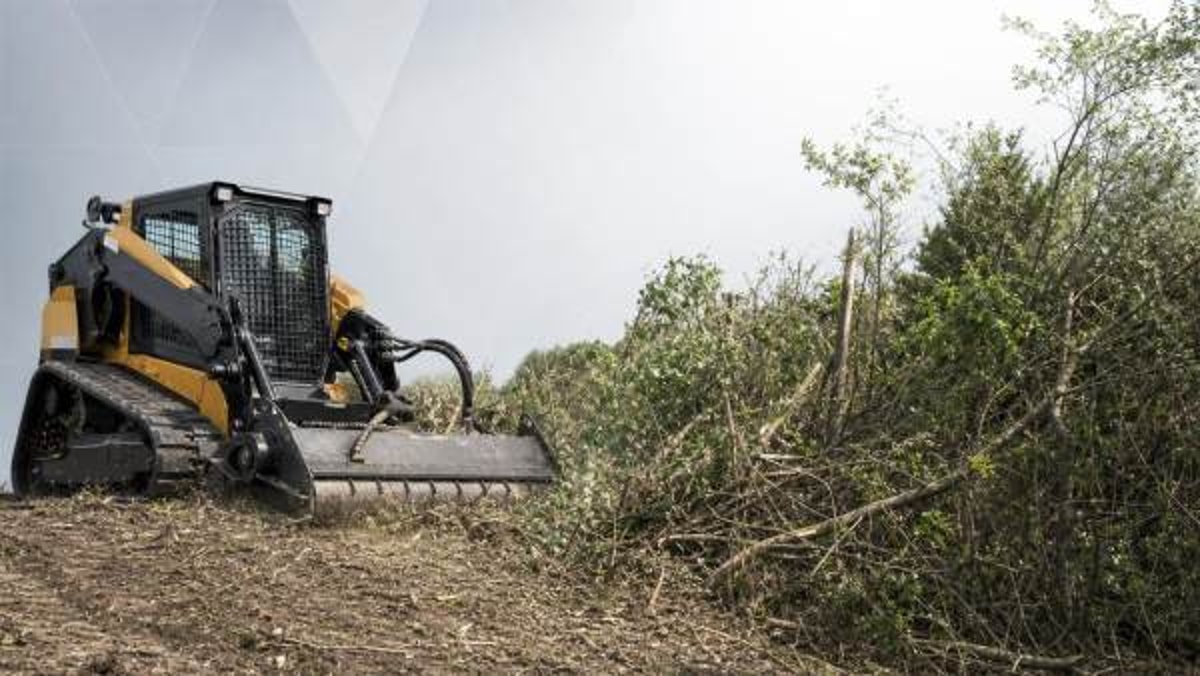
Before starting a land clearing project, understanding the practical limits of a skid steer brush cutter can prevent costly downtime, safety risks, and poor site results. From vegetation density and terrain conditions to hydraulic capacity and attachment compatibility, these factors directly affect project planning, machine performance, and operator efficiency. This guide outlines the skid steer brush cutter limits every project manager should assess before committing equipment to the job.
Why skid steer brush cutter limits matter more in today’s land clearing environment
Land clearing decisions have changed. Project managers are under tighter deadlines, stronger safety oversight, and greater pressure to control equipment utilization. At the same time, many sites now involve more mixed vegetation, irregular access routes, and stricter environmental expectations. In this context, the real question is no longer whether a skid steer brush cutter can cut brush. The more important question is where its operating limits begin and how those limits affect budget, sequencing, and risk.
A skid steer brush cutter remains one of the most versatile tools for light to moderate clearing, fence-line maintenance, roadside management, lot preparation, and pre-construction site cleanup. However, the attachment is often assigned to tasks better suited to dedicated forestry mulchers, excavator-mounted heads, or larger tracked equipment. That mismatch is becoming more common as contractors try to do more with fewer machines. For project leaders, understanding the limits of a skid steer brush cutter is now a planning discipline, not just an operator concern.
The market signal is clear: equipment buyers and site supervisors are placing more value on application fit, hydraulic matching, and productivity predictability. A skid steer brush cutter that performs well in grass, saplings, and light woody overgrowth may lose efficiency fast in rocky ground, steep grades, dense hardwood stems, or continuous heavy-duty cycles. The limit is rarely a single specification. It is usually a combination of site conditions, machine capability, and operator expectations.
The biggest shift: planning now starts with site complexity, not attachment availability
One of the most important changes in land clearing is the move from equipment-first planning to condition-first planning. In the past, crews might simply dispatch the available skid steer brush cutter to almost any overgrown parcel. Today, project managers are more likely to assess vegetation class, moisture conditions, debris load, and haul-off requirements before assigning equipment.
This shift is driven by three practical realities. First, labor and fuel costs make rework more expensive. Second, clients expect cleaner finishes and more reliable completion dates. Third, safety standards leave less tolerance for improvised machine use. As a result, the limit of a skid steer brush cutter must be judged against the exact clearing objective: rough knockdown, selective clearing, full site opening, firebreak preparation, or finish-grade visibility improvement.
This is where project discipline matters. A skid steer brush cutter may still enter the job, but only as part of a phased approach rather than the primary clearing platform.
Hydraulic capacity is becoming the first filter in equipment selection
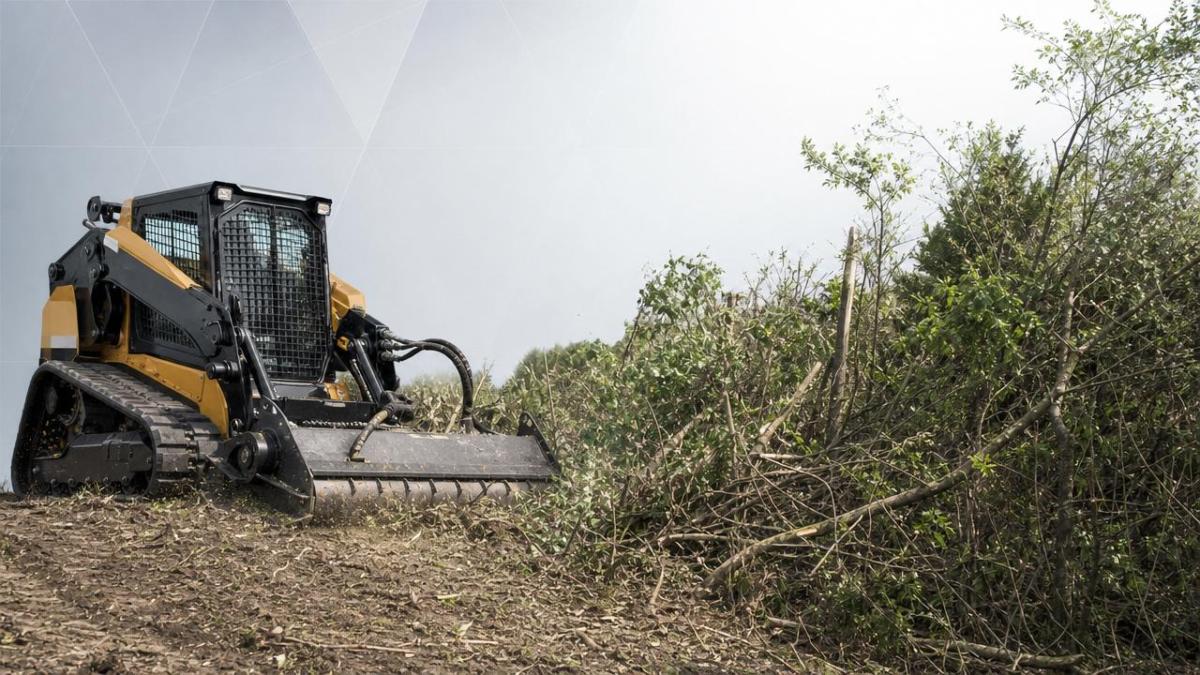
Among all skid steer brush cutter limits, hydraulic capacity is the one most often underestimated. As land clearing projects demand faster throughput, the difference between standard-flow and high-flow skid steers becomes operationally significant. A cutter attachment may physically fit a machine, but that does not mean it will deliver acceptable rotor speed, recovery time, or torque under load.
For project managers, the growing lesson is simple: compatibility is not performance. If the skid steer cannot maintain hydraulic output under dense cutting conditions, production estimates become unreliable. Operators compensate by slowing travel speed, taking partial-width passes, or making repeat cuts. The result is longer machine hours, more fuel use, and elevated wear on both the host machine and the cutter.
This trend matters in procurement as well. Fleet owners increasingly review hydraulic flow, pressure ratings, cooling capability, and case drain requirements before buying a skid steer brush cutter. For project-based rentals, these checks are even more important because mismatched pairings often create hidden performance losses that only become obvious on site.
Vegetation limits are changing as sites become more overgrown and less predictable
A second major shift is the increasing variability of vegetation on commercial, utility, and agricultural sites. Many parcels are left unmanaged for longer periods before redevelopment or maintenance cycles resume. That means a skid steer brush cutter is now more likely to encounter mixed material: vines, thorny brush, invasive species, storm debris, and intermittent small trees within the same working zone.
The practical limit here is not just stem diameter. It is material consistency. Light brush can often be cleared efficiently, but tangled growth and layered woody material reduce feed efficiency and increase the chance of stalling, blade damage, or debris ejection. Dense root crowns, concealed stumps, and wire contamination can further shift a routine pass into a repair event.
For project planning, this means vegetation surveys deserve more attention than many teams give them. A site walk should identify not only what is growing, but also how uniformly it is distributed. A skid steer brush cutter performs best when operators can maintain a steady approach. Mixed-density clearing tends to break that rhythm and lower output.
Signals that vegetation may exceed a practical skid steer brush cutter limit
- Repeated need to reverse and re-cut the same area
- Noticeable drop in rotor momentum after each heavy contact
- Frequent exposure of hidden rocks, wire, or stump hazards
- Operator visibility reduced by uneven or collapsing brush layers
- Projected finish time stretching beyond original machine allocation
Terrain and access constraints are now shaping machine productivity more than attachment specs alone
Another important trend is the growing role of terrain in performance forecasting. A skid steer brush cutter can appear powerful on paper, yet struggle in real-world access conditions. Wet ground reduces traction. Side slopes affect machine balance and operator confidence. Soft edges, drainage channels, and rough cutover ground limit safe travel speed and working angle.
This is particularly relevant for project managers working on utility corridors, retention pond edges, rural development sites, orchards, or transitional forestry land. The limit of a skid steer brush cutter often arrives through mobility constraints before cutting power becomes the issue. If the machine cannot approach material safely, maintain stable footing, or exit quickly in an emergency, the attachment’s theoretical capacity does not matter.
As a result, more teams are separating cutting capability from site reach capability. Tracked loaders may improve flotation and stability, but they also bring transport and cost considerations. Wheeled skid steers may be faster on firm ground, yet less effective in wet or churned conditions. The smarter trend is to evaluate terrain, haul route, and weather exposure together, rather than selecting a skid steer brush cutter in isolation.
Safety expectations are redefining where the limit really is
Historically, many teams defined skid steer brush cutter limits by what the machine could physically cut. Today, the better standard is what it can cut safely and repeatedly within policy. Debris throw, blind spots, rollover exposure, and bystander separation distances all shape whether a site is suitable for this equipment class.
This matters because more land clearing now occurs near roads, structures, public interfaces, utility assets, and regulated work zones. Even when a skid steer brush cutter is mechanically capable, it may not be the right choice where flying debris control is difficult or where exclusion zones interrupt workflow. On compact sites, the safe perimeter required for operation can be a hidden productivity constraint.
The implication for project leaders is that safety planning should be integrated into the go or no-go decision. Shielding, guarding, cab protection, operator training, and emergency stop familiarity are not secondary checks. They are part of defining the equipment limit itself.
How different stakeholders are affected by skid steer brush cutter limits
What project managers should assess before committing a skid steer brush cutter
Given these shifts, a more disciplined pre-job review is becoming standard practice. Before approving a skid steer brush cutter for a land clearing task, project managers should validate five areas.
- Machine-to-attachment match: Confirm hydraulic flow, pressure, carrier weight, guarding, and coupler compatibility.
- Vegetation profile: Estimate density, height, stem size, contamination risk, and uniformity across the site.
- Terrain and weather exposure: Check traction conditions, slope, drainage, soil softness, and forecast changes.
- Safety perimeter: Evaluate roads, buildings, public access, utilities, and debris throw sensitivity.
- Desired finish: Decide whether the goal is rough clearing, selective removal, or near-finish presentation.
If more than one of these categories shows elevated risk, the skid steer brush cutter may still have a role, but likely as a secondary tool in a broader equipment plan.
The emerging best practice: use the skid steer brush cutter as part of a staged clearing strategy
The most effective operators are not asking a skid steer brush cutter to do everything. Instead, they use it where it delivers the best ratio of mobility, cost, and controlled cutting. This staged strategy is increasingly common on mixed-condition sites. Larger or specialized equipment may open dense zones first, while the skid steer brush cutter handles follow-up passes, edge work, access lanes, and selective cleanup.
This approach reflects a broader trend across heavy equipment planning: maximize fit rather than force versatility. It also reduces downtime caused by overheating, blade wear, hose damage, and repeated operator repositioning. In many cases, the right question is not whether to use a skid steer brush cutter, but at what phase of the work it creates the most value.
Final judgment signals before you move forward
For project managers and engineering leads, the practical limit of a skid steer brush cutter is best understood as a moving threshold shaped by hydraulics, vegetation, terrain, safety, and finish expectations. Recent changes in site complexity and performance accountability mean those limits deserve earlier review than they often receive.
Before committing the attachment, confirm whether the machine can maintain production under actual site load, whether the vegetation profile is consistent enough for efficient cutting, whether the terrain supports safe movement, and whether the required exclusion zone is realistic. If any of those answers remain uncertain, the job may require a different attachment mix, a staged clearing sequence, or a higher-capacity platform.
If your team needs to judge how skid steer brush cutter limits affect a specific land clearing project, focus on four questions first: What exactly must be cleared, what conditions will slow the machine down, what safety controls are mandatory, and what finish standard will the client accept? Those answers will usually reveal whether a skid steer brush cutter is the right choice, the wrong choice, or only one part of the right solution.
Related Intelligence
- Forestry EquipmentPortable sawmill manufacturer claims that deserve a closer lookPortable sawmill manufacturer claims can sound impressive, but which ones hold up in real use? Discover a practical checklist to compare output, durability, service, and true lifecycle value.
- Forestry EquipmentCommercial stump grinders: what causes vibration to get worse fastStump grinders commercial crews use can develop severe vibration fast. Learn the top causes, warning signs, and maintenance checks to prevent downtime and costly failures.
- Forestry EquipmentSkid steer brush cutter limits you should know before land clearingSkid steer brush cutter limits can make or break a land clearing project. Learn how hydraulics, terrain, vegetation, and safety affect performance before you commit equipment.
The Morning Broadsheet
Daily chemical briefings, market shifts, and peer-reviewed summaries delivered to your terminal.
