

The Authority in Global Agricultural Chemistry & Bio-Resources
How to compare a portable sawmill manufacturer by cut accuracy
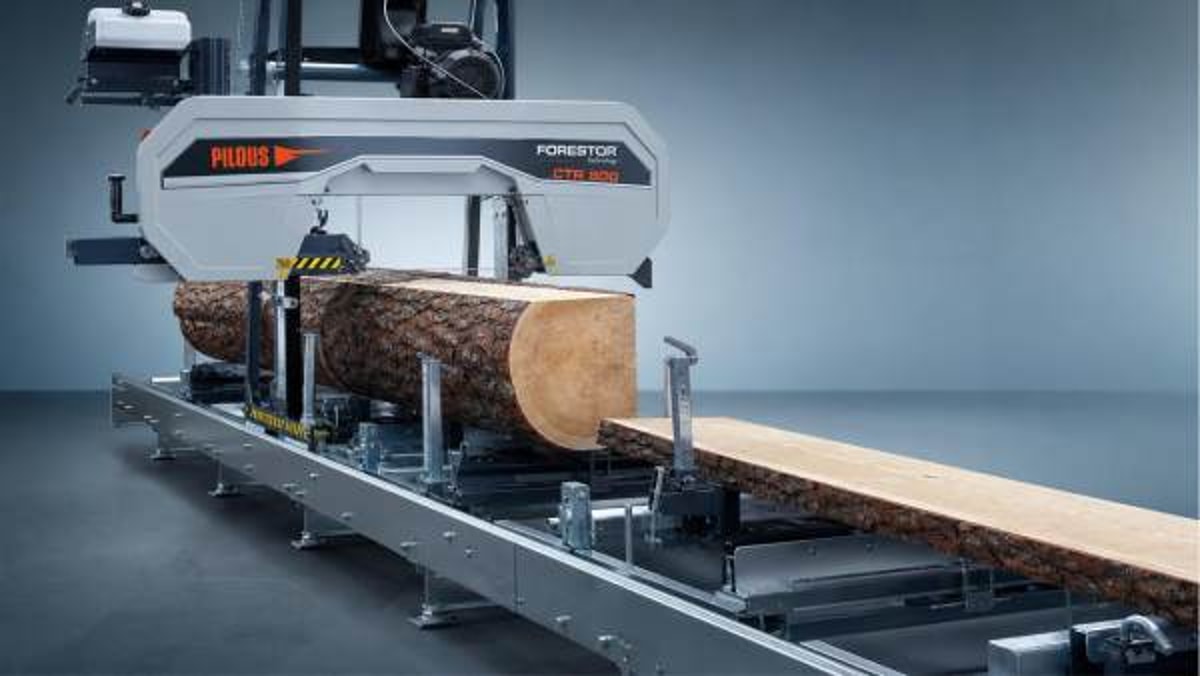
Selecting a portable sawmill manufacturer based on cut accuracy requires more than comparing brochure claims. For technical evaluators, precision depends on blade stability, frame rigidity, feed consistency, calibration control, and repeatable performance under load. This guide outlines how to assess measurable cutting accuracy, verify engineering standards, and identify manufacturers capable of delivering dependable results in demanding forestry and wood-processing applications.
What should technical evaluators measure first when comparing a portable sawmill manufacturer?
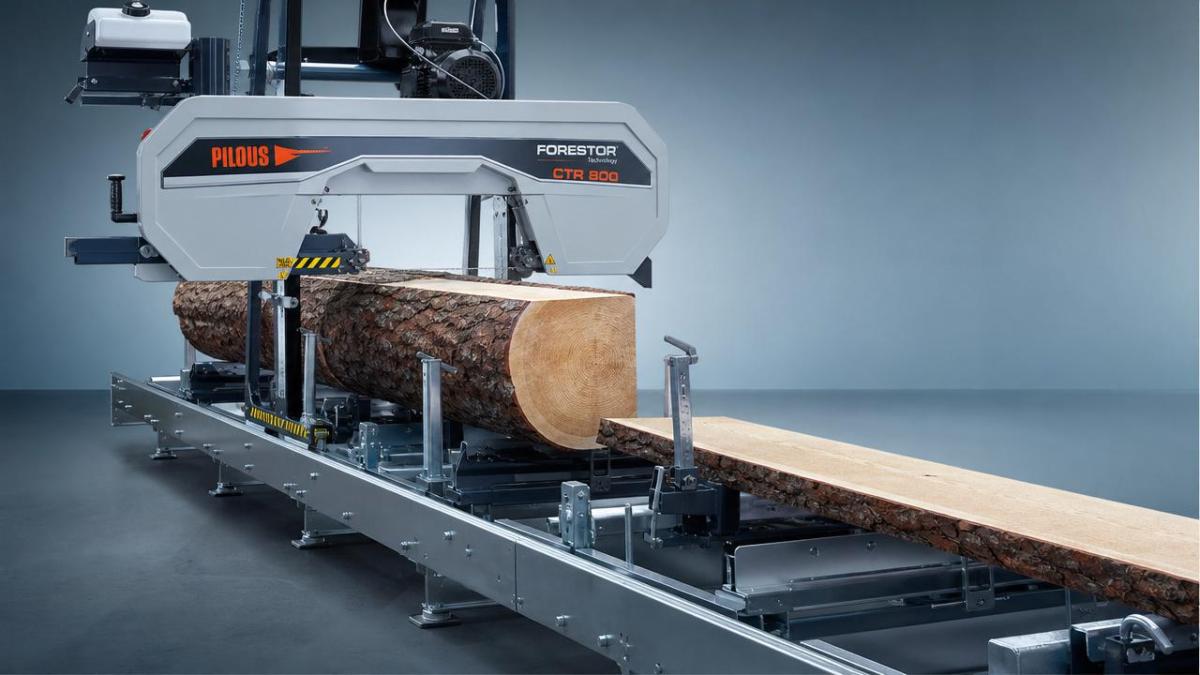
When a technical team compares a portable sawmill manufacturer, the most useful starting point is not engine power, trailer appearance, or advertised productivity. The first question is simpler and more important: how consistently does the machine produce the target board thickness, width, and surface quality across repeated cuts? In procurement for forestry machinery, cut accuracy is the direct link between mechanical design and economic output.
A poorly controlled cut creates thickness variation, taper, wave, and excess kerf loss. That increases downstream planing, waste volume, rework time, and disagreement between production, maintenance, and procurement teams. For wood-processing operators working under tight yield assumptions, even small deviation per board can become material cost leakage over an operating season.
Technical evaluators should review cut accuracy as a system outcome shaped by several engineering variables rather than a single claim. A portable sawmill manufacturer should be able to explain the relationship between the saw head structure, blade guidance, bed alignment, feed mechanics, tensioning method, and calibration access. If the supplier cannot connect these factors in a technically coherent way, accuracy claims deserve caution.
- Measure thickness repeatability across multiple passes, not just one demonstration board.
- Check whether tolerance changes at different feed rates and log diameters.
- Assess whether accuracy is maintained after transport, setup, and several hours of operation.
- Request a practical explanation of calibration points and routine adjustment intervals.
In ACC’s coverage of agricultural and forestry machinery, the strongest manufacturers are usually those that can document process stability instead of relying on generic marketing language. For evaluators, the comparison should focus on measurable behavior under load, because portable sawmill performance on a static showroom floor rarely reflects field conditions.
Which design features most influence portable sawmill cut accuracy?
Cut accuracy in a portable sawmill is produced by structural stiffness and motion control. A machine may use a quality blade, but if the saw head twists, the track is misaligned, or the feed system surges, the cut will still drift. That is why comparing one portable sawmill manufacturer against another requires breaking the machine into its core accuracy drivers.
Saw head and frame rigidity
The head assembly must resist deflection during cutting, especially on dense or uneven logs. Flex in the head structure can change blade tracking and produce taper from one side of the board to the other. Evaluators should examine section thickness, weld quality, connection points, and the way the head rides on the mast or track.
Blade guidance and tensioning
Blade guides should maintain stable tracking while limiting vibration. Weak guide support or inconsistent tension can create washboarding, wandering, and edge variation. A capable portable sawmill manufacturer should explain recommended blade width, guide type, tension adjustment method, and how operators verify correct setup in routine service.
Feed system consistency
A jerky feed system introduces dynamic load changes into the blade. That can distort the cut even if the frame itself is robust. Look at feed motor control, drive transmission stability, operator control resolution, and whether the machine allows predictable speed reduction in harder timber without excessive manual correction.
Bed alignment and log clamping
No portable sawmill manufacturer can deliver reliable accuracy if the log support system permits movement or uneven loading. Bed rails, cross bunks, side supports, and clamp geometry all affect the cut. Technical buyers should inspect whether the machine holds logs securely and whether alignment adjustment is practical after transport over rough access roads.
The table below helps technical evaluators compare the main engineering factors that directly affect cut accuracy when screening a portable sawmill manufacturer.
This framework helps evaluators move from broad impressions to engineering verification. It also supports more objective supplier discussions, especially when comparing manufacturers serving agricultural estates, mobile forestry crews, and primary wood processors with different tolerance expectations.
How can you test cut accuracy instead of trusting brochure claims?
The best way to compare a portable sawmill manufacturer is to request a repeatable test protocol. Many technical problems remain hidden if the demonstration uses only one straight, moderate-density log under ideal conditions. A useful test should include multiple passes, measurement points, and at least two operating scenarios.
- Define the target product, such as structural boards, edging stock, or dimensional lumber, before the test starts.
- Measure board thickness at several positions across the length and width rather than at one center point.
- Repeat the same cut sequence after transport or repositioning to assess whether calibration holds in field use.
- Run the sawmill at conservative and higher feed rates to see how tolerance changes under load.
- Inspect surface finish and kerf path alongside dimensional results, because vibration often appears before gross dimensional failure.
Technical evaluators should also separate machine capability from operator skill. If a portable sawmill manufacturer argues that all accuracy depends on operator experience, that may indicate limited control robustness. Skilled operation matters, but good machine design reduces variability and shortens the learning curve for production teams.
In cross-sector procurement, ACC often emphasizes test discipline because performance risk expands across the supply chain. When a forestry contractor promises dimensionally stable output to a mill, or a farm enterprise adds wood processing to diversify revenue, inaccurate field equipment creates commercial risk beyond the machine itself.
How do leading manufacturers differ in calibration, controls, and serviceability?
Two machines can appear similar on paper yet perform very differently in long-term accuracy retention. That difference often comes from calibration architecture and serviceability. A portable sawmill manufacturer that designs for simple, repeatable adjustment will usually outperform one that requires frequent but difficult realignment.
The comparison below focuses on practical selection issues that matter after delivery, especially for technical evaluators responsible for uptime, operator training, and lifecycle cost.
For many buyers, serviceability is the hidden determinant of real cut accuracy. A well-designed portable sawmill manufacturer makes precision maintainable in the field, not just achievable on the day of installation.
Which standards, documentation, and supply-chain signals matter in procurement?
Portable sawmill procurement sits inside a broader industrial decision environment. Forestry machinery buyers increasingly need traceable documentation, parts continuity, and credible technical communication, particularly when equipment is integrated into larger agricultural, primary processing, or export-oriented operations.
While a portable sawmill manufacturer may not be governed by the same framework as pharmaceutical or chemical equipment, the procurement logic is similar. Evaluators should verify manufacturing consistency, safety documentation, component traceability where relevant, and the supplier’s ability to provide structured technical support.
- Ask for documented inspection routines covering alignment, blade path, and head movement.
- Review spare-parts identification methods and regional support capability.
- Check whether operating manuals include measurable tolerance checkpoints rather than only general safety notes.
- Confirm whether the manufacturer can support application-specific discussions for hardwood, softwood, wet logs, or mixed-density material.
This is where ACC adds value for industrial readers. Our editorial work across agricultural machinery, bio-processing systems, and regulated industrial supply chains reinforces one consistent procurement principle: reliable suppliers provide verifiable technical language, process transparency, and decision-ready information. That approach helps technical evaluators compare manufacturers with less ambiguity and lower sourcing risk.
What common mistakes lead buyers to choose the wrong portable sawmill manufacturer?
Many selection errors begin when teams compare visible features instead of cutting outcomes. A larger engine or lower purchase price can appear attractive, yet neither guarantees board uniformity. In field operations, accuracy losses often cost more than the initial equipment discount.
Mistake 1: judging by advertised capacity alone
Maximum log diameter and theoretical throughput say little about thickness consistency. A portable sawmill manufacturer should be assessed on how well the machine performs within the intended production envelope, not at the most extreme published specification.
Mistake 2: ignoring transport and setup effects
Portable equipment is exposed to movement, uneven ground, and repeated setup cycles. Machines that cut accurately in a fixed demonstration yard may drift in remote forestry conditions. Evaluators should ask how often alignment needs checking after transport and what tools are required.
Mistake 3: underestimating operator variability
If a machine only performs well with one highly experienced operator, production planning becomes fragile. Better manufacturers design controls, references, and maintenance routines that reduce dependence on individual technique.
Mistake 4: failing to connect accuracy with yield economics
A small dimensional drift repeated across many boards can materially reduce recoverable lumber volume. Technical teams should convert tolerance variation into estimated trim loss, planing allowance, and reject risk. That creates a stronger business case than comparing unit price alone.
FAQ: how do buyers compare a portable sawmill manufacturer with confidence?
How much cut accuracy variation is acceptable?
Acceptable variation depends on the end product, downstream machining allowance, and timber type. The key is not a universal number but repeatability under defined conditions. Ask the portable sawmill manufacturer to state expected tolerance ranges for typical applications and to explain how those values are maintained during normal field operation.
Should technical evaluators prioritize hydraulic handling or structural precision?
Hydraulic log handling improves workflow and safety, but structural precision remains the primary filter if cut accuracy is the decision criterion. The best choice balances both. If budget limits force tradeoffs, verify that the base frame, head alignment, and feed control meet production tolerance needs before adding convenience features.
What documentation should a serious manufacturer provide?
At minimum, request operating documentation, maintenance intervals, calibration or alignment procedures, wear-part references, and practical guidance for blade setup. A reliable portable sawmill manufacturer should also be able to discuss application limits openly, including material conditions that reduce accuracy if not managed correctly.
How important is after-sales support in cut accuracy performance?
It is critical. Many accuracy issues emerge after the machine enters real service, when blades, guides, bearings, and alignment points begin to wear. If replacement parts, troubleshooting support, and maintenance instructions are weak, even a well-designed sawmill can lose performance quickly.
Why consult ACC when evaluating a portable sawmill manufacturer?
Technical procurement is increasingly shaped by data quality, cross-border sourcing complexity, and the need to compare suppliers using evidence rather than assumptions. AgriChem Chronicle supports that process through sector-specific editorial analysis spanning agricultural and forestry machinery, industrial processing systems, and compliance-sensitive supply chains.
For teams evaluating a portable sawmill manufacturer, ACC provides a decision framework grounded in technical clarity. We help readers interpret engineering claims, identify the right evaluation checkpoints, and connect machine accuracy with operational economics. That perspective is especially valuable for buyers managing mixed-use operations across forestry, farming, and primary processing.
If you need support with parameter confirmation, manufacturer comparison, application-specific selection, delivery-cycle questions, documentation review, or a structured shortlist for technical procurement, contact ACC. Our editorial and industry analysis approach is designed to help institutional buyers and evaluators move from broad market noise to precise, decision-ready insight.
Related Intelligence
- Forestry EquipmentBIS Mandates Separate Certification for Drone & AI Modules in Forestry EquipmentBIS mandates separate certification for drone & AI modules in forestry equipment—key for Chinese exporters targeting India. Act now to avoid license invalidation by 30 Sep 2026.
- Forestry EquipmentPortable sawmill manufacturer claims that deserve a closer lookPortable sawmill manufacturer claims can sound impressive, but which ones hold up in real use? Discover a practical checklist to compare output, durability, service, and true lifecycle value.
- Forestry EquipmentCommercial stump grinders: what causes vibration to get worse fastStump grinders commercial crews use can develop severe vibration fast. Learn the top causes, warning signs, and maintenance checks to prevent downtime and costly failures.
The Morning Broadsheet
Daily chemical briefings, market shifts, and peer-reviewed summaries delivered to your terminal.
