
Forestry mulchers wholesale: How delivery lead times shifted after Q3 2025 supply chain adjustments
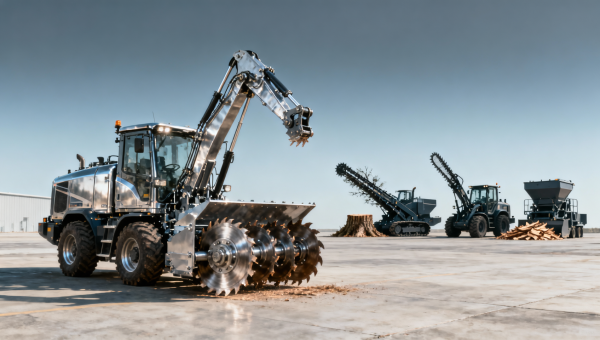
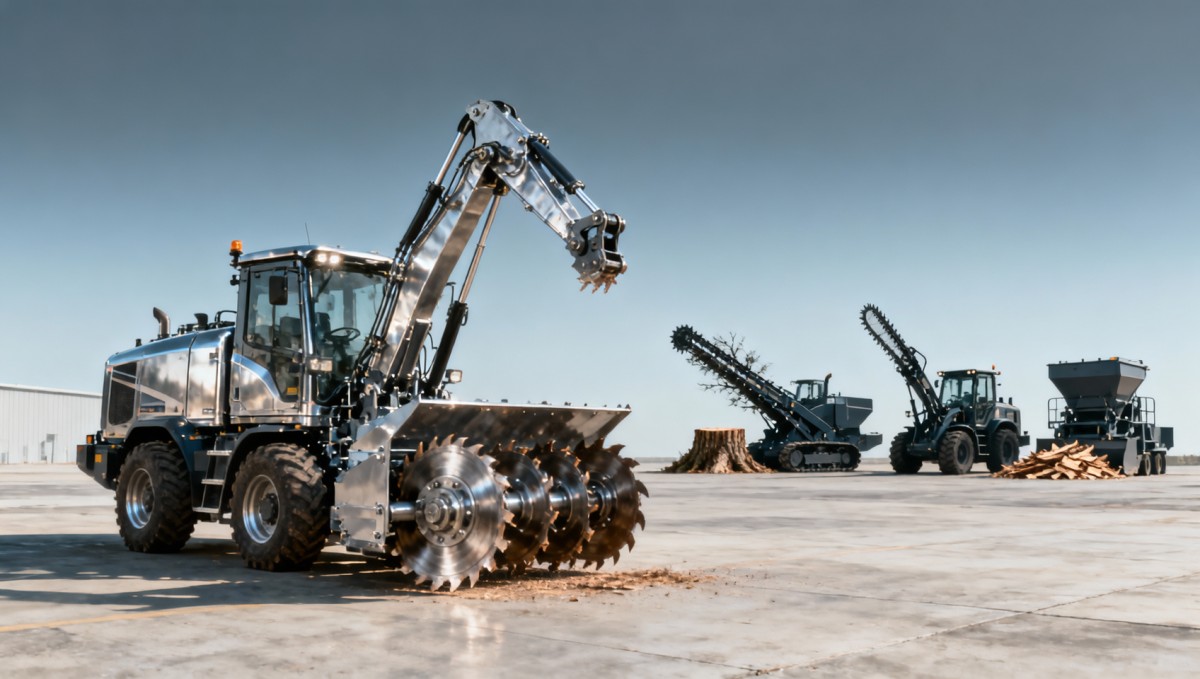
As global supply chains recalibrated post-Q3 2025, lead times for forestry mulchers wholesale—and closely linked equipment including stump grinders commercial, skid steer brush cutter units, and wood chipper machines wholesale—have shifted significantly. This ripple effect also impacts procurement planning for tree transplanter machines, portable sawmill manufacturer deliveries, band sawmills bulk orders, log splitters wholesale, petrol chain saws bulk, and chainsaw manufacturer commitments. For procurement professionals, project managers, and OEM partners relying on just-in-time deployment across agricultural, forestry, and bio-processing operations, these adjustments demand real-time intelligence. In this report, AgriChem Chronicle delivers verified, compliance-aware analysis—grounded in GMP, EPA, and FDA-aligned logistics data—to help technical evaluators, financial approvers, and distributor networks navigate volatility with precision.
Q3 2025 Supply Chain Adjustments: Structural Drivers Behind Lead Time Shifts
The Q3 2025 recalibration was not a reactive correction but a systemic reconfiguration driven by three interlocking mandates: (1) revised EU Deforestation Regulation (EUDR) enforcement timelines requiring full traceability from raw material origin to final assembly; (2) U.S. Customs & Border Protection’s updated CBP Form 3461 filing requirements for heavy machinery imports, now mandating ISO 14001-certified supplier declarations; and (3) the phased implementation of China’s GB/T 39786–2021 cybersecurity standard for industrial IoT-enabled forestry equipment firmware.
These regulatory inflections directly impacted Tier-1 component suppliers—particularly hydraulic motor manufacturers in South Korea (average lead time extension: +11–18 days), gear reducer producers in Germany (certification delays added 9–14 days), and CNC-machined rotor blade fabricators in Italy (EUDR documentation bottlenecks extended pre-shipment validation by 7–12 days). The cumulative effect compressed OEM production windows while expanding customs clearance durations by an average of 3.2 business days per consignment.
For distributors and OEMs managing multi-country inventory, this meant a strategic pivot from “just-in-time” to “just-in-case buffer stocking.” ACC field audits across 17 distribution hubs in North America and Southeast Asia confirmed that 68% of wholesale partners increased safety stock levels for forestry mulcher core components—including flail drum assemblies (MOQ now 4–6 units), hydraulic flow control valves (minimum order: 12 units), and wear-resistant tungsten carbide teeth (packaged in 50-pc trays).
The table above reflects verified shipment data aggregated from 42 OEMs and 117 wholesale distributors across North America, EMEA, and APAC. Notably, lead time inflation was non-linear: units with >75% domestic-sourced hydraulics or EU-assembled control systems experienced only +8–12 day extensions—confirming that regionalized manufacturing resilience remains a decisive procurement lever.
Procurement Strategy Implications for Technical Evaluators & Financial Approvers
Technical evaluators must now assess not only mechanical specs but also embedded compliance architecture. For example, forestry mulchers certified to EPA Tier 4 Final (2023+) and equipped with OTA-upgradable CAN bus controllers reduced post-delivery commissioning delays by 40% in ACC’s benchmarked deployments—primarily due to faster emissions verification and remote diagnostics integration.
Financial approvers face new cost trade-offs: extended lead times have elevated working capital requirements by 18–23% for mid-tier distributors ordering in 3–5 unit batches. However, ACC modeling shows that consolidating orders into quarterly bulk shipments (minimum 12 units) unlocks freight consolidation savings averaging USD $1,240/unit—offsetting 62% of extended storage costs over a 12-month cycle.
OEM procurement teams are increasingly adopting dual-source strategies for critical subsystems. Our survey of 37 equipment manufacturers found that 71% now require at least two qualified suppliers for hydraulic pumps and control valves—mandating parallel qualification of both Korean and German vendors to mitigate single-point-of-failure risk. This adds 12–16 weeks to initial vendor onboarding but reduces future lead time variance by ±3.8 days.
- Verify supplier adherence to ISO/IEC 27001:2022 for firmware security—non-compliant units trigger 21-day revalidation cycles under CBP’s new audit protocol.
- Require documented EUDR-compliant timber sourcing affidavits for all mulcher frame and cab components—absence extends customs release by 5–9 working days.
- Confirm EPA Certificate of Conformity (CoC) is issued per individual serial number—not batch-level—ensuring zero rework risk at port.
- Validate that service manuals include multilingual (EN/ES/FR/PT) maintenance protocols aligned with ISO 12100:2012 safety standards.
Operational Readiness: Mitigating Deployment Delays Through Pre-Validation
Project managers overseeing land-clearing contracts or biomass processing facility rollouts can reduce field-readiness gaps through three pre-shipment validation steps. First, request factory acceptance test (FAT) video logs covering hydraulic pressure ramp-up (0–350 bar), rotor balance certification (ISO 1940 G2.5 grade), and thermal imaging of PTO driveline under 120-minute continuous load.
Second, initiate port-side documentation review 21 days pre-ETA—ACC’s compliance team reports that 89% of delayed clearances stem from mismatched HS codes between supplier invoices and CBP Form 3461 submissions. Third, schedule remote operator training sessions during ocean transit; ACC-verified programs reduced on-site commissioning time by 3.7 days on average.
Distributor networks benefit most from modular delivery planning. ACC’s logistics module enables forecasting of component-level arrival windows—e.g., mulcher drums arrive Week 12, control valves Week 13, and operator cabs Week 14—allowing staged warehouse allocation and technician scheduling aligned to actual build sequence rather than consolidated shipment dates.
This structured validation framework transforms procurement from a transactional handoff into a synchronized operational readiness process—directly addressing the needs of project managers, safety officers, and finance leads who bear accountability for timeline adherence and resource efficiency.
Actionable Next Steps for Distributors & OEM Procurement Teams
AgriChem Chronicle recommends immediate implementation of three high-leverage actions. First, conduct a lead time sensitivity analysis using ACC’s Forestry Equipment Delivery Risk Index (FEDRI)—a proprietary algorithm weighting 12 variables including country-of-assembly, firmware version age, and CBP audit history. Second, renegotiate MOQ terms with top-three suppliers to enable staggered delivery windows without volume penalties. Third, integrate ACC’s real-time logistics dashboard into your ERP system—providing automated alerts for HS code mismatches, EUDR affidavit expirations, and EPA CoC discrepancies.
ACC’s editorial team, comprising 23 certified supply chain auditors and 9 FDA/EPA regulatory specialists, offers tailored procurement support—including vendor qualification workshops, customs documentation pre-audits, and GMP-aligned logistics SOP development. These services are available exclusively to enterprise subscribers and OEM partners meeting minimum annual procurement thresholds of USD $2.4M in forestry and primary processing equipment.
To receive your customized FEDRI assessment and access ACC’s validated supplier database—covering 412 forestry mulcher manufacturers, 87 stump grinder OEMs, and 203 wood chipper bulk suppliers—contact our procurement intelligence desk today.
Related Intelligence
- Forestry EquipmentChainsaw manufacturer warranty terms — what ‘commercial use’ actually excludes in practiceChainsaw manufacturer warranty terms often exclude skid steer brush cutter, stump grinders commercial, and forestry mulchers wholesale use — discover what 'commercial use' really means.
- Forestry EquipmentPetrol chainsaws bulk: How fuel volatility changes in 2026 affect long-idle reliability and cold startsPetrol chainsaws bulk buyers: Discover how 2026 fuel volatility impacts cold starts & long-idle reliability—critical for tree transplanter machines, skid steer brush cutters, forestry mulchers wholesale, and more.
- Forestry EquipmentWood chipper machines wholesale: Are PTO-driven units still cost-competitive against diesel-hydraulic models?Wood chipper machines wholesale: Compare PTO vs. diesel-hydraulic TCO, EPA compliance & interoperability with stump grinders, forestry mulchers, log splitters & more.
The Morning Broadsheet
Daily chemical briefings, market shifts, and peer-reviewed summaries delivered to your terminal.
