

The Authority in Global Agricultural Chemistry & Bio-Resources
A chainsaw manufacturer is only as good as its parts support
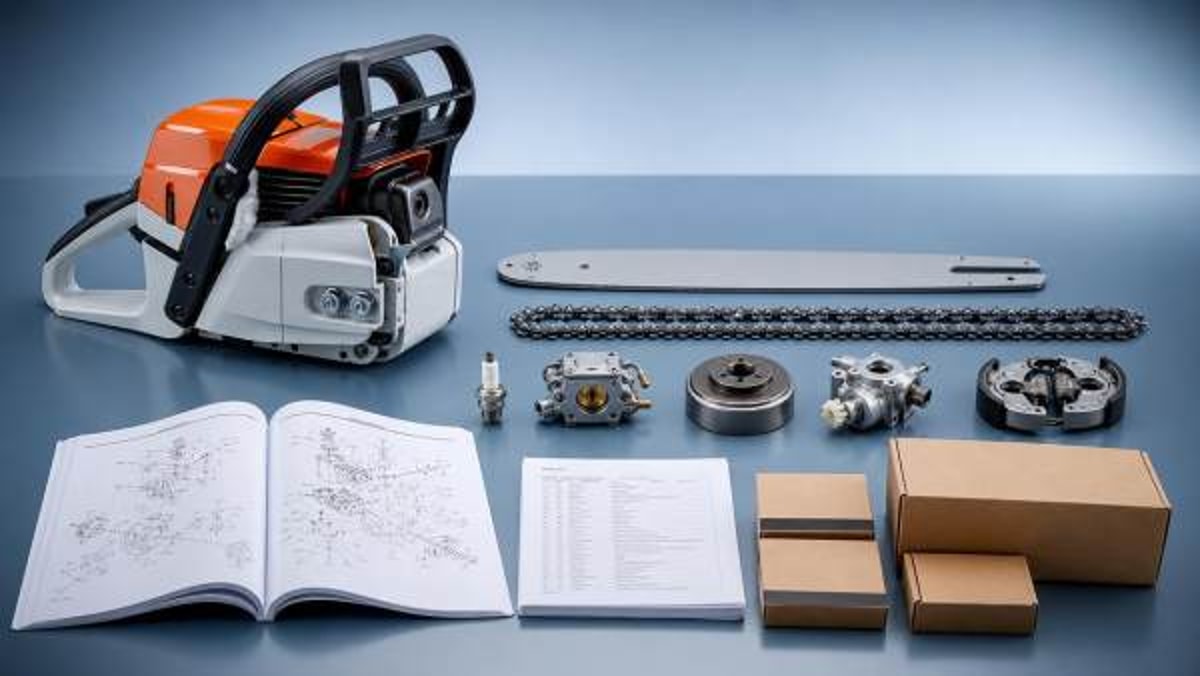
For after-sales maintenance teams, a chainsaw manufacturer is judged long after the sale—by the speed, accuracy, and availability of parts support. In demanding forestry and agricultural operations, downtime caused by missing components or poor documentation can quickly erode trust. That is why evaluating a chainsaw manufacturer requires looking beyond the machine itself to the strength of its replacement parts network, technical guidance, and long-term service reliability.
For maintenance personnel, a checklist-based approach is the fastest way to separate a reliable chainsaw manufacturer from one that only performs well on a product brochure. Engine output, bar length, and cutting speed matter at the point of purchase, but spare parts structure determines whether a fleet stays productive through peak harvest, storm cleanup, woodland maintenance, and contract forestry work. When the right clutch drum, ignition module, carburetor kit, chain brake band, or oil pump cannot be sourced quickly, the technical quality of the original saw becomes irrelevant.
This guide is designed for after-sales teams that need practical evaluation criteria, not vague claims. It focuses on what to check first, how to judge support quality, which issues are commonly overlooked, and what information to prepare before engaging a chainsaw manufacturer on service expectations.
Start here: the first checks that reveal true parts support strength
Before reviewing pricing or warehouse promises, maintenance teams should verify whether a chainsaw manufacturer has the basic infrastructure required for dependable service. These first checks quickly show whether support is systemized or improvised.
- Confirm whether the manufacturer provides exploded parts diagrams for every active and legacy model. Without model-specific diagrams, ordering accuracy declines and repeat failures become more likely.
- Check if part numbers are stable, traceable, and tied to serial number ranges. A good chainsaw manufacturer should clearly indicate superseded parts and compatibility changes.
- Review stocking logic for fast-moving wear items such as guide bars, chains, sprockets, filters, spark plugs, starter ropes, fuel lines, and anti-vibration mounts.
- Ask about fulfillment lead times for standard, uncommon, and discontinued items. Reliable support is measured across all three categories, not only common consumables.
- Verify whether technical bulletins, service manuals, torque values, and troubleshooting procedures are accessible to field technicians and dealer workshops.
- Determine if the manufacturer supports root-cause analysis for repeated failures, rather than treating every issue as a simple replacement request.
If a chainsaw manufacturer cannot provide these fundamentals quickly, maintenance teams should treat that as an early warning sign. Good parts support is usually visible in documentation discipline long before it is proven in emergency supply performance.
Core checklist: how to evaluate a chainsaw manufacturer for after-sales performance
The most useful evaluation method is to score support across multiple service dimensions. This prevents overreliance on one attractive factor, such as low unit cost or a broad catalog.
A strong chainsaw manufacturer performs well across all five areas. A weak one may compensate with marketing language, but poor visibility in any of these categories tends to create service bottlenecks under real operating pressure.
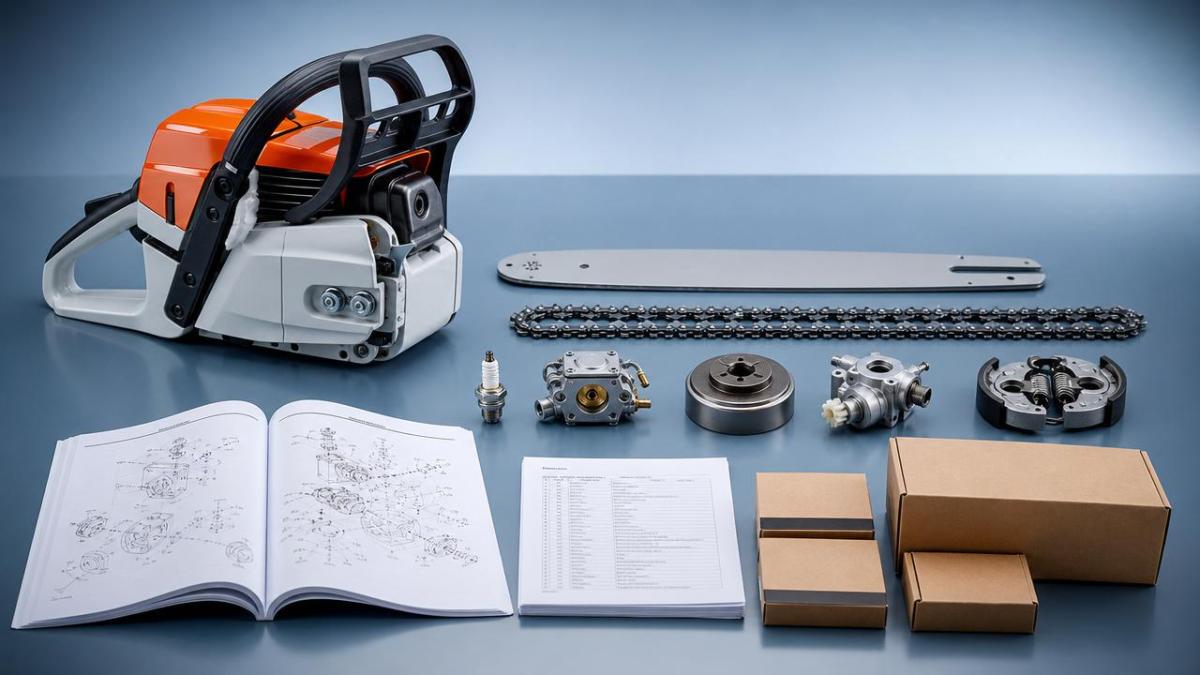
Priority parts categories that should never be overlooked
After-sales teams should not treat all parts equally. Some categories have a disproportionate impact on uptime, safety, and repair complexity. When reviewing a chainsaw manufacturer, prioritize the following groups.
1. Fast-wear operating parts
Chains, guide bars, drive sprockets, air filters, fuel filters, and spark plugs must be easy to identify and replenish. These are high-turn components, and any uncertainty in sizing or compatibility increases routine service time.
2. Safety-critical components
Chain brake assemblies, throttle interlocks, anti-vibration systems, catcher components, and switch modules require exact replacements. A responsible chainsaw manufacturer should provide clear installation references and not encourage unsafe substitutions.
3. Fuel and ignition system parts
Carburetors, fuel lines, primer bulbs, ignition coils, spark caps, and related kits often create difficult diagnostic scenarios. Good support means these parts are not only available but also backed by troubleshooting trees and adjustment data.
4. Power transmission and lubrication parts
Clutches, drums, needle bearings, chain tensioners, and oil pumps can immobilize a saw completely. A chainsaw manufacturer with mature after-sales systems will usually maintain these assemblies in stock and provide rebuild or replacement options.
5. Structural and sealing components
Crankcase gaskets, seals, handles, covers, buffers, and mounting hardware may seem secondary, but they influence long-term reliability. Support quality often becomes visible here because lower-tier suppliers tend to neglect low-profile but essential components.
How support expectations change by maintenance scenario
The right chainsaw manufacturer for one user group may not be the right fit for another. Maintenance teams should match parts support standards to the actual operating environment.
Agricultural and estate maintenance fleets
These users often need dependable supply of common service items, simple ordering processes, and cost control across multiple machines. Priority should be placed on consumables, user-friendly manuals, and consistent support for medium-duty models.
Professional forestry operations
High-load cutting environments demand rapid access to clutch systems, bars, chains, vibration mounts, and engine-related parts. Here, the best chainsaw manufacturer is the one that minimizes downtime under sustained field conditions and supports mobile repair teams.
Dealer and regional service centers
These organizations need ordering integration, parts forecasting, warranty handling procedures, and standardized training. The support model must scale beyond one repair bench and function across multiple technicians and customer accounts.
Mixed-brand workshops
For service teams handling several OEMs, catalog clarity and technical responsiveness become decisive. If a chainsaw manufacturer uses confusing nomenclature or weak revision control, workshop efficiency drops sharply.
Common blind spots that cause future service problems
Many buyers ask whether parts are available, but too few ask the more important follow-up questions. After-sales issues usually emerge from blind spots rather than complete absence of support.
- Assuming availability means local availability. A parts list is not the same as regional stock on hand.
- Ignoring support for retired models. A chainsaw manufacturer may support current units well while leaving older fleets exposed.
- Overlooking documentation quality. Poor diagrams and incomplete service notes can waste more time than the shipment itself.
- Failing to verify authenticity safeguards. Counterfeit or inconsistent components undermine safety and create warranty disputes.
- Not checking escalation channels. Complex engine or lubrication failures often require direct technical consultation, not just parts ordering.
- Treating warranty and non-warranty support as identical. Some suppliers respond quickly only when claims are billable.
These blind spots are especially relevant in regulated and quality-sensitive supply environments, where traceability, documentation integrity, and supplier accountability matter as much as shipment speed.
Practical execution advice: what to request before committing
If your organization is evaluating or onboarding a chainsaw manufacturer, the most effective next step is to request operational proof instead of general assurances. Ask for concrete service evidence that maintenance teams can test directly.
- A sample parts catalog with exploded views and serial number references
- A list of recommended stock items for 6 to 12 months of maintenance demand
- Typical lead times for common, uncommon, and obsolete parts
- Technical manuals, troubleshooting charts, and service bulletin examples
- Warranty workflow details, including claim response times and approval documentation
- Evidence of dealer training, field support, or technical helpline availability
- A policy on model lifecycle support and parts supersession management
This information allows after-sales teams to compare suppliers using measurable service criteria. It also creates a clear baseline for future accountability if support quality deteriorates after the commercial agreement begins.
FAQ for after-sales maintenance teams
How can I tell if a chainsaw manufacturer truly supports older equipment?
Ask for support duration by model, not general statements. A reliable chainsaw manufacturer should specify years of post-discontinuation support, substitute part pathways, and documentation access for legacy machines.
Which metric matters most: price, lead time, or documentation?
For after-sales work, lead time and documentation usually outweigh unit price. An inexpensive component has little value if it arrives late or is ordered incorrectly because the catalog was unclear.
Should maintenance teams favor OEM-only parts support?
In safety-critical and high-load applications, OEM support is generally the safer route, especially when a chainsaw manufacturer provides traceability, technical validation, and warranty alignment. Alternative sources may help with minor consumables, but control standards must remain high.
Final service checklist before you move forward
A chainsaw manufacturer is only as good as its parts support because service credibility is built in the workshop, not the showroom. For after-sales maintenance teams, the best choice is usually the manufacturer that offers accurate parts identification, dependable stock coverage, transparent lifecycle support, and technical guidance that speeds diagnosis and repair.
Before moving ahead, prioritize these questions: Which parts fail most often in your operating environment? What stock must be held locally? Which models require long-term legacy support? How fast can the chainsaw manufacturer respond to safety-critical breakdowns? What manuals, bulletins, and training resources will be available to your technicians? If you need to confirm specifications, compatibility, service cycle planning, stocking recommendations, budget impact, or cooperation terms, these are the right topics to raise first in supplier discussions.
Related Intelligence
- Forestry EquipmentBIS Mandates Separate Certification for Drone & AI Modules in Forestry EquipmentBIS mandates separate certification for drone & AI modules in forestry equipment—key for Chinese exporters targeting India. Act now to avoid license invalidation by 30 Sep 2026.
- Forestry EquipmentPortable sawmill manufacturer claims that deserve a closer lookPortable sawmill manufacturer claims can sound impressive, but which ones hold up in real use? Discover a practical checklist to compare output, durability, service, and true lifecycle value.
- Forestry EquipmentCommercial stump grinders: what causes vibration to get worse fastStump grinders commercial crews use can develop severe vibration fast. Learn the top causes, warning signs, and maintenance checks to prevent downtime and costly failures.
The Morning Broadsheet
Daily chemical briefings, market shifts, and peer-reviewed summaries delivered to your terminal.
