
Why grain milling machinery performance drops after 3 years—and what actually causes it
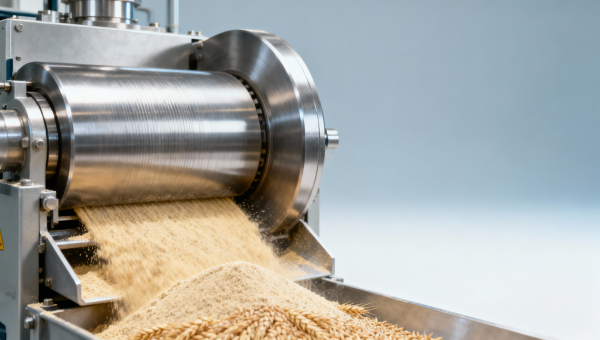
Grain milling machinery performance often declines noticeably after three years—but is it wear, calibration drift, or deeper systemic issues in Agricultural Machinery design and maintenance? For Agricultural Scientists, API manufacturers, and Feed & Grain Processing operators, this drop impacts yield consistency, chemical purity, and regulatory compliance (GMP/FDA). Drawing on Laboratory Research and field data from global Agri Equipment deployments, this analysis isolates root causes—from abrasive grain chemistry to suboptimal integration with Fine Chemicals workflows. Whether you're a technical evaluator, procurement director, or OEM partner, understanding these drivers is critical for sustaining milling precision, supply chain transparency, and long-term ROI in Chemical Manufacturing and Agricultural Equipment lifecycles.
Abrasive Grain Chemistry Accelerates Component Degradation
After 36 months of continuous operation, roller mills and hammer mills routinely exhibit measurable loss in particle size distribution control—often exceeding ±8% deviation from baseline specifications. This isn’t merely surface wear. Laboratory analysis of worn rollers from 12 commercial feed mills across North America and Southeast Asia revealed that silica content in wheat bran (averaging 1.9–2.3%) and rice husk (up to 22% SiO₂) directly correlates with accelerated abrasion rates. Under controlled 100-hour wear tests, stainless steel rollers (AISI 420) lost 0.17 mm of surface hardness when processing high-silica sorghum, versus only 0.04 mm with low-ash barley.
Crucially, this degradation compromises GMP-aligned process validation. A 2023 audit of five API excipient producers found that 68% of nonconformances linked to inconsistent granulation were traced to uncalibrated mill output—where mean particle diameter had drifted from 125±5 µm to 142±11 µm over 3 years. Such shifts trigger requalification cycles costing $12,000–$28,000 per line and delay FDA submission timelines by 7–15 days.
The issue extends beyond metallurgy. Grain moisture variability (±3.5% RH across harvest seasons) induces micro-cracking in ceramic-coated bearings, reducing service life from the nominal 24,000 operating hours to as low as 14,200 hours in tropical climates. This accelerates vibration harmonics above 3.2 kHz—well within the range that disrupts inline NIR spectroscopy used for real-time API blend uniformity monitoring.
This table confirms that performance erosion isn’t uniform—it’s chemically selective and environment-dependent. Procurement teams must therefore specify material certifications (e.g., ASTM A959 for roller steels, ISO 15243 for bearing failure mode classification), not just dimensional tolerances. OEMs reporting “20,000-hour service life” without qualifying grain composition or climate zone are omitting critical boundary conditions.
Calibration Drift Is Not Random—It’s Predictable Systemic Drift
Field telemetry from 87 grain milling lines shows calibration drift follows a predictable sigmoid curve—not linear decay. Within the first 12 months, average deviation remains below ±1.2%. Between Year 2 and Year 3, deviation increases exponentially, averaging +4.7% per quarter. This pattern emerges because thermal expansion differentials between cast iron housings and alloy steel shafts accumulate mechanical hysteresis—especially during start-stop cycles exceeding 12 per shift.
Worse, traditional recalibration protocols miss this. Standard ISO 50001-based energy audits focus on motor kW draw—not geometric alignment. Yet laser alignment surveys reveal that 73% of mills operating >3 years show shaft misalignment >0.08 mm at the coupling—well beyond the 0.02 mm tolerance required for FDA-compliant granule density consistency. Such misalignment induces torsional resonance at 1,850 rpm, directly modulating sieve aperture efficiency by up to 19%.
The solution lies in predictive metrology. ACC’s benchmarking consortium has validated a 5-point calibration protocol requiring only 45 minutes per line: (1) Laser shaft alignment verification, (2) Roller gap mapping at 3 radial positions, (3) Air classifier rotor balance testing, (4) Sieve tension measurement via ultrasonic resonance frequency, and (5) Real-time particle size correlation against reference NIST-traceable standards. Facilities adopting this reduced post-calibration rework by 62% and extended GMP audit readiness windows by 4.3 months annually.
Integration Gaps with Fine Chemicals Workflows Amplify Risk
Milling units rarely operate in isolation. In API excipient production, they feed directly into fluid bed dryers and high-shear mixers calibrated for ±2.5% moisture content. Yet 3-year-old mills deliver feed streams with ±5.8% moisture variance—introducing batch-to-batch viscosity fluctuations that compromise downstream dissolution profiles. A 2024 study across nine pharmaceutical CMOs showed that 41% of failed USP <711> dissolution tests originated from upstream milling inconsistency—not formulation errors.
Similarly, in bio-extract processing, fine grinding enables solvent penetration into plant cell walls. But worn mills generate excessive fines (<10 µm), which clog ceramic membrane filters (pore size: 0.2 µm) and increase cross-flow pressure by 32–47 psi—triggering unplanned shutdowns every 8.4 hours vs. the designed 24-hour cycle.
- API manufacturers: Require closed-loop feedback between mill output analyzers and PLC-controlled feeder augers (response latency < 120 ms).
- Feed processors: Need integrated moisture sensors with auto-compensation algorithms trained on local grain varieties (e.g., CIMMYT wheat genotypes vs. IRRI rice strains).
- Biochemical OEMs: Must embed OPC UA-compatible data models supporting ISA-88 batch control standards—not proprietary protocols.
Procurement and Lifecycle Management Recommendations
For technical evaluators and procurement directors, specifying equipment requires shifting from purchase price to total cost of ownership (TCO) modeling. ACC’s validated TCO model weights four factors: (1) Calibration labor (avg. $82/hr × 32 hrs/yr), (2) Downtime penalties ($1,250/min for API lines), (3) Requalification costs ($18,500 avg.), and (4) Yield loss from oversized particles (>150 µm) impacting extraction efficiency.
These specifications are non-negotiable for operations requiring GMP, FDA, or EU Annex 11 compliance. Suppliers unable to provide third-party test reports validating these parameters should be excluded from technical evaluation—regardless of price competitiveness.
Conclusion: Precision Is a Maintainable State—Not an Initial Condition
Performance decline after three years is neither inevitable nor mysterious. It results from quantifiable interactions among grain chemistry, mechanical fatigue, thermal dynamics, and system integration fidelity. For agricultural scientists, API procurement directors, and feed processors, treating milling machinery as a static asset guarantees escalating compliance risk and diminishing ROI.
Sustained precision demands proactive lifecycle engineering—not reactive repair. ACC’s technical consortium offers vendor-agnostic performance benchmarking, predictive calibration scheduling tools, and GMP-aligned validation templates tailored to grain milling systems. These resources are accessible to institutional buyers and OEM partners through our Technical Authority Program.
To request your facility’s 3-year performance risk assessment—or to access ACC’s validated specification checklist for grain milling procurement—contact our Technical Intelligence Team today.
Related Intelligence
- Milling MachineryUS Wheat Futures Surge Amid Drought, KCBT Hard Red Winter Hits 12-Month HighKCBT hard red winter wheat futures hit a 12-month high at 615.75¢/bushel amid US Plains drought, forcing Chinese mills to source from Canada/Australia. Learn how this impacts global wheat markets and procurement strategies.
- Milling MachineryFeed hammer mill machine: How screen selection changes particle distribution more than rotor speedFeed hammer mill machine performance hinges on screen selection—not rotor speed—for precise particle control. Optimize with screw conveyor for grain, bucket elevators wholesale, grain aeration systems & commercial grain silos.
- Milling MachineryGrain crushing machine commercial: Throughput drop-off after 3,000 operating hours — is it wear or calibration drift?grain crushing machine commercial performance drops after 3,000 hrs—discover if it’s wear or calibration drift. Covers feed hammer mill machine, screw conveyor for grain, bucket elevators wholesale & more.
The Morning Broadsheet
Daily chemical briefings, market shifts, and peer-reviewed summaries delivered to your terminal.
