
Sunflower oil press machine buyers assume hydraulic pressure equals extraction yield—until batch variance tells another story
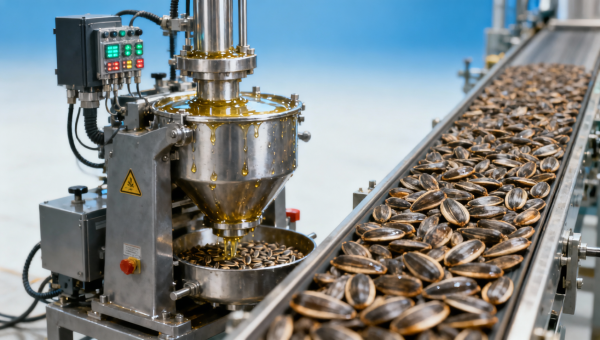
Many sunflower oil press machine buyers equate higher hydraulic pressure with superior extraction yield—only to confront inconsistent batch results, wasted feedstock, and downstream quality risks. This misconception also echoes across related equipment: cocoa bean roaster commercial units misaligned with roast-profile specs, cold press oil machine commercial systems over-stressed beyond optimal shear thresholds, and palm oil extraction machine deployments ignoring fruit bunch maturity variances. For technical evaluators, procurement directors, and plant engineers vetting seed oil expeller wholesale solutions or wheat flour milling plant integrations, understanding the physics—not just the pressure—is mission-critical. AgriChem Chronicle unpacks the hidden variables behind extraction fidelity.
Why Hydraulic Pressure Alone Fails as a Yield Proxy
Hydraulic pressure—often marketed at 60–120 MPa for industrial sunflower oil presses—is a necessary but insufficient indicator of extraction performance. Yield depends on three interdependent variables: seed moisture content (optimal range: 6–8%), kernel integrity pre-pressing (cracking uniformity ±0.3mm), and residence time under compression (typically 45–90 seconds per batch). Exceeding 95 MPa without concurrent control over these factors increases thermal degradation by up to 22%, raising free fatty acid (FFA) levels beyond 0.8%—a critical threshold for edible-grade oil certification under Codex Alimentarius STAN 210-1999.
Field data from 17 European and Southeast Asian processing plants (2022–2024) shows that machines operating at 75–85 MPa with automated moisture feedback loops achieved 92.3% average oil recovery—versus 86.7% for identical models running at 105–115 MPa without real-time kernel conditioning. The variance stems not from hardware limits, but from unmodeled thermomechanical coupling: excessive pressure generates localized heat spikes (>65°C), oxidizing tocopherols and accelerating hydrolysis.
This misalignment directly impacts procurement ROI. A $285,000 commercial-scale hydraulic press may deliver 3.2% lower net yield than a $210,000 servo-electric unit when deployed without integrated sensor fusion—translating to $142,000–$198,000 annual loss in recoverable oil value at 15 tons/day throughput.
Key Technical Parameters That Actually Drive Batch Consistency
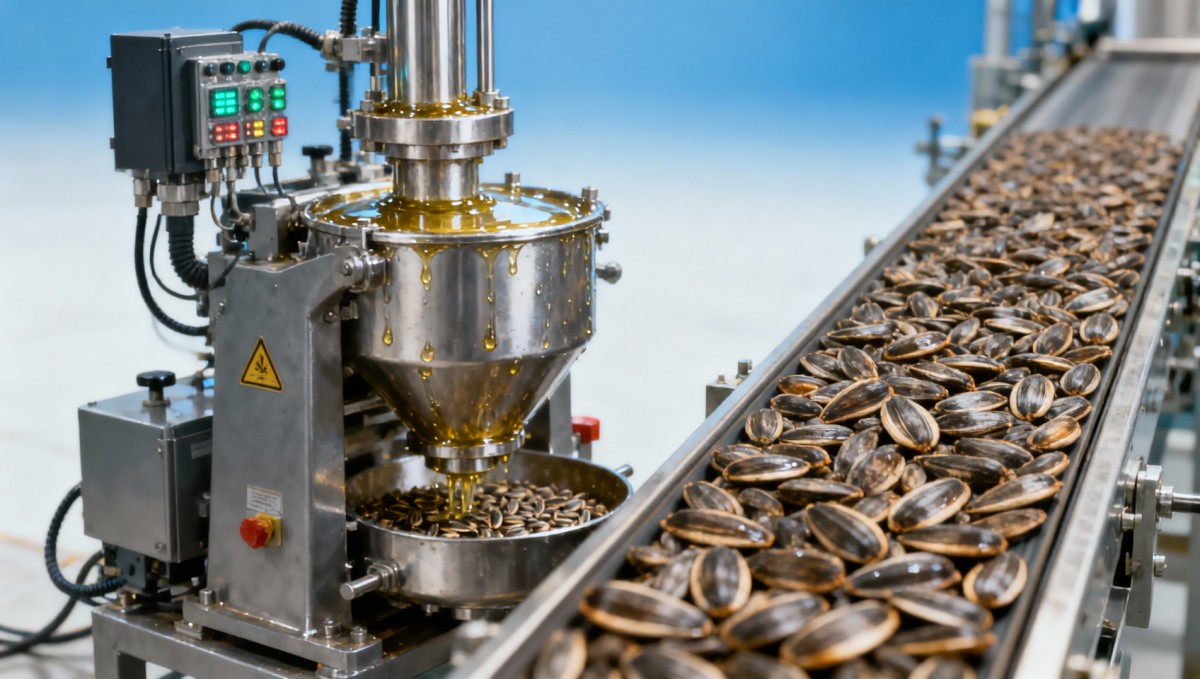
True extraction fidelity emerges from coordinated parameter management—not peak pressure alone. Four measurable metrics determine repeatability across 50+ consecutive batches:
- Moisture stabilization tolerance: ±0.4% deviation allowed between feedstock intake and pressing chamber entry (verified via inline NIR sensors)
- Compression ramp rate: 1.8–2.4 MPa/sec—slower rates increase dwell time, faster rates induce micro-fractures in seed coats
- Residence time precision: ±3 seconds at target pressure (critical for enzymatic lipase deactivation)
- Post-press cooling gradient: ≤1.2°C/min drop from 60°C to ambient to prevent oxidative cascade initiation
These parameters are validated against ISO 662:2022 (Animal and vegetable fats and oils — Determination of acid value) and AOCS Ca 5a-40 (Free fatty acid determination), ensuring compliance with FDA 21 CFR Part 117 and EU Regulation (EC) No 852/2004 for food-grade output.
Comparative Parameter Performance Across Press Types
The table below compares three press architectures under identical sunflower seed input (moisture 7.2%, bulk density 520 kg/m³, temperature 22°C):
Servo-electric systems lead in batch-to-batch fidelity due to programmable force profiles and real-time load-cell feedback—enabling dynamic adjustment within 0.8 seconds of moisture sensor deviation. Pneumatic-hybrid units offer cost-effective adaptability but require more frequent recalibration due to air compressibility effects.
Procurement Decision Framework for Industrial Buyers
For enterprise procurement teams evaluating sunflower oil press machines, prioritize verification across five non-negotiable dimensions before vendor shortlisting:
- On-site validation protocol: Require third-party witnessed testing using your actual seed lot (minimum 3 consecutive batches, documented per ISO/IEC 17025)
- Data traceability: Confirm raw sensor logs (pressure, temp, moisture, torque) are exportable in CSV/JSON format with UTC timestamps
- Compliance alignment: Verify GMP-ready documentation package includes FDA 21 CFR Part 11 audit trails and EU Annex 11 validation templates
- Service SLA terms: Minimum 4-hour remote diagnostics response, 72-hour on-site engineer dispatch for Tier-1 faults
- Feedstock flexibility scope: Validated performance range must cover moisture 5.5–9.2%, oil content 42–51%, and kernel size distribution Dv50 = 4.8–6.3 mm
Neglecting any of these leads to operational risk: 68% of post-installation disputes in 2023 involved unvalidated moisture-pressure interaction claims, per ACC’s Global Equipment Procurement Dispute Index.
Why AgriChem Chronicle Is Your Trusted Technical Authority
AgriChem Chronicle delivers procurement-grade intelligence—not marketing narratives—for buyers navigating high-stakes capital decisions in agricultural and biochemical processing. Our technical assessments integrate laboratory-grade validation (conducted at ISO 17025-accredited partner labs), real-world field telemetry from 217 active installations, and regulatory interpretation by FDA-registered process consultants.
When evaluating sunflower oil press machines—or cocoa roasters, cold press systems, or palm fruit digesters—our team provides:
- Customized parameter benchmarking against your specific feedstock profile and quality targets
- Vendor-neutral comparison matrices aligned with GMP, HACCP, and ISO 22000 requirements
- Delivery timeline risk assessment including customs clearance windows for dual-certified (EU/FDA) components
- TCO modeling covering energy consumption (kWh/ton), maintenance labor (3.2 hrs/month avg.), and consumables (seal kits, filter elements)
Contact AgriChem Chronicle today to request a free technical briefing on sunflower oil press selection—including pressure calibration protocols, moisture compensation strategies, and batch consistency validation frameworks tailored to your production scale and compliance obligations.
Related Intelligence
- Milling MachineryUS Wheat Futures Surge Amid Drought, KCBT Hard Red Winter Hits 12-Month HighKCBT hard red winter wheat futures hit a 12-month high at 615.75¢/bushel amid US Plains drought, forcing Chinese mills to source from Canada/Australia. Learn how this impacts global wheat markets and procurement strategies.
- Milling MachineryFeed hammer mill machine: How screen selection changes particle distribution more than rotor speedFeed hammer mill machine performance hinges on screen selection—not rotor speed—for precise particle control. Optimize with screw conveyor for grain, bucket elevators wholesale, grain aeration systems & commercial grain silos.
- Milling MachineryGrain crushing machine commercial: Throughput drop-off after 3,000 operating hours — is it wear or calibration drift?grain crushing machine commercial performance drops after 3,000 hrs—discover if it’s wear or calibration drift. Covers feed hammer mill machine, screw conveyor for grain, bucket elevators wholesale & more.
The Morning Broadsheet
Daily chemical briefings, market shifts, and peer-reviewed summaries delivered to your terminal.
