

The Authority in Global Agricultural Chemistry & Bio-Resources
Aquaculture & Fishery Systems: When Water Quality Data Misleads
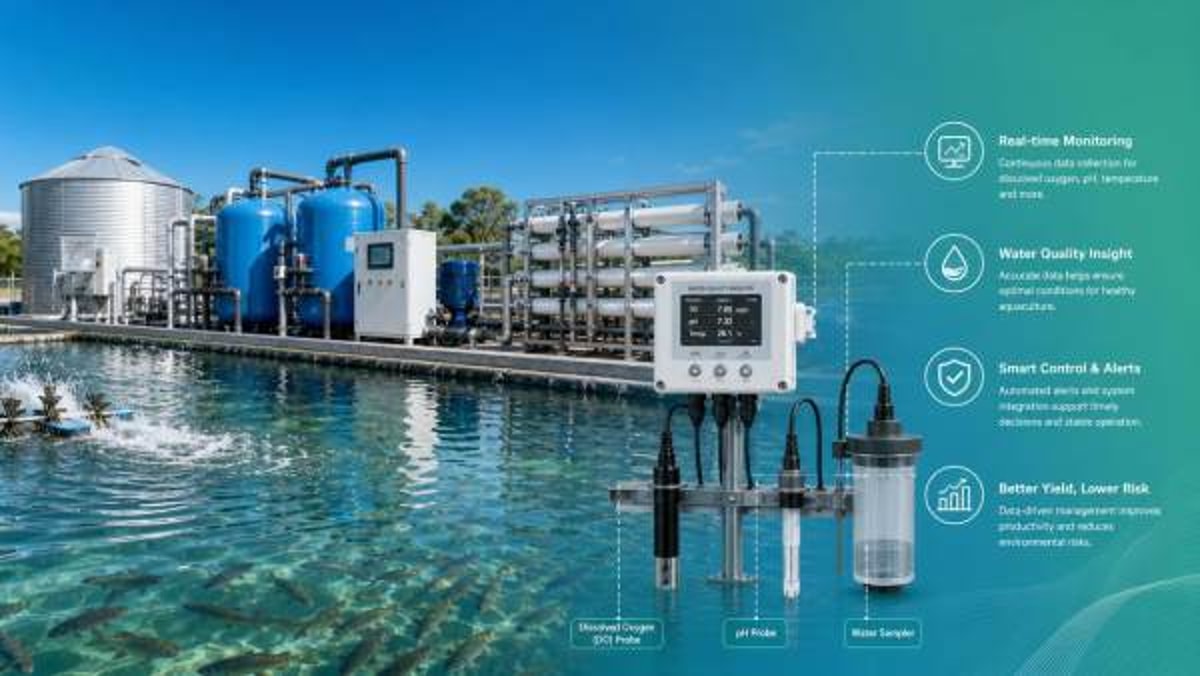
In Aquaculture & Fishery systems, water quality data is often treated as a definitive benchmark, yet isolated readings can easily distort technical assessments, risk models, and procurement decisions. For evaluation teams, understanding when data appears compliant but fails to reflect real biological or operational conditions is critical. This article examines how misleading indicators emerge, why they matter, and what more reliable assessment frameworks should include.
What misleading water quality data means in Aquaculture & Fishery systems
In quaculture & Fishery operations, water quality data usually includes dissolved oxygen, pH, temperature, salinity, ammonia, nitrite, turbidity, alkalinity, and microbial load. These indicators are essential, but they do not become reliable simply because they are numerical. A reading can be technically correct and still operationally misleading if it is taken at the wrong depth, wrong time, wrong location, or under an unrepresentative production condition.
For technical evaluation personnel, the real challenge is not whether water quality metrics exist, but whether the dataset reflects the biological reality experienced by fish, shrimp, shellfish, or recirculating system components. A pond may show acceptable morning oxygen while suffering dangerous overnight depletion. A recirculating aquaculture system may present stable average pH while localized biofilter stress is already reducing nitrification efficiency. In both cases, the water quality data looks orderly, yet the production risk remains high.
This matters across the broader primary industries landscape because Aquaculture & Fishery performance is increasingly linked to environmental compliance, feed conversion, animal welfare, disease prevention, and capital allocation. As digital monitoring expands, more stakeholders assume that more data automatically means better decisions. In practice, poor interpretation can make a sophisticated monitoring program more dangerous than a simple but disciplined one.
Why the industry pays closer attention to interpretation, not just measurement
Modern Aquaculture & Fishery operations are under pressure from regulators, insurers, investors, processors, and export markets. Water quality is now a technical, biological, and commercial signal at the same time. A farm may need to prove environmental stewardship, maintain productivity under climate variability, and justify equipment purchases such as aeration systems, sensors, pumps, filtration skids, or ozone units.
Because of this, technical teams can no longer treat single-point readings as final evidence. Water chemistry interacts with stocking density, feeding schedules, biomass growth, weather shifts, sediment load, and maintenance cycles. In intensive systems, small measurement errors can cascade into large economic effects. Misread data can lead to overdesigned treatment systems, underestimation of mortality risk, unnecessary chemical intervention, or confidence in a supplier whose equipment performs well only under ideal test conditions.
For a journal audience that includes industrial operators and institutional buyers, this is especially relevant. Evaluation teams are often comparing vendor claims, pilot results, and operating reports across regions. Without a disciplined assessment framework, the same water quality dashboard may be interpreted as proof of stability by one team and as a warning sign by another.
Common ways water quality data becomes misleading
Misleading data in quaculture & Fishery settings usually emerges from context failure rather than pure instrument failure. The number itself may be correct, but the conclusion attached to it is weak. Several patterns appear repeatedly in field evaluations and technical due diligence.
- Snapshot sampling replaces trend analysis. One compliant sample hides daily or seasonal volatility.
- Averages conceal stress events. Mean oxygen or temperature values do not show extreme lows and highs.
- Sampling points are not representative. Inlets, outlets, corners, and central zones can differ sharply.
- Calibration records are incomplete. Sensor drift is often subtle but commercially significant.
- Biological loading is ignored. A system can test well at low biomass and fail during full production.
- Water quality is reviewed without process data. Feed input, solids removal, and aeration runtime are missing.
- Species-specific tolerance is oversimplified. Acceptable ranges for one stock are risky for another life stage.
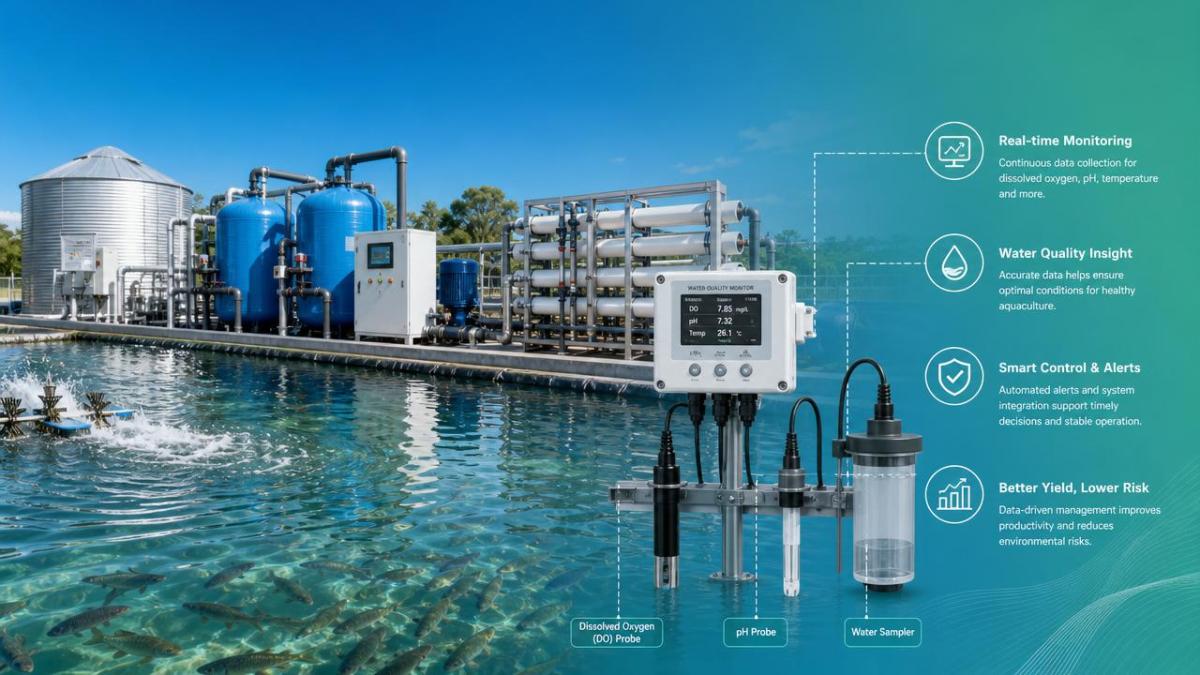
These failures are common in pond culture, cage farming, hatcheries, and recirculating aquaculture systems alike. Even well-funded facilities can overtrust dashboards if operating teams do not challenge how data was generated. In Aquaculture & Fishery technology assessment, the question should always be: does the dataset describe actual exposure conditions over time?
An industry overview of where interpretation risk is highest
Interpretation risk is not uniform. It changes with production model, intensity, species, and infrastructure complexity. The table below summarizes where technical evaluation teams should be most cautious.
Business value of better interpretation for technical evaluation teams
For technical assessment personnel, stronger interpretation directly improves capital discipline and operational resilience. In quaculture & Fishery project reviews, the goal is not merely to confirm that a site can produce acceptable laboratory values. The goal is to determine whether the system can maintain biological stability under realistic stress conditions.
This affects several business decisions. First, equipment selection becomes more accurate. Aeration, circulation, filtration, dosing, and sensor packages should be sized against dynamic load, not idealized readings. Second, supplier validation becomes stronger. Vendors that provide high-frequency trends, calibration history, failure logs, and biomass-linked performance data are usually lower-risk partners than those presenting polished summary charts only. Third, compliance forecasting improves. Environmental and food safety obligations increasingly depend on documented consistency rather than isolated compliance moments.
There is also a risk management dimension. Fish kills, disease outbreaks, poor feed conversion, and slow growth often begin before headline indicators cross formal thresholds. Teams that understand misleading water quality data can detect early instability sooner, reducing the cost of intervention. In a high-value operation, that difference may be more important than small differences in equipment purchase price.
Typical assessment scenarios where numbers can hide operational reality
Technical evaluators in Aquaculture & Fishery environments often encounter similar scenarios, even when system designs differ. Recognizing these patterns supports more realistic benchmarking.
What a more reliable evaluation framework should include
A stronger framework for quaculture & Fishery assessments combines water quality metrics with temporal, biological, and operational context. This does not require unnecessary complexity. It requires disciplined linkage between the number and the production system it represents.
At minimum, technical teams should request time-series data rather than isolated samples, review sensor calibration intervals, compare readings across multiple locations and depths, and connect chemistry values to biomass, feed input, mortality events, and maintenance records. It is also useful to examine how fast the system recovers after stress. A facility that returns to baseline quickly after heavy feeding, power interruption, or weather variation is often more robust than one that only performs well under stable conditions.
Species and life-stage sensitivity should also be built into interpretation. Juveniles, broodstock, shellfish, and high-density finfish each respond differently to water instability. A report that claims “acceptable quality” without defining stock condition, density, and developmental stage is incomplete for serious evaluation work.
Practical recommendations for review, validation, and supplier discussions
When reviewing Aquaculture & Fishery projects, technical personnel can improve decision quality through a few consistent practices. Ask for worst-case operating data, not just normal-day performance. Verify whether readings were taken during peak feeding, maximum biomass, seasonal heat, or low-flow conditions. Check whether equipment claims are backed by full-cycle production records. Distinguish between laboratory precision and field reliability, because many systems degrade through fouling, maintenance gaps, or operator inconsistency.
It is equally important to evaluate governance around data. Who owns the sensors? Who calibrates them? How are anomalies logged? Are missing readings explained? In sophisticated facilities, decision quality often depends less on the sensor brand and more on procedural discipline. This is where technically curated intelligence from specialist industry sources becomes valuable: it helps buyers compare claims against realistic operating benchmarks rather than promotional narratives.
For organizations active across fine chemicals, feed processing, primary industry equipment, and aquatic production technologies, this cross-disciplinary rigor is increasingly necessary. Water quality in Aquaculture & Fishery operations is not an isolated environmental issue. It is tied to feed strategy, process engineering, microbial management, and downstream product quality.
A grounded path forward
Misleading water quality data does not mean metrics are untrustworthy. It means metrics must be interpreted within the living system they describe. For technical evaluation teams, the most reliable approach is to move beyond compliance snapshots and toward integrated evidence: trends, context, stress response, biological outcomes, and operational records.
As Aquaculture & Fishery systems become more capital-intensive and more regulated, this broader assessment model will separate robust projects from superficially attractive ones. Teams that apply it will make better equipment decisions, identify hidden risk earlier, and build stronger confidence in supplier and site evaluations. For decision-makers seeking credible market intelligence, the priority is clear: do not ask only whether the water quality data is good; ask whether it truly represents production reality.
Related Intelligence
- RAS SystemsAquaculture & Fishery Systems: When Water Quality Data MisleadsAquaculture & Fishery insights: learn how misleading water quality data can distort risk, equipment choices, and compliance decisions—and what smarter evaluation teams should check first.
- RAS SystemsECHA Launches PVC Hose Phthalates Review for RAS SystemsECHA PVC hose phthalates review: DEHP, BBP, DBP compliance urgent for RAS systems—act before 30 June 2026 to avoid EU customs risks.
- RAS SystemsWIC 2026 Highlights Low-Altitude Economy & Smart Agri-EquipmentWIC 2026 spotlights low-altitude economy & smart agri-equipment—RAS systems, climate control, and smart greenhouses take center stage for global exporters and integrators.
The Morning Broadsheet
Daily chemical briefings, market shifts, and peer-reviewed summaries delivered to your terminal.
