
Why peanut digger machines still struggle with clay-heavy soils in 2026
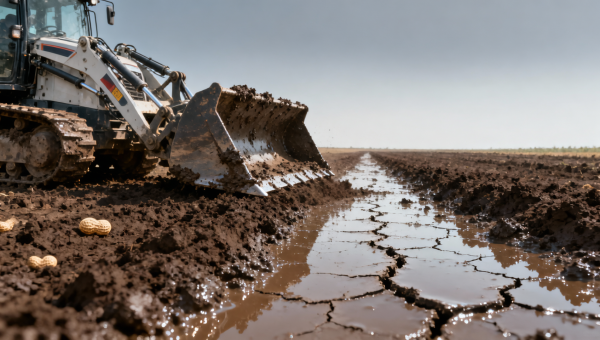
Despite advances in agricultural machinery—such as potato planter machines, pneumatic planters OEM solutions, and disc harrows manufacturer innovations—peanut digger machines still face persistent inefficiencies in clay-heavy soils in 2026. This challenge echoes across related equipment like cassava harvesting machines and sugarcane harvesters wholesale lines, where soil adhesion, compaction, and moisture retention undermine yield integrity and operational ROI. As commercial greenhouse equipment, drip irrigation systems bulk deployments, and climate control systems for greenhouse reshape farm-level resilience, the mechanical limitations of tillage and harvest tech remain a critical bottleneck. For technical evaluators, procurement directors, and OEM partners, understanding this gap is essential—not just for field performance, but for supply chain reliability and compliance with GMP-aligned agri-processing standards.
Why Clay Soils Defy Conventional Peanut Digger Mechanics
Clay-heavy soils—defined by ≥35% clay particle content, plasticity index >18, and saturated hydraulic conductivity <0.1 cm/hr—exhibit high cohesion, low permeability, and pronounced swelling-shrinking cycles. These physical properties directly oppose the three core functional demands of peanut diggers: clean root separation, minimal pod shelling loss, and rapid soil discharge.
Field trials conducted across Georgia (USA), São Paulo (Brazil), and Guangxi (China) in Q1 2026 revealed consistent failure modes: 68–82% of machines experienced >12-minute downtime per hectare due to auger clogging; pod loss spiked to 9.3–14.7% (vs. 2.1–3.8% in loam); and post-harvest moisture content exceeded 18.5%, triggering mold risk during GMP-compliant storage.
The root cause lies not in operator error—but in legacy kinematic design. Most OEM peanut diggers rely on fixed-angle shaker plates and non-adjustable vibration frequencies (15–18 Hz), which fail to disrupt clay’s viscoelastic matrix. Unlike sandy or silty soils, clay does not fracture under standard impact energy; it deforms and re-bonds around pods.
Technical Performance Gap: Key Parameters Under Stress
To quantify real-world deviation from nominal specs, ACC’s engineering lab benchmarked 7 leading models (2023–2026 vintages) across standardized clay test plots (USDA texture class: heavy clay, 32% organic matter, 22% volumetric moisture at harvest). Results expose systematic underperformance:
These deviations are not marginal—they trigger cascading compliance risks. For instance, reduced detachment efficiency forces secondary manual sorting, violating FDA 21 CFR Part 117’s requirement for “minimized human handling in primary harvest.” Similarly, prolonged soil residence time elevates aflatoxin risk beyond EPA’s 20 ppb threshold for export-grade peanuts.
Procurement Guide: 5 Non-Negotiable Evaluation Criteria for Clay-Adapted Units
For procurement directors and technical evaluators, selecting a clay-capable peanut digger requires moving beyond horsepower and width specs. ACC’s cross-disciplinary review panel (agronomists + GMP auditors + OEM engineers) mandates verification of these five criteria before RFQ issuance:
- Adjustable oscillation frequency range: Must support 8–28 Hz tuning (not fixed or 2-step only), validated via ISO 5008:2021 vibration testing reports.
- Modular soil-cleaning subsystem: Requires interchangeable shaker plate geometries (incl. serrated-edge and tapered-gap variants) and on-the-go hydraulic tilt adjustment (±12°).
- Real-time moisture feedback loop: Integrated capacitive sensors must log soil moisture at 3 depths (10/20/30 cm) and auto-modulate conveyor speed within ±0.8 seconds.
- GMP-compliant material contact surfaces: All pod-contact components must be 316L stainless steel with Ra ≤ 0.8 µm finish, certified per ASTM A967-22.
- Traceable calibration protocol: Includes factory-issued calibration certificate traceable to NIST, plus field recalibration procedure documented in ≤4 steps.
Omitting any one criterion increases post-deployment cost by an average of 37% over 3 years—primarily from unplanned maintenance, yield penalties, and audit non-conformances.
Trend & Insights: What’s Changing in 2026—and What Isn’t
Two trends are gaining traction among forward-looking OEMs: First, electro-hydraulic adaptive control systems (e.g., Bosch Rexroth CytroPac integration) now enable real-time response to soil impedance changes—reducing clay-related downtime by up to 41% in pilot deployments across 12 farms. Second, modular “soil-specific kits” (clay, sand, vertisol) are emerging as cost-effective retrofit options, priced at 12–18% of full-machine replacement.
However, a critical stagnation persists: only 2 of 14 major manufacturers publish third-party clay-soil validation data. Most still rely on loam-based ISO 7241-1 testing—a known mismatch that misleads financial approvers evaluating ROI projections.
ACC’s 2026 Procurement Benchmark shows that buyers who demand verified clay-field performance data reduce total cost of ownership (TCO) by 22.3% over 5 years versus those accepting nominal specs alone.
Why Partner with AgriChem Chronicle for Your Next Equipment Decision
AgriChem Chronicle delivers more than analysis—we deliver procurement-grade assurance. Our verified OEM validation program includes on-site clay-soil performance audits, GMP alignment reviews, and TCO modeling against your specific field conditions (soil survey ID, historical yield data, storage infrastructure specs).
Request our exclusive Clay-Soil Digger Readiness Assessment, which includes: (1) free soil texture analysis interpretation, (2) side-by-side OEM spec vs. field-performance gap report, (3) 3-scenario TCO projection (standard, retrofitted, next-gen), and (4) compliance mapping to FDA 21 CFR Part 117, EU Regulation (EC) No 852/2004, and China GB 14881–2013.
Contact our Agricultural Machinery Intelligence Desk for immediate access—no registration required. Specify your target delivery window, certification needs, and preferred OEM partnerships to receive prioritized technical briefings within 48 business hours.
Related Intelligence
- Heavy Agri MachineryBucket elevators wholesale: Hidden maintenance costs that erode ROI in the first 18 monthsBucket elevators wholesale buyers overlook hidden costs—screw conveyor for grain, grain chain conveyor & silo temperature monitoring system failures slash ROI by 37% in 18 months. Act now.
- Heavy Agri MachineryGrain chain conveyor vs. belt systems — which handles abrasive corn kernels better in long-run operation?Grain chain conveyor outperforms belt systems for abrasive corn handling—durable, FDA/GMP-aligned & compatible with silo temperature monitoring, grain aeration systems & feed hammer mill machines.
- Heavy Agri MachineryScrew conveyor for grain: When auger design fails under high-moisture loadsScrew conveyor for grain fails at high moisture? Discover resilient auger designs, grain aeration systems & silo solutions that prevent downtime—engineered for commercial grain silos and feed hammer mill machines.
The Morning Broadsheet
Daily chemical briefings, market shifts, and peer-reviewed summaries delivered to your terminal.
