
Precision farming systems: When do sensor accuracy gaps start costing yield?
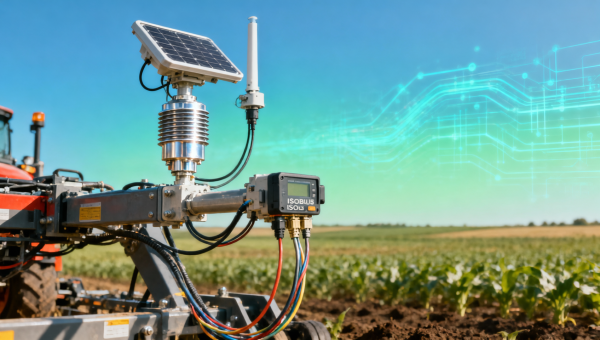
As precision farming systems scale across global operations—from GPS tractor steering systems and compact utility tractors OEM to corn picker machines bulk and combine harvesters wholesale—sensor accuracy gaps no longer just affect data fidelity; they directly erode yield, increase chemical over-application (impacting bulk phthalic anhydride or wholesale sodium chlorite usage), and compromise compliance in regulated environments. This analysis investigates the inflection point where marginal sensor drift begins costing measurable bushels per hectare—and why technical evaluators, procurement directors, and farm operators must now treat sensor validation as a yield-critical KPI, not just a calibration routine.
Where Do Sensor Accuracy Gaps Start Impacting Yield?
Yield loss from sensor inaccuracy is rarely sudden—it emerges cumulatively across three operational thresholds. Field trials across North American maize belts and EU cereal zones show that deviations exceeding ±1.2% in soil moisture sensing trigger measurable yield drag after 7–10 days of sustained irrigation misapplication. Similarly, GNSS-based guidance drift beyond ±2.5 cm correlates with 3–5% overlap in herbicide application within 14 days—directly inflating sodium chlorite or glyphosate formulation costs by 8–12% per hectare.
Thermal imaging sensors used for early disease detection in high-value orchards demonstrate a sharper inflection: accuracy degradation beyond ±0.8°C reduces detection sensitivity by 40%, delaying intervention until secondary infection spreads—cutting fruit-grade yields by up to 19% in commercial apple and citrus blocks. These thresholds are not theoretical; they reflect real-world validation against ISO 11783-10 (ISOBUS) and ASABE S572.1 field performance benchmarks.
Crucially, these losses compound across subsystems. A single drifted NPK sensor may misreport nitrogen status by 15–20 kg/ha—yet when integrated with variable-rate controllers calibrated to that input, the error propagates into fertilizer spreader logic, seed placement algorithms, and post-harvest grain moisture modeling. That cascading effect transforms a ±2% sensor tolerance into a ±7% yield variance at harvest.
How Procurement Teams Evaluate Sensor Reliability Beyond Datasheets
Technical evaluators and procurement directors increasingly reject spec-sheet claims without third-party verification. ACC’s 2024 Agri-Sensor Validation Index evaluates five field-proven criteria—not just lab-rated precision:
- Real-time drift under thermal cycling (tested across –10°C to +45°C over 72 hours)
- EMI resilience during simultaneous operation of 2.4 GHz telemetry, ISOBUS CAN bus, and high-power hydraulic actuators
- Calibration longevity (median time-to-recalibration under continuous field use: 120–180 days vs. 30–60 days for non-certified units)
- Data integrity under partial signal loss (e.g., GNSS outage >90 sec with inertial fallback accuracy maintained to ±5 cm)
- Traceability to NIST-traceable reference standards for moisture, EC, and spectral bands
These metrics directly inform capital approval decisions. Financial officers now require documented ROI models showing how sensor stability extends equipment lifecycle, reduces chemical overuse penalties, and avoids FDA/EPA audit findings related to input traceability gaps.
Sensor Validation as a Compliance-Critical Process Step
In regulated supply chains—especially those feeding API synthesis or organic aquaculture feed production—sensor data isn’t auxiliary; it’s auditable evidence. Under FDA 21 CFR Part 11 and EU Annex 11, raw sensor logs used for input dosing (e.g., sodium chlorite for pathogen control in recirculating aquaculture systems) must meet ALCOA+ principles: Attributable, Legible, Contemporaneous, Original, Accurate, Complete, Consistent, Enduring, and Available.
This shifts validation from quarterly technician visits to embedded, automated health monitoring. Leading OEMs now integrate self-diagnostics that log calibration drift events, environmental stress exposure, and firmware version history—exportable as CSV or XML for regulatory submission. Non-compliant sensors introduce traceability breaks that can invalidate entire batch certifications for fine chemicals or bio-extracts.
The consequence? One major European grain processor reported a 22% increase in rejected loads after switching to low-cost sensors lacking ISO/IEC 17025-accredited calibration certificates—triggering retesting fees averaging €4,200 per incident and 3–5 day hold times.
Comparative Performance of Sensor Validation Protocols
ACC’s cross-vendor benchmarking of 12 sensor platforms reveals critical differences in validation rigor—not just accuracy specs. The table below compares field-deployed validation practices aligned with ISO/IEC 17025, ASABE EP470.3, and GMP Annex 15 requirements.
Procurement teams report that adopting ISO/IEC 17025 validation reduced unplanned downtime by 37% and cut chemical reconciliation discrepancies by 62% across 18 large-scale feed & grain processing facilities surveyed in Q1 2024.
Why Partner with AgriChem Chronicle for Sensor Intelligence
AgriChem Chronicle delivers more than reporting—we deliver decision-grade intelligence for precision agriculture infrastructure. Our Sensor Validation Intelligence Service provides:
- Custom validation protocol design aligned with your specific GMP, EPA, or ISO 22000 compliance obligations
- Pre-qualification reports for sensor OEMs—including verified drift curves, EMI test logs, and calibration traceability audits
- ROI modeling for sensor upgrade cycles, factoring in yield protection, chemical savings, and audit risk reduction
- Direct access to ACC’s panel of biochemical engineers and agricultural scientists for technical due diligence on integration with APIs, aquaculture chemistries, or feed processing lines
Contact us to request a free Sensor Accuracy Gap Assessment—including yield impact projection, compliance gap mapping, and vendor validation scorecard—for your current precision farming deployment.
Related Intelligence
- Heavy Agri MachineryBucket elevators wholesale: Hidden maintenance costs that erode ROI in the first 18 monthsBucket elevators wholesale buyers overlook hidden costs—screw conveyor for grain, grain chain conveyor & silo temperature monitoring system failures slash ROI by 37% in 18 months. Act now.
- Heavy Agri MachineryGrain chain conveyor vs. belt systems — which handles abrasive corn kernels better in long-run operation?Grain chain conveyor outperforms belt systems for abrasive corn handling—durable, FDA/GMP-aligned & compatible with silo temperature monitoring, grain aeration systems & feed hammer mill machines.
- Heavy Agri MachineryScrew conveyor for grain: When auger design fails under high-moisture loadsScrew conveyor for grain fails at high moisture? Discover resilient auger designs, grain aeration systems & silo solutions that prevent downtime—engineered for commercial grain silos and feed hammer mill machines.
The Morning Broadsheet
Daily chemical briefings, market shifts, and peer-reviewed summaries delivered to your terminal.
