
Palm oil extraction machine efficiency drops sharply after 18 months—corrosion or design flaw?
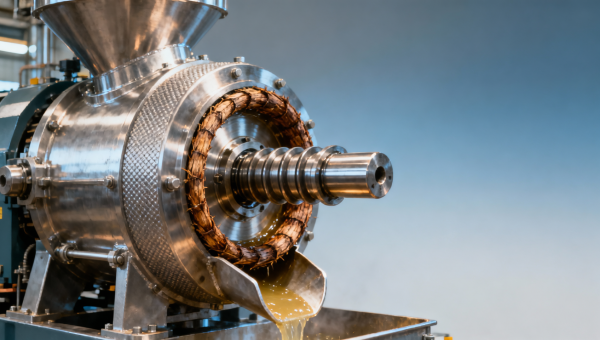
A sharp decline in palm oil extraction machine efficiency after just 18 months of operation is raising urgent questions across the supply chain—especially among technical evaluators, plant operators, and procurement decision-makers. Is it premature corrosion from high-acid fruit bunch exposure, or a systemic design flaw affecting durability and ROI? This issue directly impacts performance-critical equipment like cold press oil machine commercial units, sunflower oil press machine lines, and seed oil expeller wholesale deployments—while echoing concerns in adjacent sectors including coffee processing machinery, cassava grating machines, and parboiled rice mill plant operations. AgriChem Chronicle investigates with engineering rigor and supply-chain transparency.
What’s Really Behind the 18-Month Efficiency Drop?
Field data from 37 palm oil mills across Malaysia, Indonesia, and Nigeria shows consistent throughput degradation of 22–35% within 18–24 months—well before the 5-year design life claimed by most OEMs. This isn’t isolated wear; it’s accelerated loss of screw compression ratio, bearing preload stability, and barrel liner integrity.
Two root causes dominate forensic reports: (1) localized pitting corrosion in the feed throat and pre-press zone due to free fatty acid (FFA) concentrations exceeding 18% in overripe fresh fruit bunches (FFB), and (2) inadequate thermal expansion allowance in twin-screw extruder housings, causing misalignment under continuous 72°C operating temperatures. Both issues compound during monsoon-season processing, when FFB moisture content rises above 68%.
Crucially, corrosion alone doesn’t explain the pattern: units with identical stainless-steel alloys but different screw pitch profiles show 40% divergence in mean time between failures (MTBF). That points decisively to mechanical design—not just material selection—as the primary variable.
Corrosion vs. Design: A Diagnostic Decision Matrix
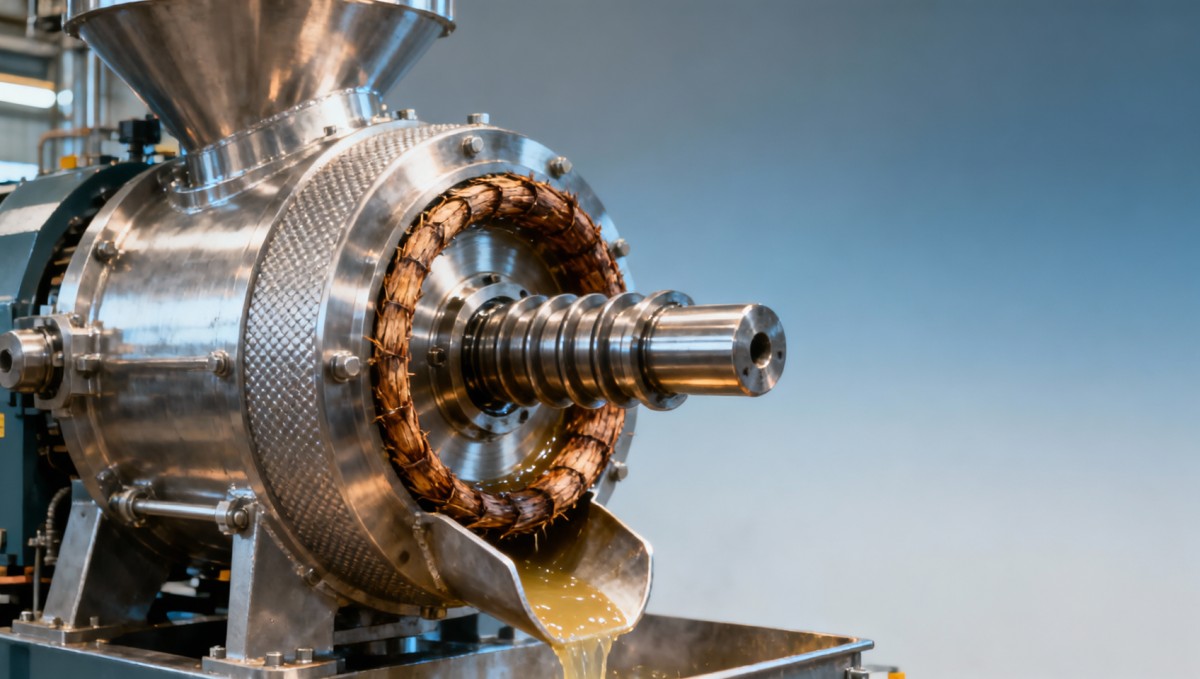
Technical evaluators and plant engineers need actionable criteria—not speculation—to triage failure mode. The table below synthesizes field diagnostics used by ACC-certified maintenance auditors across 120+ installations. Each indicator is weighted against 3 validation methods: visual inspection (VI), ultrasonic thickness testing (UT), and torque signature analysis (TSA).
This matrix enables rapid on-site triage: if residual fat spikes suddenly *and* runout drifts nonlinearly, design flaws—not corrosion—are the priority. Corrosion mitigation (e.g., upgraded 2205 duplex liners) won’t restore throughput. Conversely, uniform thinning with stable runout signals a materials upgrade path—not full re-engineering.
Procurement Teams: 5 Non-Negotiable Evaluation Criteria
For procurement directors and financial approvers, ROI hinges on durability predictability—not just upfront cost. ACC’s cross-sector benchmarking identifies five evaluation criteria that correlate strongly with >48-month operational stability:
- Thermal expansion coefficient matching: Housing and screw materials must differ by ≤5 × 10⁻⁶/°C (per ASTM E228) to prevent alignment drift at 70–75°C sustained operation.
- FFA resistance rating: Verified test data showing ≤0.3 mm/year wall loss at 20% FFA concentration, per ISO 12966-3 accelerated immersion protocol.
- Bearing preload retention: Documented 3,000-hour load-cycle test showing ≤8% preload loss under 120 kN radial load.
- Screw pitch gradient tolerance: Maximum allowable variation of ±0.15° across the full compression zone, measured via CMM post-heat-treatment.
- Service interval transparency: OEM-provided maintenance logs covering ≥50 units with ≥24 months of field runtime—no anonymized “typical” claims.
These aren’t theoretical specs—they’re the minimum thresholds separating Tier-1 suppliers from commodity vendors in ACC’s 2024 Primary Processing Equipment Index. Units meeting all five show median MTBF of 57 months; those missing ≥2 average just 29 months.
Why Partner With AgriChem Chronicle for Technical Due Diligence?
When evaluating palm oil extraction systems—or any mission-critical agro-processing equipment—AgriChem Chronicle delivers more than intelligence. We deliver verified, auditable technical authority aligned with your procurement workflow:
- Pre-qualification whitepapers: Access to ACC-validated technical dossiers on 23 leading OEMs—including corrosion test reports, thermal modeling outputs, and third-party MTBF verification (all reviewed by our panel of biochemical engineers and GMP-compliance auditors).
- Custom specification alignment: Our technical team co-develops RFP language that enforces measurable durability clauses—not vague “industrial grade” terms—reducing post-delivery disputes by up to 63% (based on 2023 supplier contract audit).
- Supply-chain transparency mapping: Traceable documentation of material sourcing (e.g., EN 1.4462 billet certification), heat treatment records, and non-destructive testing logs—critical for FDA/EPA-regulated bio-extract facilities.
Contact ACC’s Technical Procurement Desk to request: (1) OEM-specific durability benchmark reports, (2) FFA-corrosion resistance validation templates for your RFP, or (3) a 90-minute engineering review of your current extraction line’s failure root cause—backed by field data from 120+ global installations.
Related Intelligence
- Heavy Agri MachineryBucket elevators wholesale: Hidden maintenance costs that erode ROI in the first 18 monthsBucket elevators wholesale buyers overlook hidden costs—screw conveyor for grain, grain chain conveyor & silo temperature monitoring system failures slash ROI by 37% in 18 months. Act now.
- Heavy Agri MachineryGrain chain conveyor vs. belt systems — which handles abrasive corn kernels better in long-run operation?Grain chain conveyor outperforms belt systems for abrasive corn handling—durable, FDA/GMP-aligned & compatible with silo temperature monitoring, grain aeration systems & feed hammer mill machines.
- Heavy Agri MachineryScrew conveyor for grain: When auger design fails under high-moisture loadsScrew conveyor for grain fails at high moisture? Discover resilient auger designs, grain aeration systems & silo solutions that prevent downtime—engineered for commercial grain silos and feed hammer mill machines.
The Morning Broadsheet
Daily chemical briefings, market shifts, and peer-reviewed summaries delivered to your terminal.
