
EU's New Energy Efficiency Standards for Food Machinery Take Effect April 2026

导语
Starting April 1, 2026, the European Union will enforce new energy efficiency regulations (EU Regulation 2026/412) requiring all food processing equipment sold in the EU market to integrate real-time energy consumption monitoring modules compliant with EN 62977-2 standards. This development particularly impacts Chinese food machinery exporters, as non-compliant equipment will face barriers to CE certification renewal. The food packaging, sterilization, sorting, and filling machinery sectors should closely monitor these changes, given their direct influence on export compliance and market access.
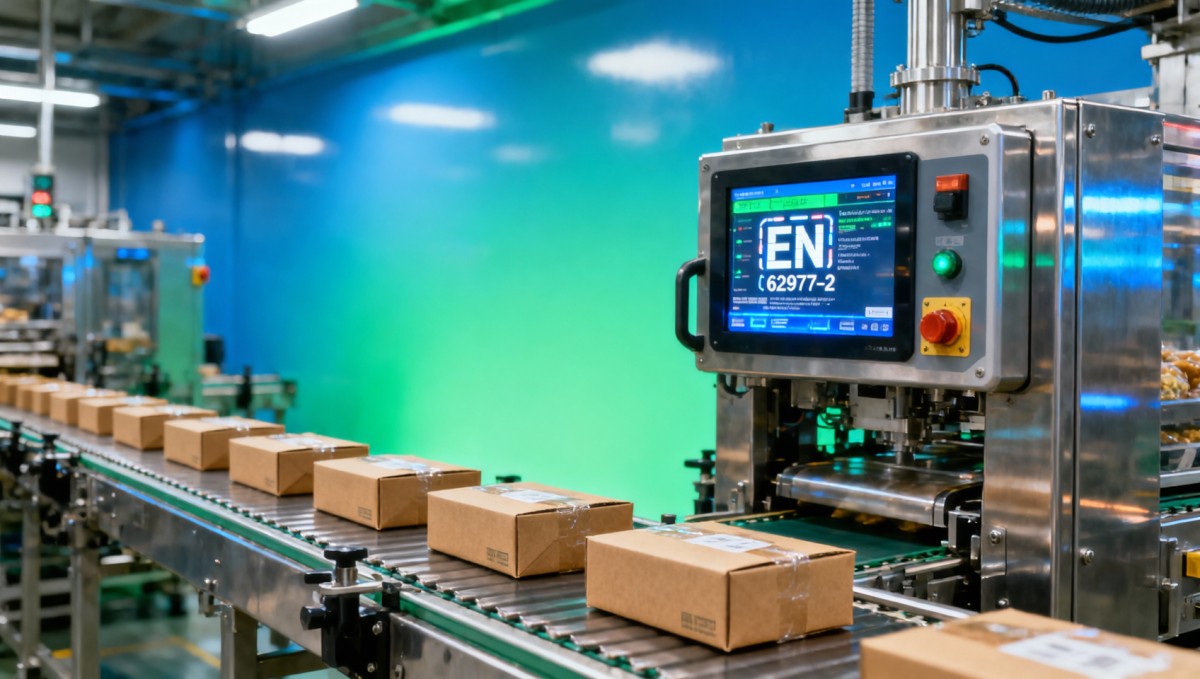
Event Overview
The EU Commission's Regulation 2026/412 mandates that food contact processing equipment (including filling, sterilization, sorting, and packaging lines) must feature real-time energy monitoring modules supporting remote data export. The rule takes effect on April 1, 2026, and applies to all equipment entering the EU market. Non-compliant machinery will be ineligible for updated CE certification.
Impact on Sub-Sectors
1. Food Machinery Exporters (China/EU Trade)
Chinese manufacturers exporting to the EU must retrofit existing equipment with EN 62977-2-compliant modules. This affects production lines, testing protocols, and certification timelines, potentially delaying shipments for non-upgraded machinery.
2. EU-Based Food Processors
European manufacturers purchasing non-EU equipment must verify supplier compliance before 2026. Retrofit costs may shift procurement preferences toward pre-certified EU suppliers.
3. Component Suppliers
Providers of sensors and IoT modules will see increased demand for EN 62977-2-certified parts, creating opportunities for specialized energy monitoring solutions.
Key Action Items for Businesses
1. Compliance Timeline Mapping
Exporters should audit current product lines against EN 62977-2, prioritizing high-volume EU-bound equipment for module integration by Q3 2025 to allow for certification lead time.
2. Supply Chain Coordination
Manufacturers must confirm component suppliers can deliver compliant monitoring modules without disrupting production schedules.
3. Certification Documentation
Update technical files to demonstrate monitoring module functionality, including data export capabilities, for streamlined CE recertification.
4. Cost-Benefit Analysis
Evaluate whether retrofitting existing models or developing new compliant lines offers better ROI, considering potential EU market pricing advantages.
Industry Perspective
From an industry standpoint, this regulation signals the EU's tightening sustainability requirements for industrial equipment. While currently focused on energy monitoring, future iterations may impose stricter efficiency thresholds. The rule effectively creates a technical barrier that favors suppliers with advanced IoT capabilities. Companies treating this as a one-time compliance task may miss broader opportunities to leverage energy data for operational improvements.
Conclusion
The EU's new standards represent both a compliance challenge and a strategic inflection point for food machinery exporters. Businesses should approach this as more than a regulatory hurdle—it's a chance to align with evolving sustainability expectations in industrial equipment markets. Proactive adaptation will be crucial for maintaining EU market access beyond 2026.
Sources
- EU Commission Regulation 2026/412
- EN 62977-2 Standard Documentation
Note: Implementation guidelines from national accreditation bodies are pending release and warrant monitoring.
Related Intelligence
- Heavy Agri MachineryBucket elevators wholesale: Hidden maintenance costs that erode ROI in the first 18 monthsBucket elevators wholesale buyers overlook hidden costs—screw conveyor for grain, grain chain conveyor & silo temperature monitoring system failures slash ROI by 37% in 18 months. Act now.
- Heavy Agri MachineryGrain chain conveyor vs. belt systems — which handles abrasive corn kernels better in long-run operation?Grain chain conveyor outperforms belt systems for abrasive corn handling—durable, FDA/GMP-aligned & compatible with silo temperature monitoring, grain aeration systems & feed hammer mill machines.
- Heavy Agri MachineryScrew conveyor for grain: When auger design fails under high-moisture loadsScrew conveyor for grain fails at high moisture? Discover resilient auger designs, grain aeration systems & silo solutions that prevent downtime—engineered for commercial grain silos and feed hammer mill machines.
The Morning Broadsheet
Daily chemical briefings, market shifts, and peer-reviewed summaries delivered to your terminal.
