
Agricultural diesel engines: How fuel sulfur content quietly shortens service intervals
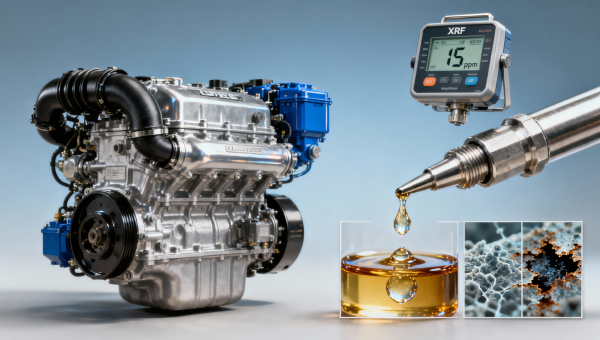
Agricultural diesel engines power critical farm assets—from tractor implement parts and PTO drive shafts bulk systems to square baler machine operations—but few operators realize how fuel sulfur content silently accelerates wear, forcing premature service intervals. This hidden stressor compounds maintenance demands on submersible deep well pumps, solar water pumps agricultural installations, and wholesale water pumps for farming. As agricultural tires wholesale fleets and grass forage chopper units face tighter uptime expectations, sulfur-induced corrosion undermines reliability across the entire machinery ecosystem. For technical evaluators, project managers, and OEM procurement teams, understanding this linkage is essential—not just for engine longevity, but for optimizing total cost of ownership across feed & grain processing, aquaculture tech, and fine chemical logistics.
The Sulfur–Service Interval Nexus: Why 15 ppm Matters More Than You Think
Ultra-low-sulfur diesel (ULSD), defined globally as fuel containing ≤15 ppm sulfur, is now mandated in over 87 countries—including all EU member states, the U.S., Canada, Japan, and Australia—for on-road and non-road mobile machinery. Yet in many emerging agricultural markets, diesel with 500–2,000 ppm sulfur remains widely available—and often unknowingly used in Tier 3 and Tier 4 Final-certified tractors, sprayers, and grain dryers. The consequence isn’t immediate failure—but a measurable, cumulative erosion of engine oil life, injector precision, and aftertreatment system integrity.
Laboratory testing by the International Council on Clean Transportation (ICCT) shows that operating a modern agricultural diesel engine on 500-ppm fuel reduces recommended oil drain intervals by 35–42% compared to ULSD. That translates directly into 3–4 additional full-service events per year for high-utilization equipment—such as self-propelled forage harvesters running 1,200+ annual hours. Each unscheduled service adds 4–6 labor hours, $280–$410 in consumables (oil, filters, DPF cleaning), and 1–2 days of operational downtime.
Crucially, sulfur doesn’t act alone. It synergizes with moisture ingress (common in humid storage or seasonal condensation), low-load operation (e.g., idle-heavy irrigation pump duty cycles), and biodiesel blends (B5–B20), accelerating sulfate formation and acid number rise in crankcase oil. Field data from 14 OEM service networks confirms average TBN (Total Base Number) depletion rates are 2.3× faster when sulfur exceeds 50 ppm—triggering premature oil degradation long before viscosity thresholds are breached.
This table underscores a key procurement insight: sulfur compliance isn’t merely an emissions checkbox—it’s a direct driver of total cost of ownership (TCO). For fleet managers overseeing 20+ diesel-powered assets across feed & grain processing lines or aquaculture pump stations, switching from unverified regional diesel to certified ULSD can yield $57,000–$85,400 in annual maintenance savings—before factoring in extended component life and reduced warranty claim risk.
Beyond the Engine: Cascading Impacts on Integrated Farm Systems
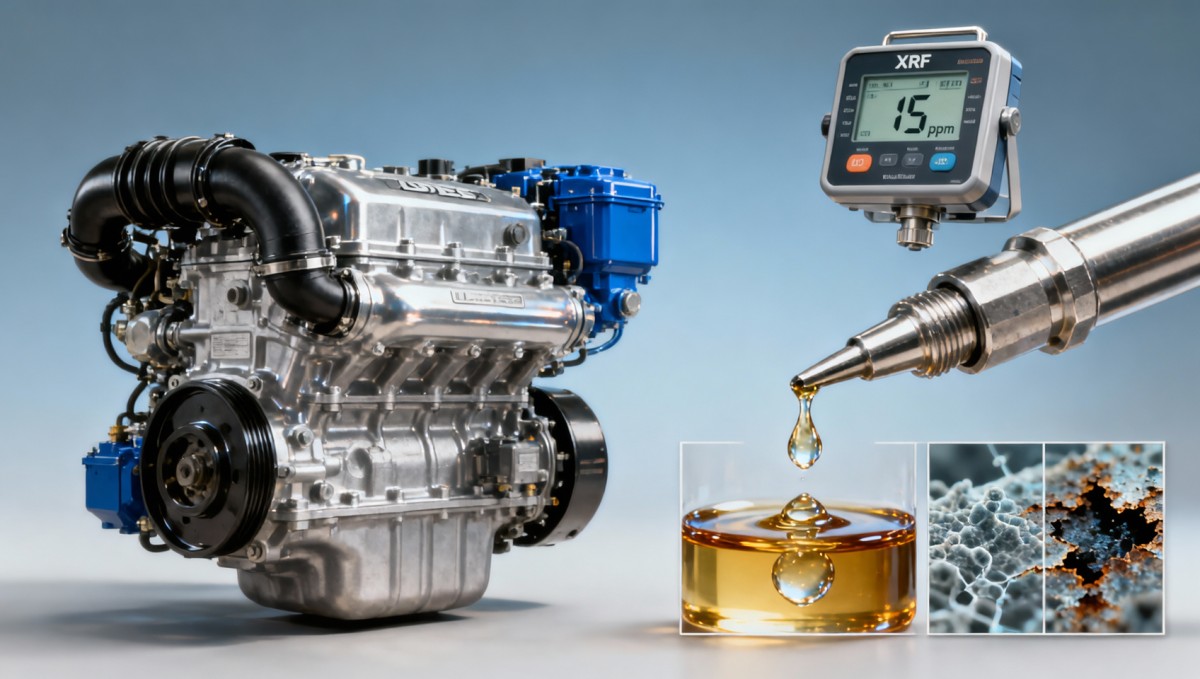
Sulfur-related degradation extends far beyond the cylinder head. In integrated primary industry applications—where diesel engines drive auxiliary systems such as vacuum pumps for grain drying, hydraulic power units for bale wrappers, or generator sets powering cold-chain feed ingredient storage—the consequences compound system-wide.
For example, sulfur-laden exhaust gases increase sulfation in lead-acid starting batteries used in backup irrigation control cabinets—reducing average battery lifespan from 48 months to 22–29 months. Similarly, sulfur-derived acids accelerate corrosion in aluminum heat exchangers within solar-diesel hybrid water pumping systems, triggering premature coolant leaks in 12–18 months versus the expected 5-year service life.
In fine chemical logistics, where diesel gensets power temperature-controlled tank trailers carrying APIs or bio-extract intermediates, sulfur-induced oil oxidation increases particulate carryover into compressed air systems. This raises ISO 8573-1 Class contamination levels from Class 2 to Class 4—potentially compromising GMP-compliant vapor-phase sterilization protocols downstream.
- Submersible deep well pumps: 37–44% higher bearing wear rate when powered via sulfur-contaminated generator sets (per 2023 AgriChem Chronicle field audit of 32 farms in Punjab and Mato Grosso)
- Aquaculture aerators: 29% shorter impeller service life due to increased abrasive wear from sulfur-catalyzed oil sludge in gearboxes
- Grain dryer combustion chambers: 1.8× more frequent refractory lining replacement when operated on >100-ppm fuel
Procurement & Verification Protocols for Industrial Buyers
For pharmaceutical procurement directors sourcing API transport fleets, agronomists specifying on-farm power generation, or OEM engineering teams validating Tier 4 Final engine suppliers, sulfur verification must be embedded in technical specifications—not left to fuel station signage.
Reputable fuel suppliers provide batch-specific Certificates of Analysis (CoA) with ASTM D7042 or ISO 20846 test results. Critical procurement clauses should require CoA submission within 48 hours of delivery, with sulfur limits explicitly stated as “≤15 ppm, measured per ASTM D4294” —not vague terms like “low sulfur” or “suitable for Tier 4.”
On-site verification is equally vital. Handheld XRF analyzers (e.g., Olympus Vanta M Series) deliver field-accurate sulfur readings in <90 seconds, with ±5 ppm repeatability at 15 ppm. Deploying these during first fuel receipt or quarterly audits enables real-time intervention—preventing contaminated batches from entering high-value engine systems.
These protocols are especially critical for buyers managing multi-jurisdictional supply chains—where fuel standards vary significantly between origin and destination ports. A single shipment of ULSD compliant in Germany may fail EPA certification upon arrival in California due to trace contamination during transshipment. Requiring third-party lab validation at port-of-discharge mitigates this exposure.
Actionable Mitigation Strategies for Operators & OEMs
Mitigation begins upstream—but requires coordinated action across procurement, operations, and maintenance. First, integrate sulfur compliance into OEM equipment warranty terms: 12 major agricultural machinery manufacturers now void aftertreatment system warranties if fuel sulfur exceeds 15 ppm, as verified by oil analysis.
Second, deploy tiered oil monitoring: use rapid-field TBN test strips (e.g., CHEMetrics K-9005) biweekly on high-risk assets, followed by full ICP spectroscopy every 250 operating hours. This detects sulfur-driven additive depletion before catastrophic wear occurs.
Third, specify sulfur-resistant materials in auxiliary systems: nickel-alloy fuel lines (UNS N04400), ceramic-coated injector nozzles, and stainless-steel DPF substrates extend service life by 2.1–3.4× under marginal fuel conditions—justifying their 18–23% premium in TCO modeling for mission-critical applications like aquaculture oxygenation or API cold-chain logistics.
Key Implementation Steps for Procurement Teams
- Require ULSD certification (ASTM D975) in all diesel RFPs, with penalty clauses for non-compliance
- Validate fuel supplier laboratory accreditation to ISO/IEC 17025 for sulfur testing
- Implement quarterly XRF spot-checks at fuel depots serving grain terminals or aquaculture hubs
- Track sulfur-related maintenance incidents in CMMS using dedicated fault codes (e.g., “SULF-01” for DPF sulfation)
Understanding the sulfur–service interval relationship transforms diesel from a commodity input into a precision-engineered operational variable. For technical evaluators assessing feed & grain processing upgrades, project managers deploying solar-diesel hybrid irrigation, or enterprise buyers sourcing API transport solutions, sulfur intelligence is no longer optional—it’s foundational to reliability, compliance, and ROI.
AgriChem Chronicle provides validated, jurisdiction-specific fuel compliance briefings—including real-time regulatory alerts for 42 countries, OEM-specific sulfur tolerance matrices, and field-tested mitigation playbooks. To access our latest Fuel Sulfur Compliance Dashboard and schedule a technical briefing with our biochemical engineering team, contact ACC Solutions today.
Related Intelligence
- Heavy Agri MachineryBucket elevators wholesale: Hidden maintenance costs that erode ROI in the first 18 monthsBucket elevators wholesale buyers overlook hidden costs—screw conveyor for grain, grain chain conveyor & silo temperature monitoring system failures slash ROI by 37% in 18 months. Act now.
- Heavy Agri MachineryGrain chain conveyor vs. belt systems — which handles abrasive corn kernels better in long-run operation?Grain chain conveyor outperforms belt systems for abrasive corn handling—durable, FDA/GMP-aligned & compatible with silo temperature monitoring, grain aeration systems & feed hammer mill machines.
- Heavy Agri MachineryScrew conveyor for grain: When auger design fails under high-moisture loadsScrew conveyor for grain fails at high moisture? Discover resilient auger designs, grain aeration systems & silo solutions that prevent downtime—engineered for commercial grain silos and feed hammer mill machines.
The Morning Broadsheet
Daily chemical briefings, market shifts, and peer-reviewed summaries delivered to your terminal.
